One day, Melissa Marginet overheard a quilter discouraging her friend from taking up this hobby – inside a quilt store!
“Don’t start,” the woman said. “It’s too expensive.”
“That’s just not right,” she thought to herself. Since then, Melissa has set out to disprove this myth so more people can enjoy affordable sewing and quilting.
“Some of us can afford all the new stuff, but some people cannot,” she said. “Remember, quilting began with what people had. You don’t have to spend $700 to make a quilt. You can make it as expensive or inexpensive as you want.”
During her Quilt Canada lecture Myth: Quilting is an Expensive Hobby, she advised how to stock up on low-cost supplies.
Melissa also showed quilts she created with minimal expense while using her favourite money-saving tips and tricks. She invited others to discover how joyful, resourceful, and affordable quilting can truly be.
Where to find affordable fabric
Primarily, Melissa relies on thrift stores’ bag sales or 25-cent sale days and yard sales. Both sources deliver a quilter’s old stash or clothes suitable for blocks.
“When people know you quilt, you acquire a lot of fabric when someone’s family member passes away,” she said. “I keep what I can use and distribute the rest.”
In fact, clothing make up many of her pieces:
- She once turned 28 ties into a double-bed quilt. She also uses her grandfather’s ties for sashing and binding.
- Work shirts and dress shirt materials offer contrast to designs.
- Blouses provide materials for $5 on average.
“There’s a lot of improvisation but it’s very creative and it gives you a lot of satisfaction,” she said. “I’ve never met a pattern that I didn’t change.”
Melissa also amasses:
- Factory castoffs, like parachute fabric
- Drapery samples from flipbooks. “They make great quilts since they are all coordinated.”
- 1970s cotton sheets and floral pillowcases. “Who is going to know if the sheet on the back isn’t new as long as it’s clean?” she asked.
In one piece, she had polyester curtains on the front and used jeans on the back. For another, she puts sweatshirt fleece as the backing. Sheeting and pieced scraps also suffice.
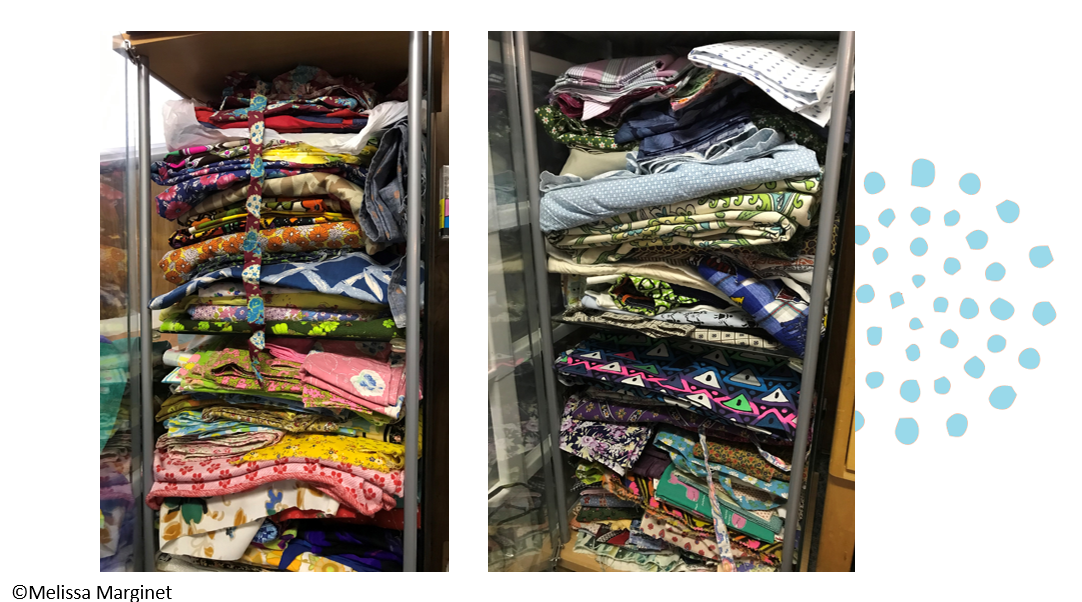
This is just a sample of her thrifted fabric stash.
What about affordable accessories?
She has bought:
- A used sewing machine for $5 at a guild meeting and her neighbour’s Singer for $10 at a yard sale.
- Irons for $2 to $3 at a thrift store.
- Dollar-store gloves to grip quilts as she machine quilts them.
- Napped-back tablecloths for her design wall. She prefers those with grids on the back to keep her rows straight since they show through on the other side.
Improvising
When Melissa discovered a hole in a beloved fabric piece, she covered it with a star. “If I find fabric I really like and it has holes in it, I don’t use all of it,” she said. “Usually, I end up with enough.”
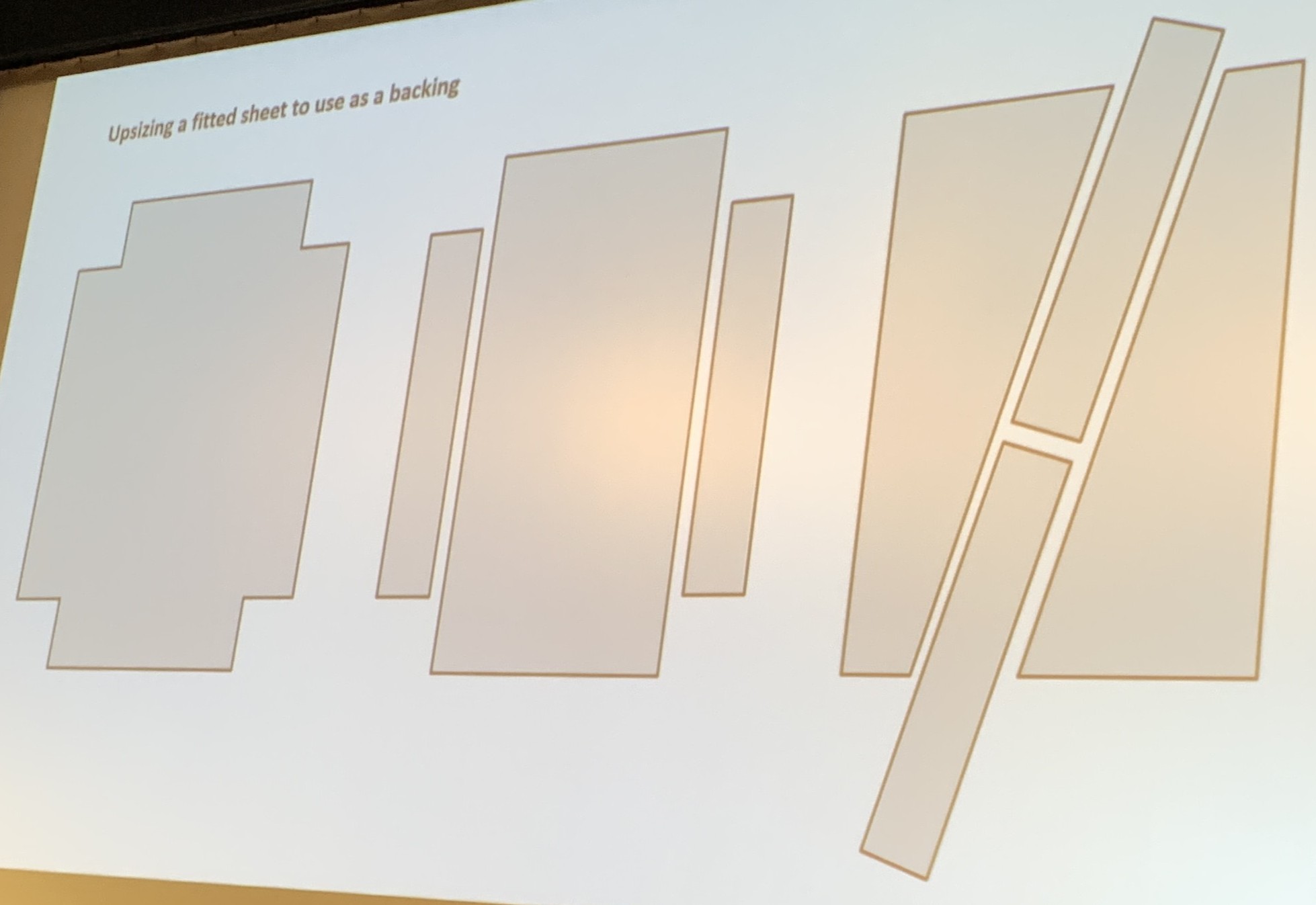
She also demonstrated how to turn a fitted sheet into a backing. Simply cut off the side pieces and insert them diagonally within the sheet top. Voilà!
For an Indian friend, she converted saris from three generations into a stunning baby quilt full of family history. Since the fabric was so fine and long, she gathered the edges by ruching.
Next, she found a sweatshirt with an inspiration slogan for free (due to a stain). She put it at the top, surrounded it with flowers, then added pink and green strips below it.
Melissa’s Mindset
According to Melissa, there are no rules for how to you make a project and not every quilt has to be a showstopper.
She made this raffle quilt out of fabric scraps intended for creating dog beds and use a sheet on the back.
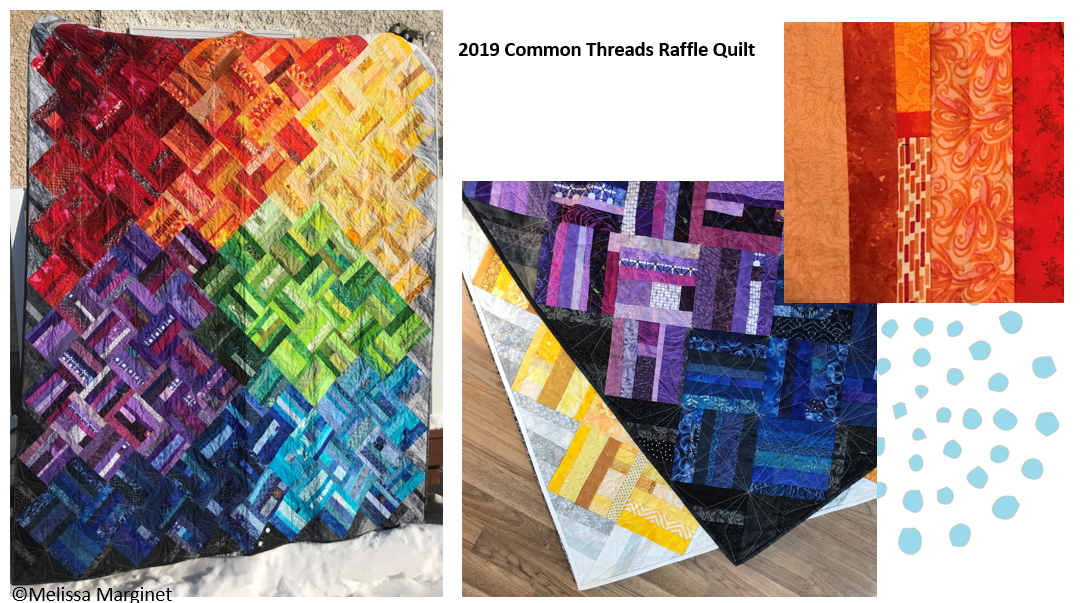
“Not everything I make meets the definition of a quilt but the people who receive them love it,” she said. “So, why do we need so many rules? “This validates your work and allows you to stand up to quilt snobs. Quilts should provide love and warmth. They are not limited to 100-percent cotton. Enjoy what you do.”
More about Melissa
Melissa has published three books on walking-foot quilting and two pattern books. She has a passion for teaching so people gain the confidence to quilt their projects on their home sewing machines. She has taught for Quilt Canada, the Saskatchewan Stitches Conference and guilds across Canada, throughout North America, including QuiltCon.
The photo gallery on her website shows work from when she started quilting to present day. As a result, when people can see the progression of when she started to where she is today.
She also encouraged people to look at the work by additional quilters and fibre artists who do much of their work with repurposed textiles: