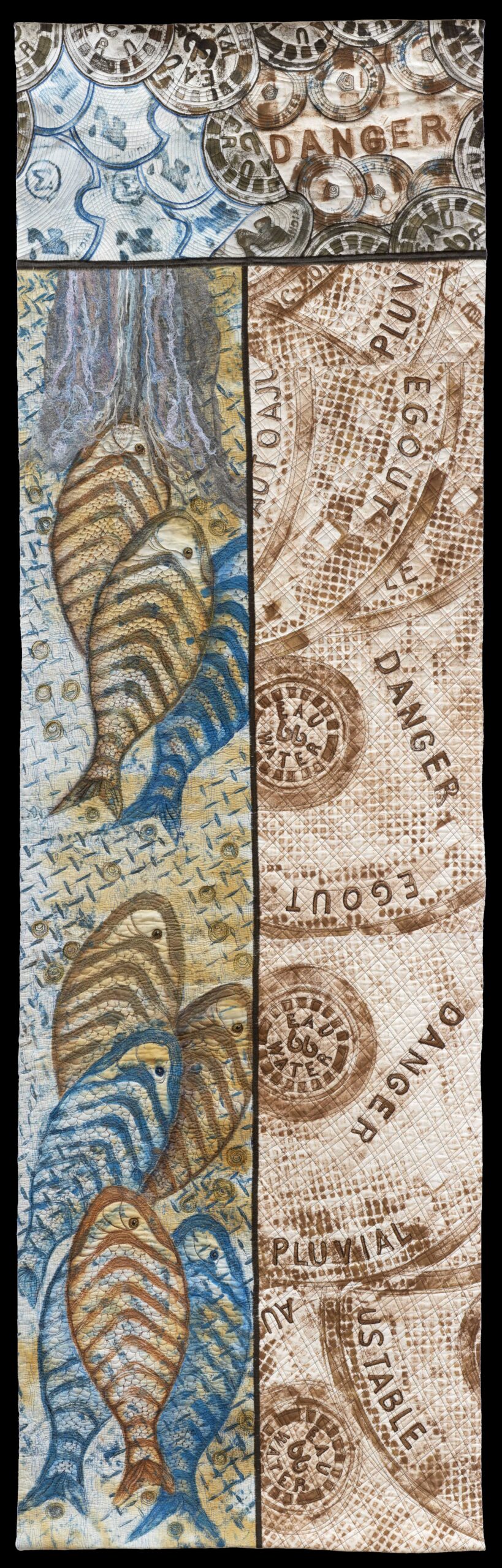
After seeing each winner’s work at Quilt Canada 2026, we asked them to share the story behind their work. We begin with Elaine Armstrong of Kingston, Ont., who won for Excellence in Sustainability.
This fun piece took more than a year to move from the ideas swimming through my head through to completion. I had to problem solve every step of the way and develop new and improved skills as the piece progressed.
Égout Pluvial intended to highlight the message of warning that decorative manholes give us. Do not let toxins run into our drainage system—all runoff eventually makes its way into our freshwater system.
How Égout Pluvial began
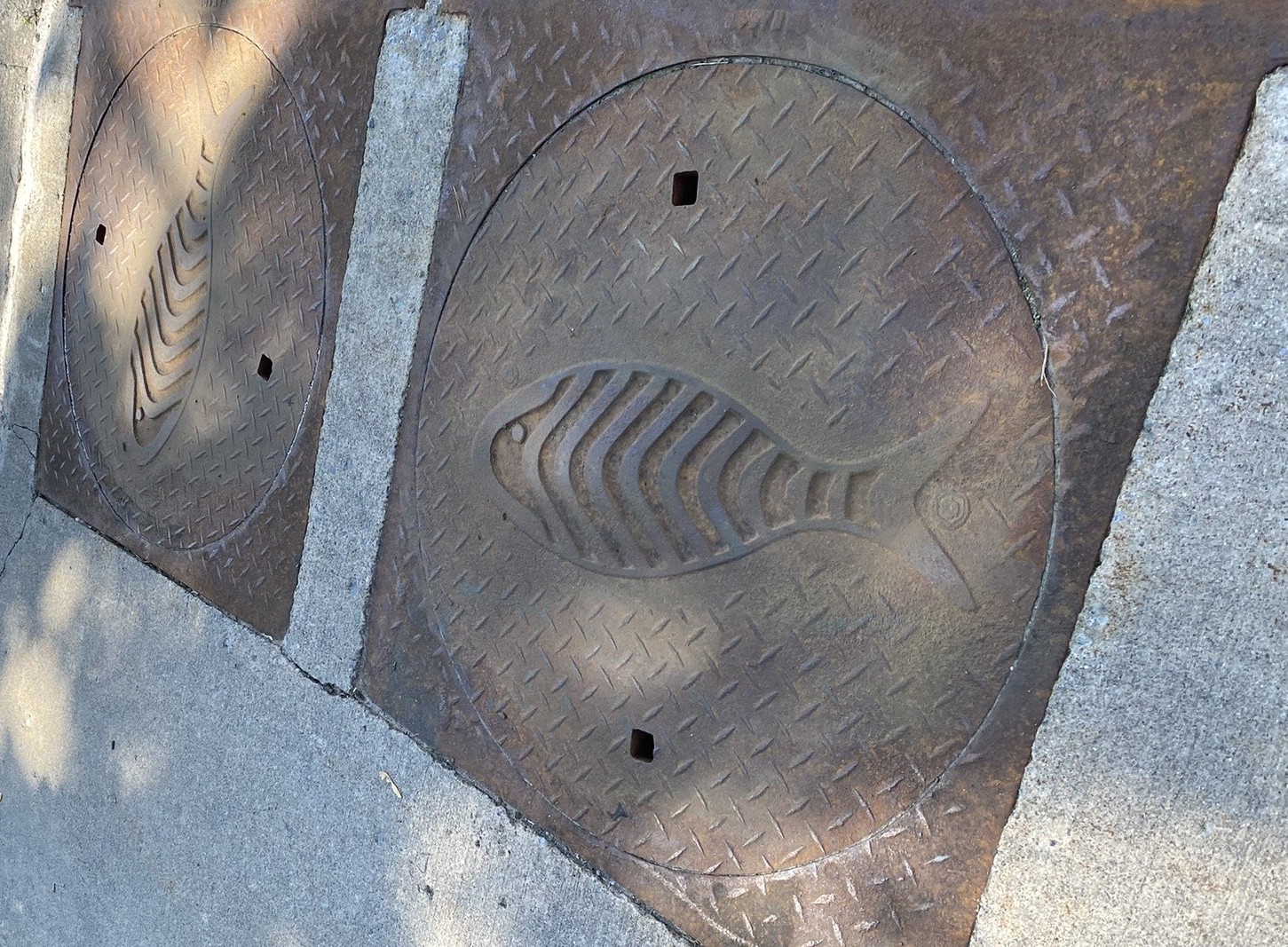
While out on my daily urban walks, in a small industrial park close to our home I often walk by two manhole covers marked with stylized fish. For months, every time I passed, I would imagine, and plan how I could transfer those fish onto fabric to use in my art. I started to run through the process in my head, step by step, every day.
How could I pick up the image without damaging the metal or using any toxic materials? I thought rust dyeing would be the natural method—using only water and vinegar. How would I set up a workstation on the side of this busy road for long enough to pick up a rust print? I could use traffic cones. Hmm, that could get expensive.
How would I transport all my supplies? I’d have to drive and park close by. What if someone moved my piece in progress? I’d have to take a lawn chair and sit vigil for a few hours.
How would I keep the fabric contact to the metal for a good print? Sandbags? Too heavy. Ziplock bags filled with water? Maybe.
Might I get stopped or questioned by anyone? Maybe.
On it went, all summer. Planning and scheming. Getting almost as excited about the process as with the vision of the final product. But still, I just wasn’t confident that I wouldn’t be questioned by the authorities and possibly removed or fined for setting up shop.
Finally, the perfect spot!
As the summer heat was fading, I began to give up hope of undertaking this project before the chill of fall set in. Heading out on my walk, I took a slightly different route. Not more than two blocks from our house, on a protected piece of quiet sidewalk, next to a patch of grass, under a tree, I spotted them! Two perfectly positioned fish manhole covers.
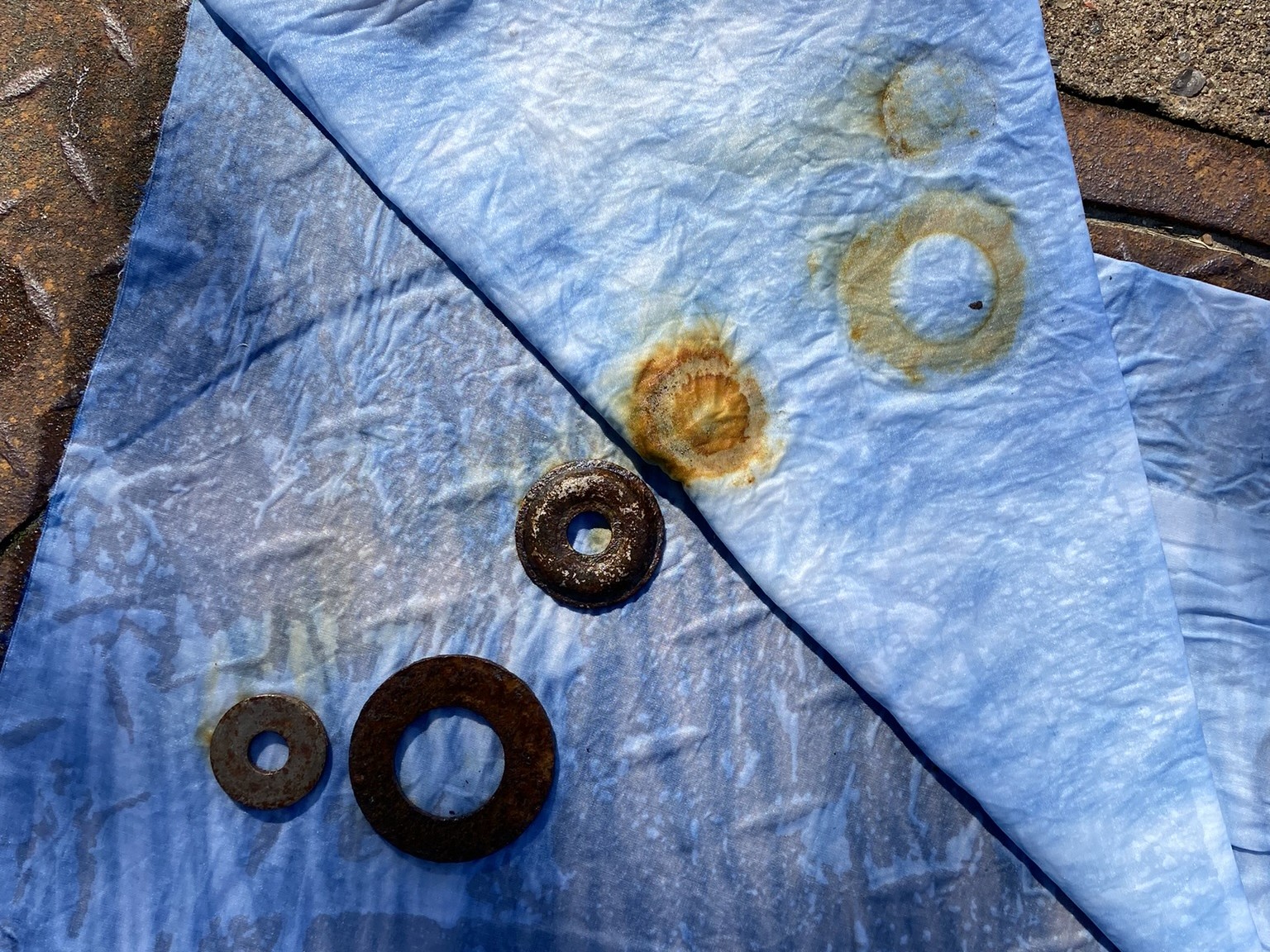
Within the week, I packed a folding camp chair, sunhat and iPod and drove over with my supplies to set up a temporary studio. I parked the car for an added shield against traffic, dampened my cloth with a non-toxic vinegar/water solution, threw on a few circular iron washer scraps, weighted it down with water-filled zip lock bags, and waited.
Three hours later, when the evening chill was setting in, I lifted the bags for a peek. I had captured the circular iron washers. As for the fish – not a single spot of rust! WHAAA! How could that be?
Totally exhausted and deflated, I returned home. Later that evening, an online search revealed that yes, indeed, manhole covers are treated so that they won’t rust.
By now I was committed to these fish, so I had to find another way.
Égout Pluvial’s Plans B and C
I returned a few days later with more scrap bed sheets, roller, brayer and acrylic (water-based) paints. It worked as a relief print and I got lots of fish transferred as well as some of the metal grid background. My favourite piece was a long thin strip with the fish swimming upward. It had potential, but I sat on it for a while imagining what it could become.
Meanwhile, part of my mind was mulling over the purpose of these fish and how many people actually notice them. Did they recognize their significance as a warning that our sewer drains eventually lead to our fresh waster system?
As if to underscore this thought, I started to notice other manhole covers clearly marked DANGER. Unfortunately, all of these seemed to be right in the middle of streets or intersections.
These are fairly busy neighbourhood streets, but I thought it would be easy enough for my husband to be on traffic lookout while I ran out to make one or two very quick rubbings. Not to stop traffic, just to warn me when something was coming. Usually fully supportive of my artistic endeavors, he flat out refused this assignment.
Winter passed and I brooded. With the summer, came a weekend getaway to Quebec. Much to my delight, my husband spotted some manhole covers on the safe, grassed slopes near our condo. They were marked with ÉGOUT PLUVIAL (storm sewer), EAU (water), and DANGER (danger). How perfect these would be to make my piece bilingual.
Off I went to buy some emergency supplies: rollers, acrylics, shower curtains. I got the most amazing relief prints in rusty tones and metal grids.
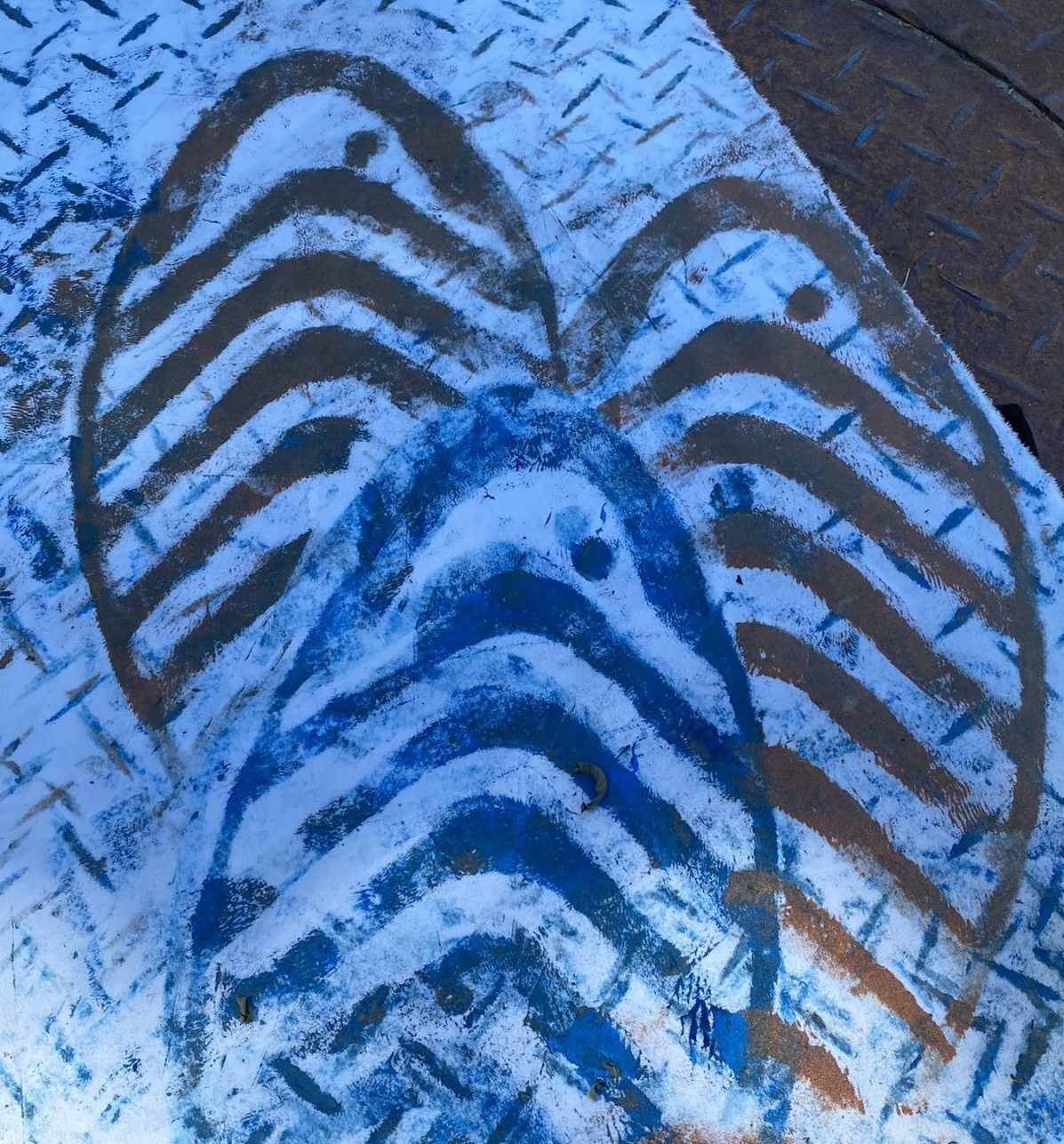
The final stages
The last discovery in this journey came closest to home. Beside a fire hydrant, just meters from our house are the small drain covers with water taps. Aha! These rubbed in blue could bring it all together.
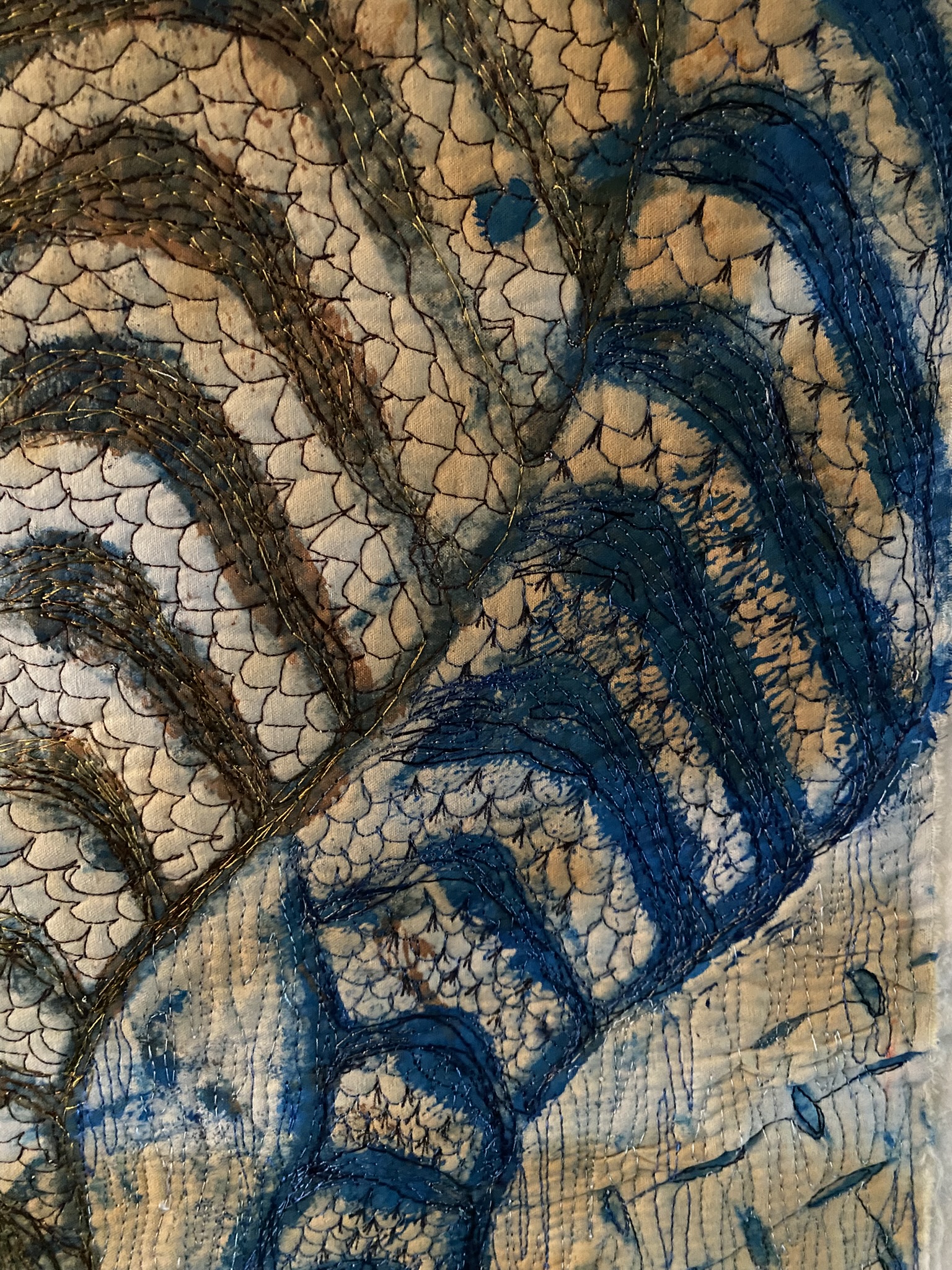
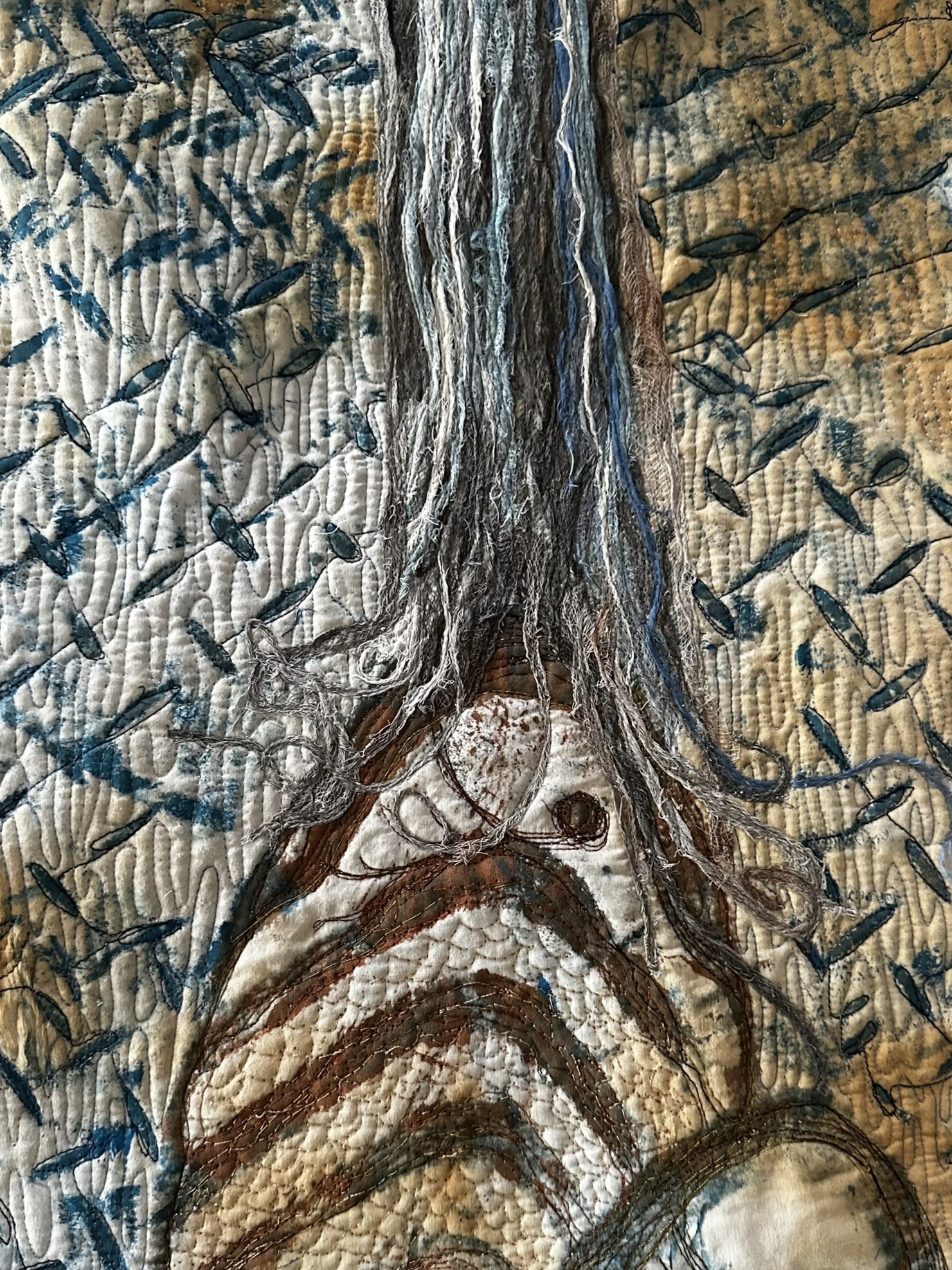
The final challenge addressed joining the three independent pieces together. I chose to use a very dense and dark machine satin/zig zag stitch to look like metal piping.