Chriss Coleman’s quilts burst with colour and energy, almost as much as the vibrancy she brings to a conversation about her work. Her two wins at CQA/ACC’s National Juried Show clearly show her skill for design and a passion for piecing.
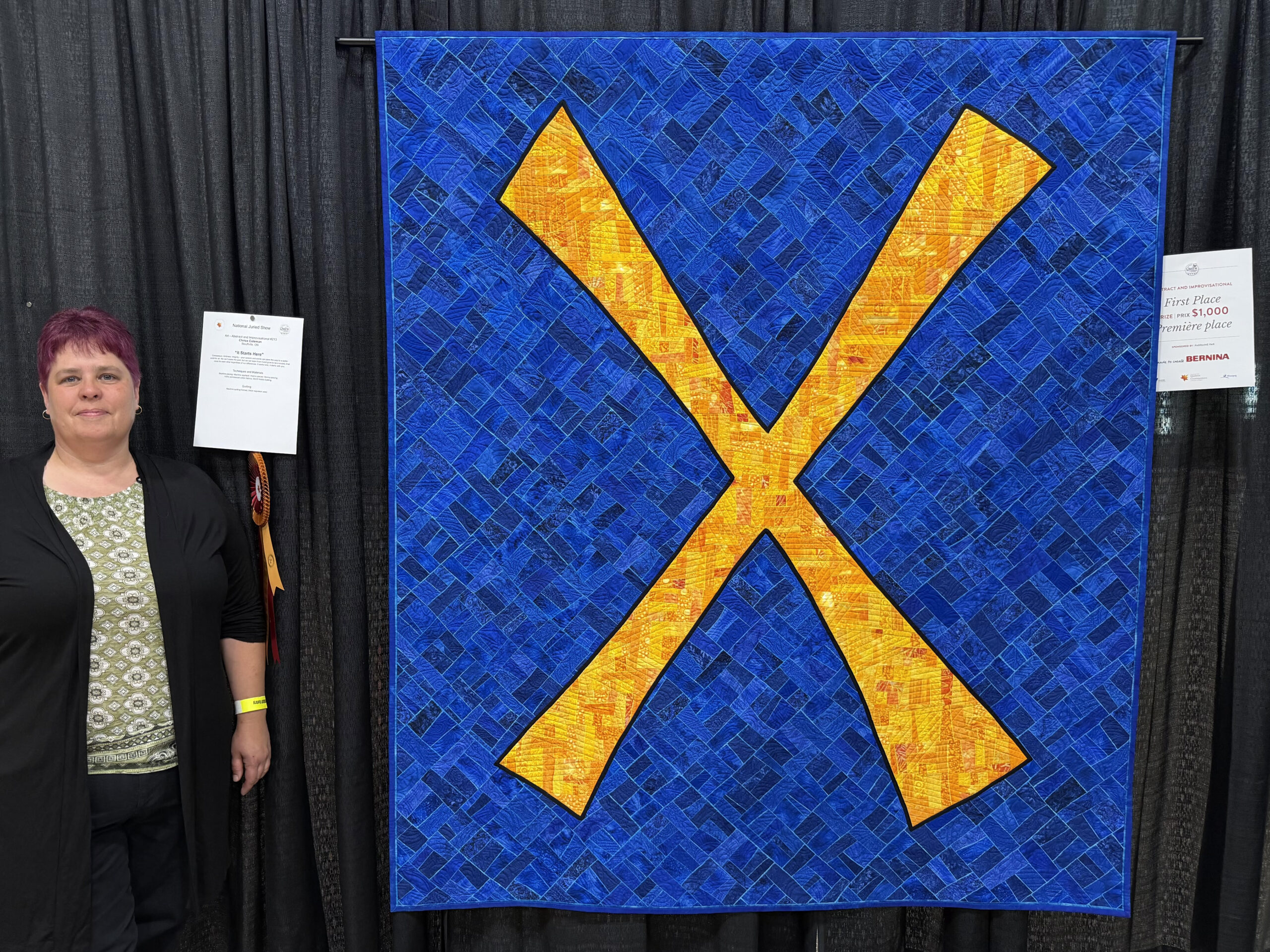
Her first place award for Art | Abstract and Improvisational features an orange X amid a brilliant blue background with 20 different hues. (She also topped this category in 2025.) Meanwhile, her temperature quilt N43º W79º has two-inch blocks – some with up to 23 seams and all with at least two colours.
Both projects use skinny strips and improv-pieced blocks and background.
For a woman who nearly gave up quilting 15 years ago, she has rebounded with a fresh enthusiasm.
Her Second Chapter
The Stouffville, Ont. resident started quilting in 2002 and almost quit in 2011 after making yet another quilt of all squares. Then she discovered improv quilting and pushed herself to learn more via Creative Live, an online learning platform.
“Without improv, I lose interest when I’ve cut all the pieces,” she said. “I like to cut, add and move pieces around. Sometimes, the fabric tells me what it wants to be. I go with the flow. The last thing I want to do is fight with the fabric.”
As her family moved to England and Denmark then back to Canada, she refined her technique. With her feet back on Canadian soil, she also grows plants to create her own dyes. Indigo provides her with blues, madder delivers a Turkish red while marigold and coreopsis gives her oranges and yellows. Meanwhile, chamomile, sulphur cosmos, cotinus and other natural sources provide colours for eco-printing.
“It’s quite interesting to go from planting the seed to dyeing the fabric,” Chriss says.
She also “snow dyes” with synthetic dyes. First, she mordants the fabric then packs snow with a dry, powdered dye on top. As the snow melts, it dissolves the dye, splitting the colours in the dye compound and slowly seeps into the material, creating intricate, watercolour-like patterns that are all unique.
“I’d rather take the extra effort than compromise,” Chriss said. “At the end of the day, you want to be happy with it.
Her Award-winning Work
Growing up, Chriss heard over and over to be cheerful so she might brighten another person’s day. That, in part, led to her award-winning It Starts Here.
Its message is clear: compassion, kindness and integrity – expressed in words and actions and words – pave the way to a better world. “We can’t erase the past, but we can learn from it and grow to be a society that cares for each other regardless of our differences,” she wrote in her artist statement. “ It starts here; it starts with you.”
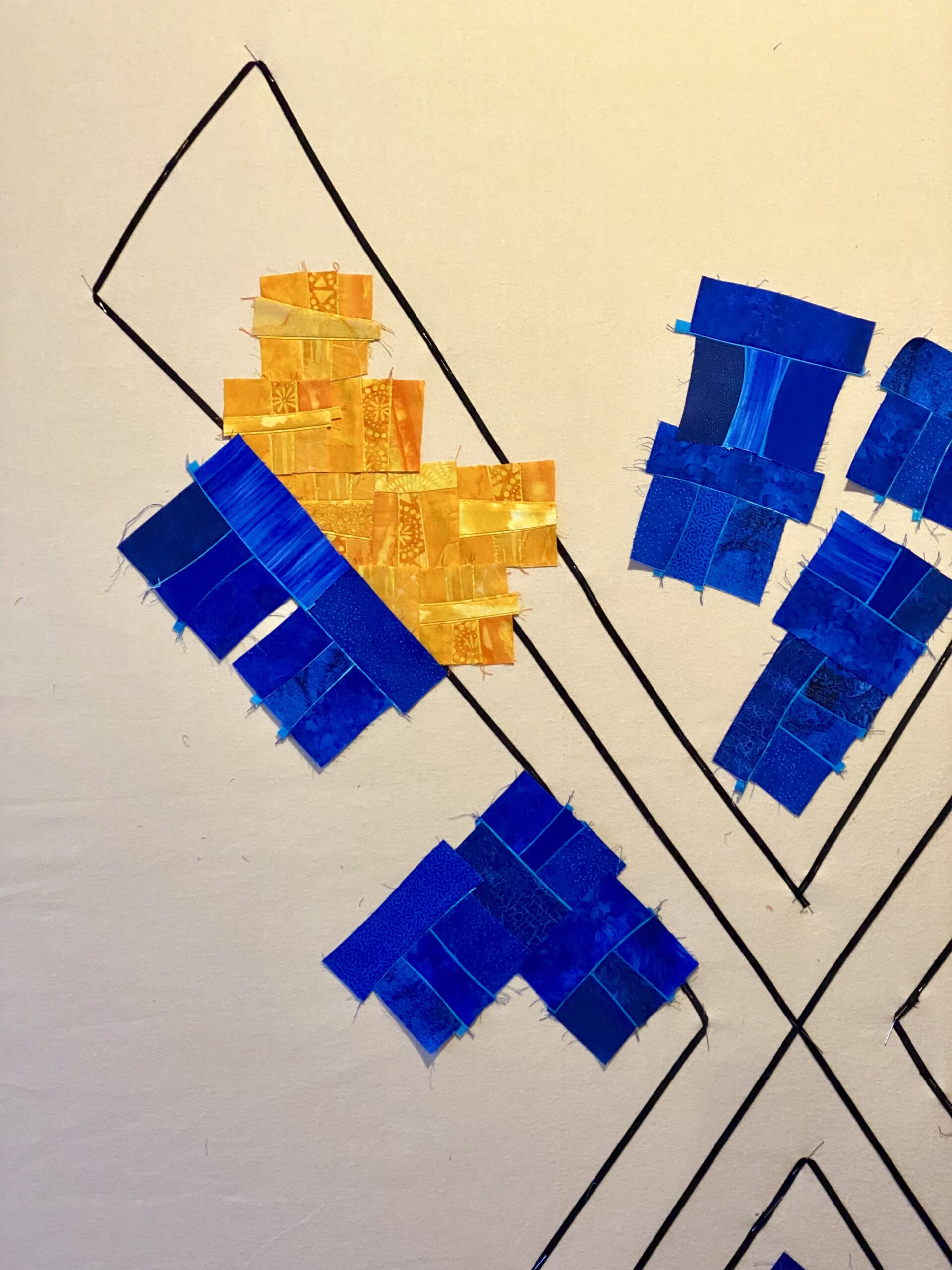
For this quilt, she began on its background first. She stacked and swapped fabrics for variety and mismatched seams to reduce bulk.
After piecing, stay-stitching and appliquéing the multi-hued orange X over top, she cut out the blue in behind it. Finally, she added black bias tape around the outline and eight teals in a flange-like inner border.
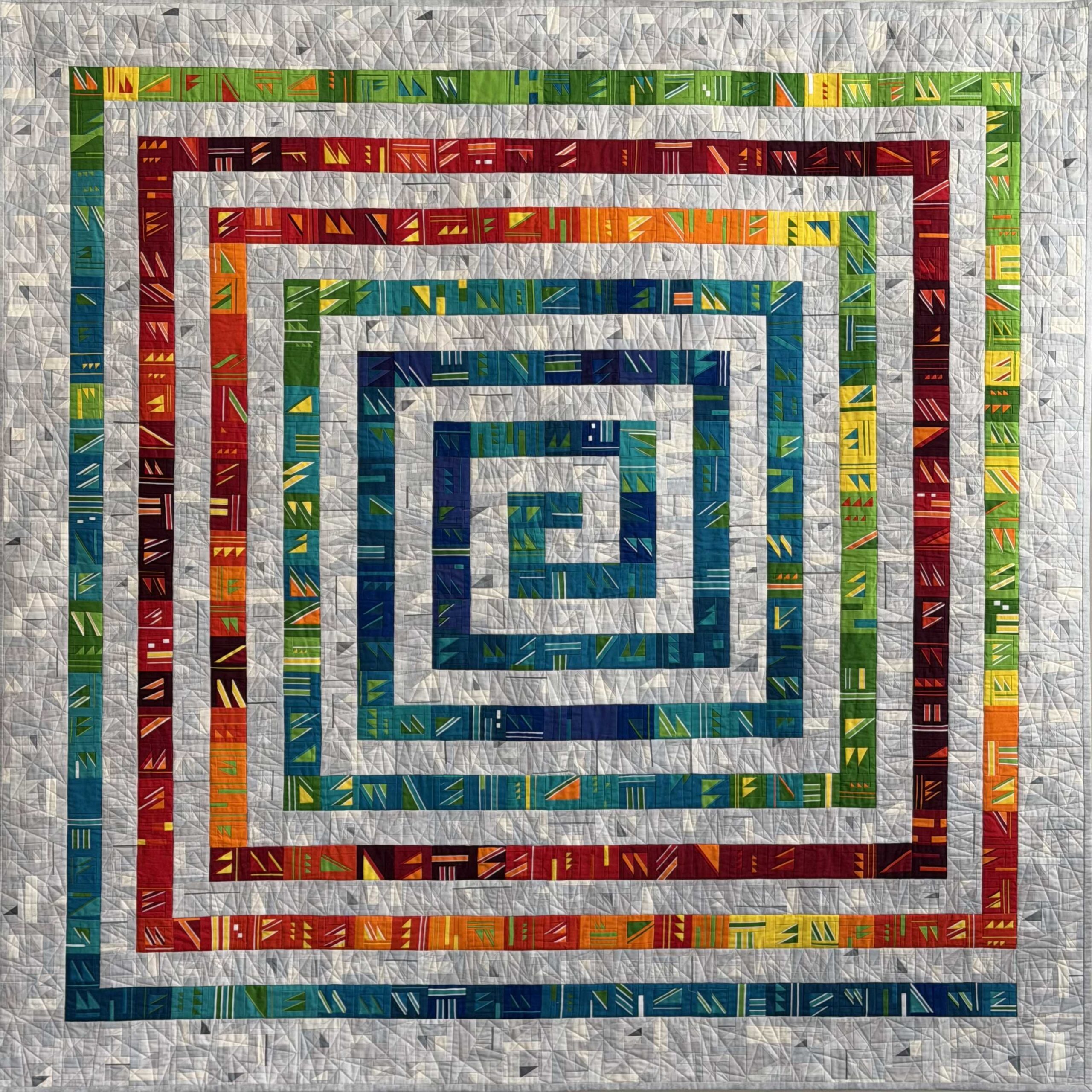
Chriss was surprised to win first place for Excellence in Piecing for N43º W79º, named for Stouffville’s coordinates.
Her rainbow of colours from reds through purples indicate highs, lows and windchill for each 2020 day via two-inch blocks, with white inserted for days with precipitation and a blank block at the end of each month. It starts in the centre on Jan. 1, spiraling outwards, emulating a traditional log cabin pattern.
“The spiral was a natural evolution,” she said. “Since 2020 was a leap year, the math worked out.”
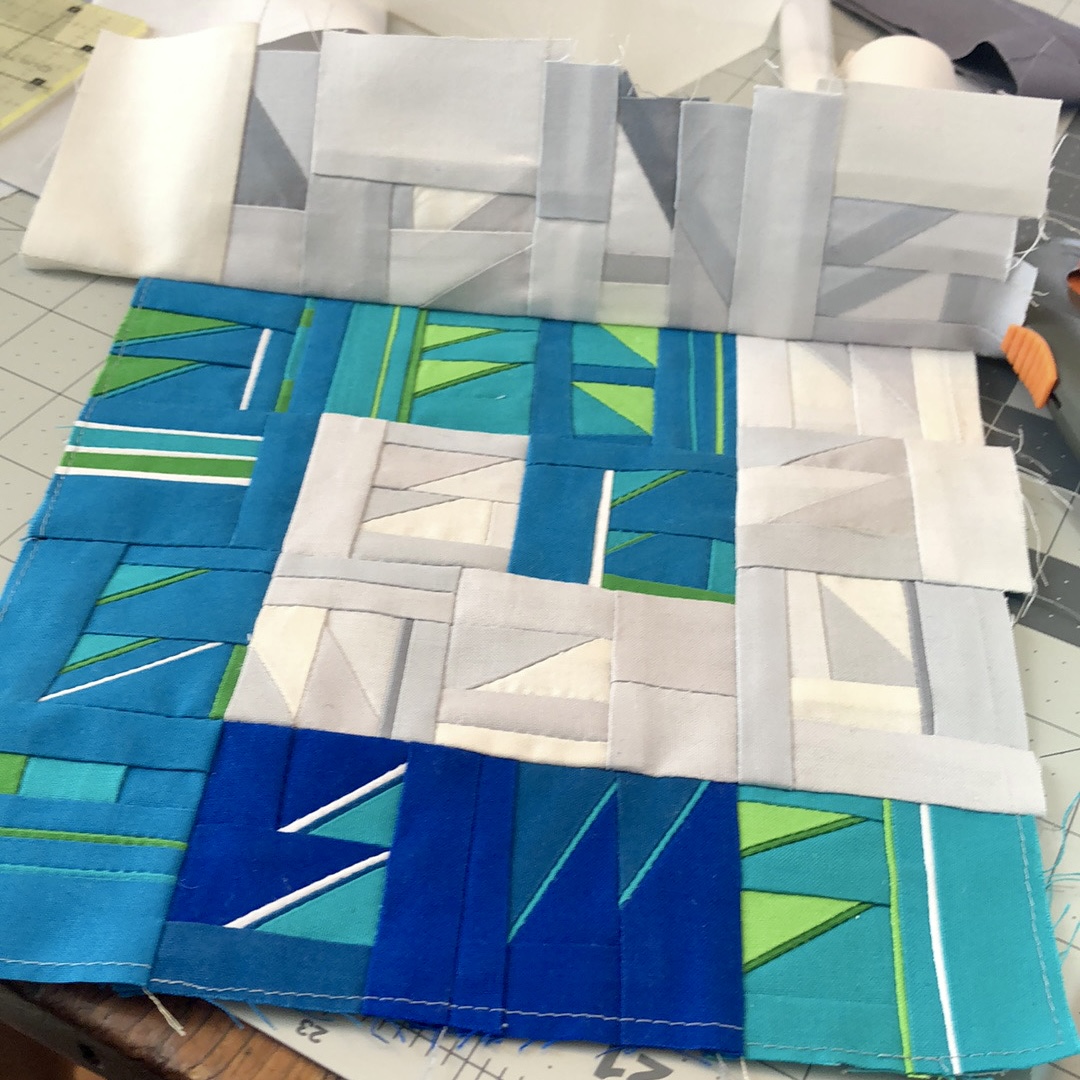
Since the coloured pieces are so intricately pieced, she did the same for the grey background “simply for fun and insanity.” She only quilted the background, finishing it in 2025, just in time for the National Juried Show.
What is Improv Quilting?
Improvisational (also known as improv) quilting takes a spontaneous, rule-free approach where the design evolves organically. Instead of relying on strict patterns or templates, creators make intuitive, real-time choices with fabric, wonky angles and unexpected colour variations.
Set Loose Guidelines: Use a few structural rules (such as two fabrics or one shape) to provide a framework.
Piece, Pause, Assess: Sew a few scraps together, then step back and look at your piece on a design wall. Let what you see dictate the next strip, curve or cut.
Trust Your Intuition: Let the fabric speak to you. Make freehand cuts and choose shapes that feel alive, rather than stressing over millimetre-perfect measurements or matching traditional points.
Embrace Imperfection: Intentionally make crooked lines, asymmetrical shapes and irregularities to give energy and unique character.
Square Up Edges: While cutting freehand is liberating, you will eventually need to bring back the ruler and rotary cutter so the blocks can fit together.