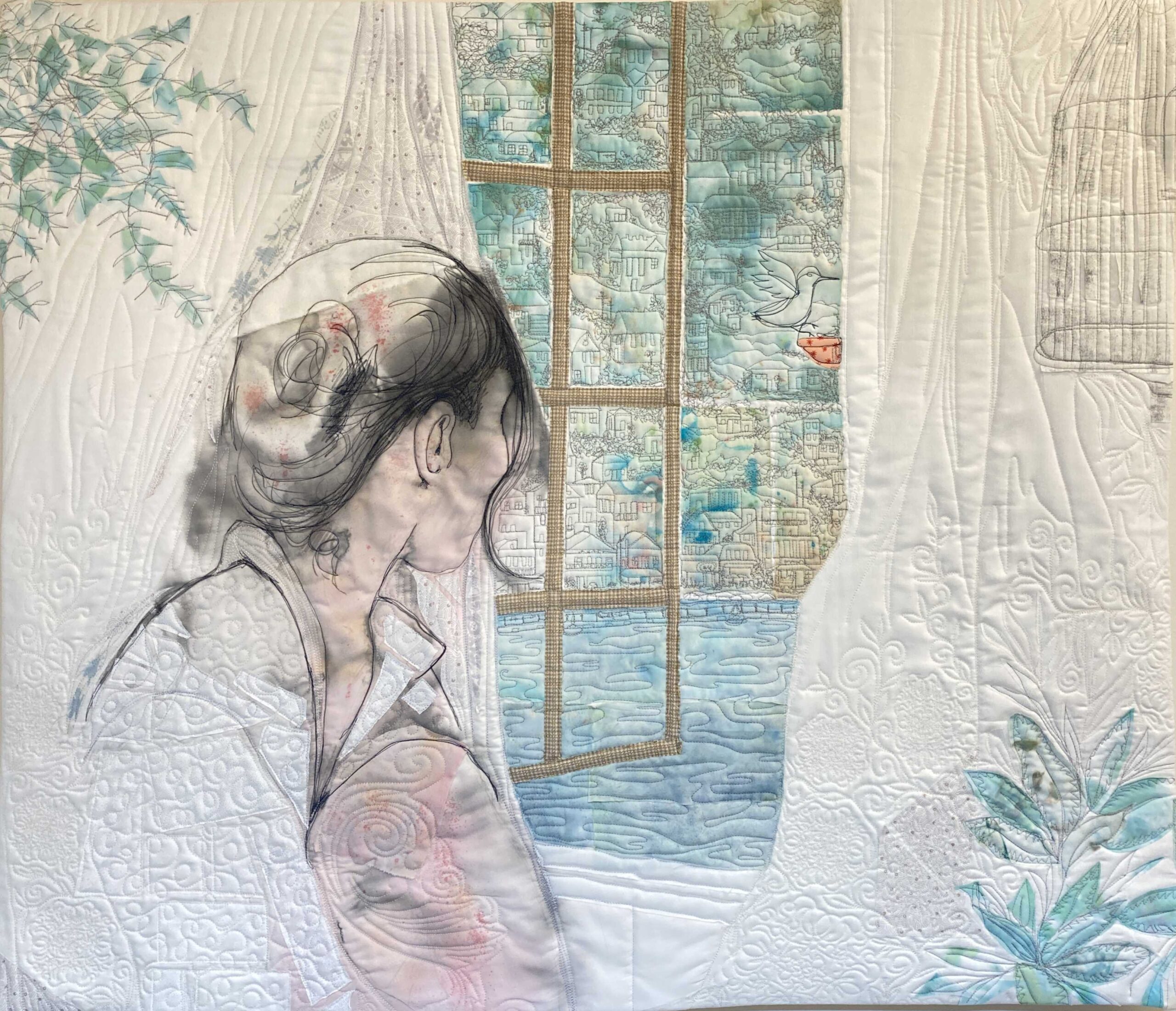
Rebekah Wilkinson earned the 2026 National Juried Show award for Excellence in 1st Time Exhibitor for “You Are Not Alone.” The piece showcased her skill at thread painting.
Every artist has a medium that feels like home. For me, that journey began decades ago in the Fine Arts program at the University of Guelph. There, I immersed myself in drawing, composition and creative exploration.
While my artistic foundation was built with traditional materials, I never imagined that one day I would discover a medium that allowed me to draw in an entirely different way—with thread.
That discovery changed everything.
When I first encountered a long arm quilting machine, I immediately recognized its artistic potential. Rather than simply stitching layers of fabric together, I saw an opportunity to use the machine as a drawing tool. The needle became my pencil, thread became my line and fabric became my canvas. From that moment on, I was captivated by the endless possibilities of thread painting and free-motion quilting as a form of fine art.
Today, every piece I create reflects years of experimentation, artistic curiosity and a desire to blend traditional fine art techniques with textile design.
Beginning with Fabric as a Blank Canvas
For this particular wall hanging, my creative process began long before I switched on the long arm machine. Every artwork starts with creating the fabric itself.
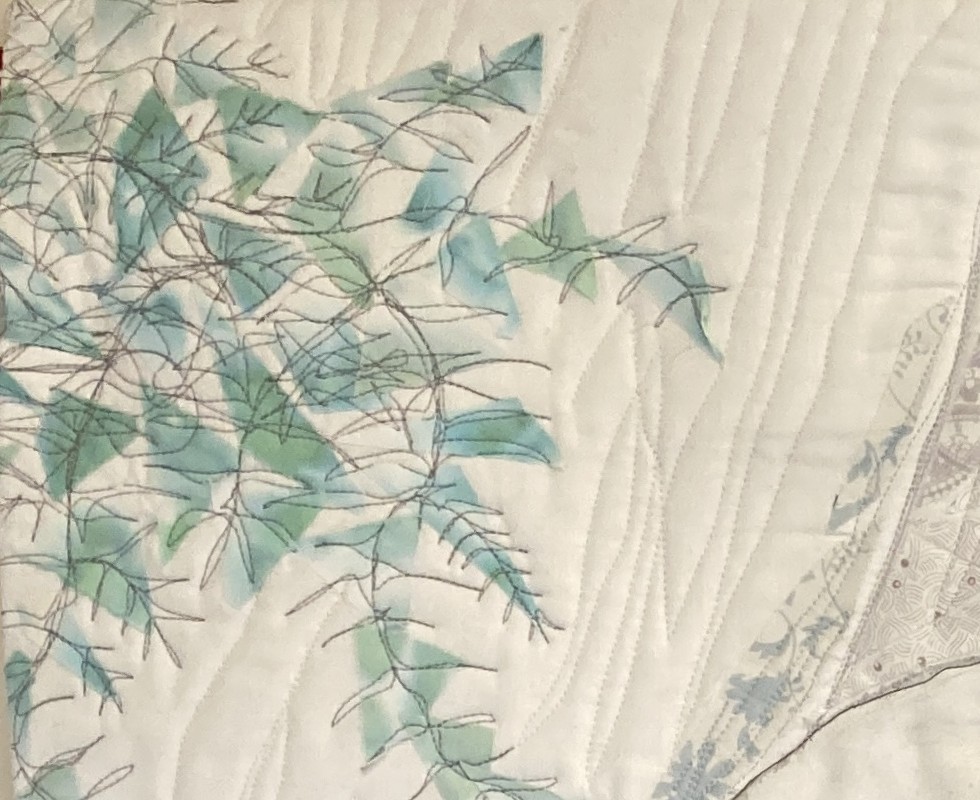
I selected small pieces of white cotton fabric and hand dyed them using fabric staining, a technique I have developed. Unlike traditional immersion dyeing, this process allows the colours to evolve naturally across the surface of the cloth.
The dye is gently dripped onto the white fabric before being lightly sprayed with water. As the water moves through the fibres, the colours begin to bloom, soften and merge into one another in unexpected ways. Every piece develops its own unique personality, making it impossible to recreate exactly.
Watching the colours spread is always one of my favourite parts of the process. I guide the colours, but I allow the fabric to have its own voice. This creates a wonderful balance between intention and spontaneity.
Once the fabric has completely dried, I carefully rinse it until the water runs perfectly clear. This removes the excess dye while leaving behind permanent, beautifully softened pastel shades. What begins as bold, saturated colour transforms into subtle layers of gentle tones that become the foundation for the artwork.
Bringing Figure Drawing to Fabric
As a graduate of a Fine Arts program, figure drawing remains an important part of my artistic practice. For years, I used charcoal as my preferred medium for its expressive quality and ability to capture movement, emotion and gesture with only a few marks.
However, no matter how carefully you preserve them, charcoal drawings remain vulnerable to smudging and damage over time.
I wanted to find a way to preserve that same expressive quality while creating something permanent.
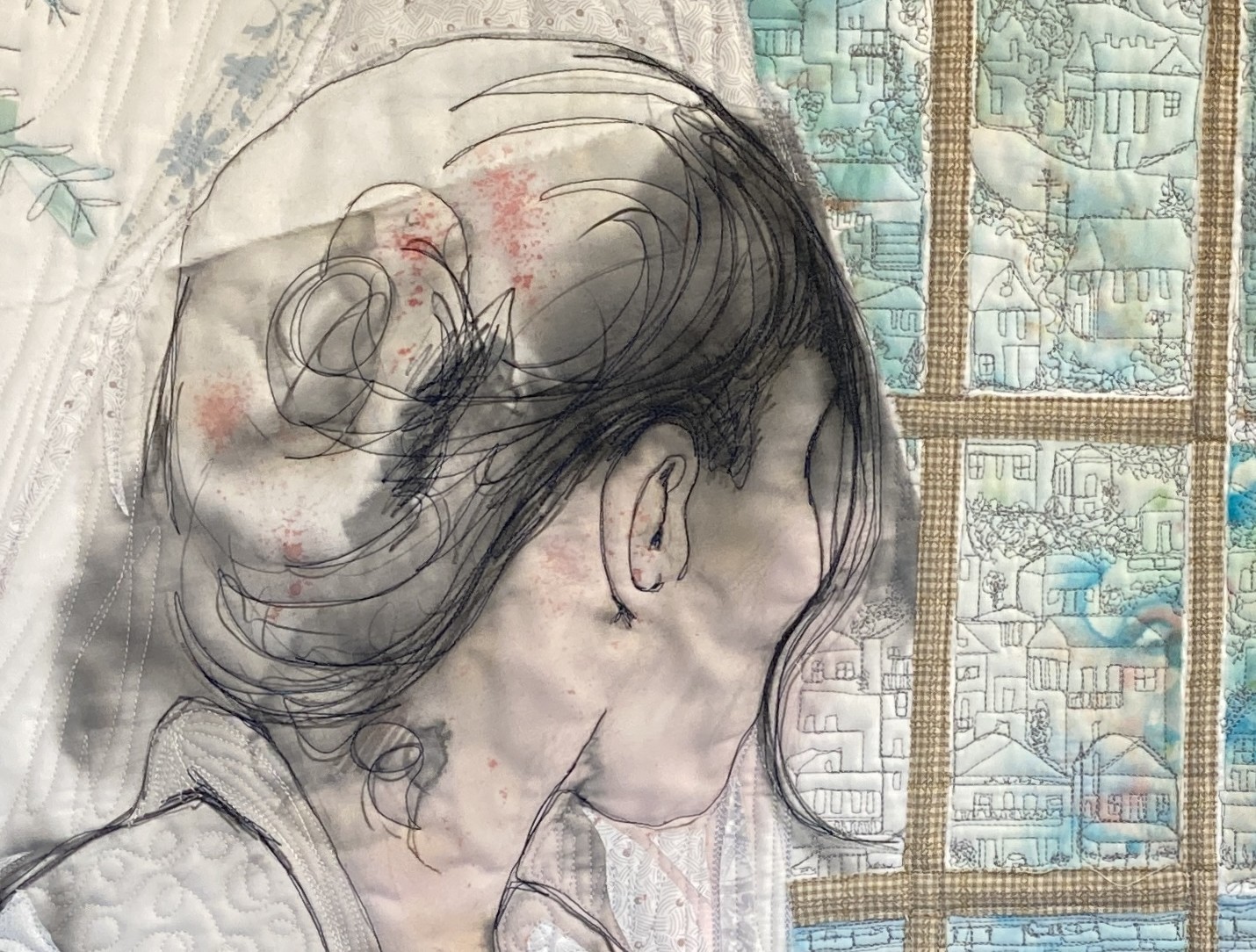
After years of experimentation, I developed my own method of translating the feeling of charcoal figure drawings onto fabric. My trials used fabric markers and black fabric dyes. Rather than copying every line exactly, I focus on capturing the energy and emotion that charcoal naturally conveys.
The resulting artwork feels spontaneous and hand drawn while benefiting from the durability of textile art. Unlike charcoal on paper, the dyed fabric becomes a lasting artwork designed to be enjoyed for decades.
For me, this process beautifully bridges my background in fine art with my passion for fibre art.
Letting Stitching Become the Drawing
Once the dyed fabrics and imagery are complete, the long arm machine becomes my drawing instrument.
Many people consider quilting as primarily joining layers together. Meanwhile, I have taken a quite different focus. I use the machine like an artist uses a pencil, creating movement, texture and depth through thousands of individual stitches.
For this piece, I intentionally chose a restrained colour palette.
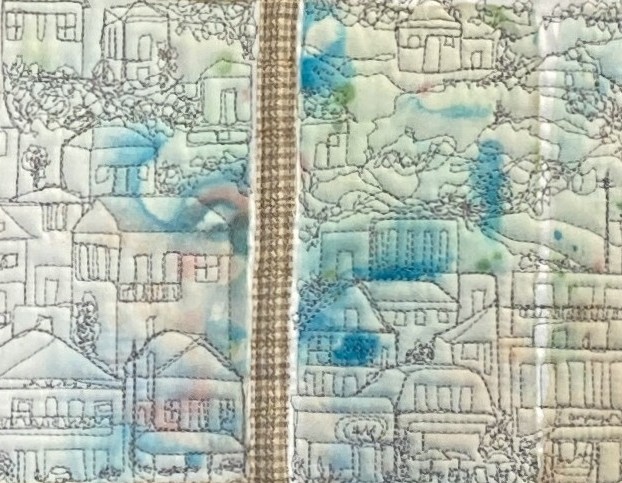
Soft whites and delicate pastel fabrics create a quiet visual atmosphere, allowing texture to become the true focal point. Most of the quilting used white thread stitched across white fabric, creating subtle patterns that reveal themselves only as light moves across the surface.
Areas of medium and dark grey thread selectively build contrast and emphasize particular forms without overwhelming the composition’s overall softness.
The beauty of thread painting lies in these layers. From a distance, viewers often notice the image first. As they move closer, they begin to discover the intricate stitching that gives the work its depth and life.
It invites slow looking—a quality that feels increasingly valuable in today’s fast-paced world.
Exploring the Story Within the Quilt
While technique is important, storytelling remains at the heart of all my artwork.
This quilt explores the emotional contrast between feeling confined and experiencing freedom.
Within the composition, the softly coloured houses intentionally draw the viewer’s eye beyond the window. Their gentle colours create a visual destination outside the immediate space, encouraging reflection on what lies beyond.
Windows have long served as symbols of possibility, hope, distance and longing. In this piece, they represent both physical and emotional boundaries.
The viewer is invited to consider their own interpretation. Does the figure feel trapped? Are the colourful houses a memory, a dream, or a future destination? Is freedom something external, or is it something we carry within ourselves?
Rather than providing definitive answers, I hope the artwork encourages quiet contemplation and personal connection.
Where Fine Art Meets Textile Art
One of the greatest joys of my creative practice comes from combining techniques from multiple artistic disciplines.
My education in fine art influences every decision—from composition and colour choices to line quality, texture and storytelling. At the same time, years of experimentation with dyeing, thread painting and long arm quilting have allowed me to develop a distinctive artistic voice. Ultimately, that blends traditional craftsmanship with contemporary fibre art.
Every finished piece represents many hours of planning, dyeing, drawing, stitching and refinement. More importantly, it reflects a lifelong passion for creating meaningful art. It invites viewers to slow down, look closely and discover something new each time they experience it.
Follow Rebekah’s Creative Journey
Creating textile art is an ongoing exploration and I love sharing both finished works and behind-the-scenes glimpses into my process.
If you’d like to learn more about my artwork, upcoming exhibitions, workshops and original textile creations, visit www.rebekahwilkinson.com.
You can also follow along on Instagram at https://www.instagram.com/rawedge_longarm. There, I regularly share works in progress, thread painting techniques, fabric dyeing experiments and the creative journey behind new pieces.
Art has always been about finding new ways to tell a story one stitch at a time, transforming thread, fabric and imagination into lasting works of textile art.