
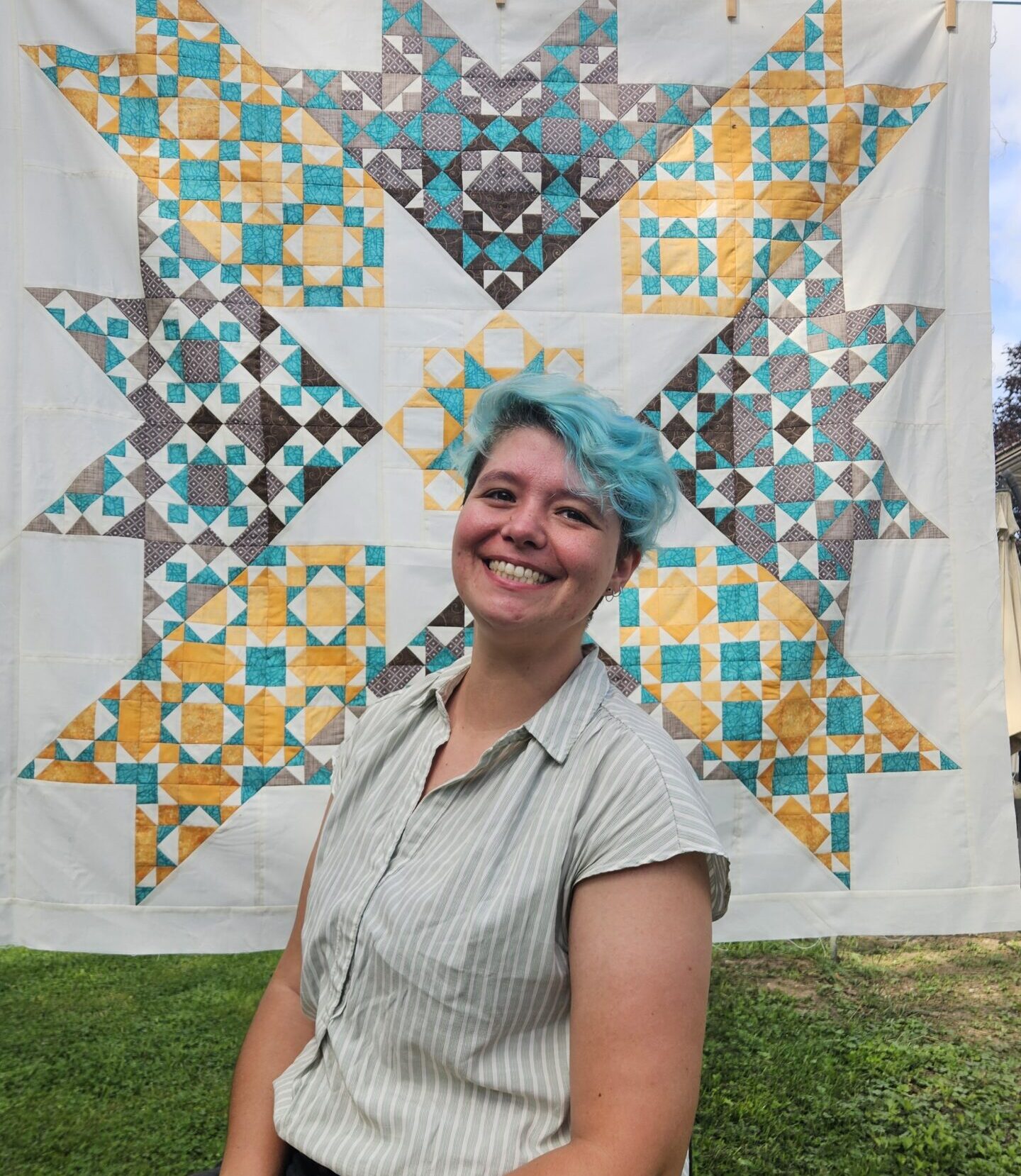
For two years, Valerie Anne sought a guild close to her new home in Central Ontario. Online searches turned up a Facebook page with no email address. Once she ferreted one out, it led to no response.
“You cannot expect anyone to pick up a phone and call a stranger, especially my generation,” she said. “I don’t know why we cannot do it, but we don’t.”
She asked at the local quilt store and even went to the advertised location for the guild – a funeral home – one afternoon and found the doors locked. It had changed sites – without updating its Facebook page.
Why was this process so hard? Because the network of guild members knew where to meet and how to stay in touch. They didn’t look at their operation from a newcomer’s perspective.
Ultimately, Valerie, 29, discovered an evening guild by accident and signed up.
A year later, she moved to a new community an hour away and started anew. This time, she found a guild 40 minutes from home and decided to try it for a year.
In the meantime, she still attends her grandmother Ruth Nott’s guild in Mississauga and her mother Diane Herrmann’s group in Orillia. After all, they provided the fabrics that got Valerie started sewing at age 6 and quilting by 15.
Welcoming Younger Quilters
“I get weird looks all the time,” she said due to their age. “It took three years for people in the Mississauga guild to realize I was a member, not my grandmother’s driver or the person who carries her bag. Others were excited to have younger members.”
Since she knows few quilters her age, Valerie set out to make friends with common interests. However, she discovered a world where she found out about nearby shows, new stores opening and other resources.
“It’s interesting to have a mix of larger and smaller guilds so I can meet people in different contexts,” Valerie said. “In a small guild, you get to know each other. With the larger ones, there’s more to learn.”

Sam’s story
Meanwhile, Sam Smedley, 28, found their place with the Maritime Modern Quilt Guild in Halifax, N.S. As a transgender man, Sam chose this guild since its members explicitly accept LGBTQ+ folks.
“I love, respect and celebrate the history and present-day of quilting as primarily a craft done by women, but I also don’t want to give up my identity to participate,” Sam stated. “There are a few male members and the folks there consistently put effort into using the right pronouns for me.”
All these small acts help create an environment to make Sam feel comfortable and welcomed, especially for someone not seen as a typical quilter.
“I love my guild and I’m so glad I took the risk to try it out,” Sam said.
Valerie suggests going to a meeting to see what works best for you.
“Most guilds are happy to have you come,” they said. “If you have a positive experience, go back as a guest or join as a member. Your opinion is the one that matters. If it feels wrong, you don’t have to go back. Try another one.”
* * *
After talking with several people who struggle to find a guild that “fits,” common themes emerged.
Timing
- Accommodating older drivers with day meetings – or skipping certain months due to winter weather or summer vacations — excludes sewists with day jobs.
- At least host workshops on weekends or weeknights to invite new participants.
- Have summer meetings for teachers who have more time after the school year.
Cost Factor
- Younger quilters likely have financial restraints. Quilting can be an expensive hobby, especially when starting out if you need to buy a machine and other supplies.
- Introduce a discount for members under 25 or 30 or make memberships more flexible if a person can only attend periodically.
- Advertise if your guild has a giveaway table or fabric swaps.
Awareness:
- Hang posters in fabric and craft stores.
- Leverage your local library with a quilting demonstration or posters there.
- Build a website, not just a Facebook page.
- Advertise meetings on community calendars hosted by local media.
- State explicitly that novices and newcomers are welcome.
- Use a guild-branded email that stays consistent rather than personal ones that change each year.
- Explain the benefits for joining, beyond access to meetings.
Meeting Structure
- Move past the perception that guilds are clubs.
- Create a wait list if the group has maxed out its space or refer people to another group.
- Consider the perception of incoming members who want to learn and offer resources so they stay. You cannot simply point people to quilt shops for lessons.
- Offer a special activity for first-time quilters once a year.
- Bring in inspiring speakers, not just those who volunteer.
- Add greeters to welcome new members and explain what to expect at meetings.
- Open workshops to non-members to pique their interest.
- Make ‘sew and tell’ and other demonstrations visible with a projector or handouts. Pass items around so people can see them. As one educator said, “Kindergarten students know how to do show and tell better.”
- Use a microphone so people can hear better.
Language Based on Presumptions
- Use words like ‘members’ and ‘everyone’ other than ‘ladies.’ Even for women, this word creates a social expectation to be demure or compliant. It also excludes male members.
- Reconsider a Christmas social when some people don’t celebrate that holiday.
- Sidebar:
Some guilds have seen their memberships surge as they adapt to the expectations of new generations. However, it takes a commitment by executive members to look at how each guild operates so they can deliver an experience that appeals to a broader number of people.
Hybrid, Virtual or In-Person Meetings
After experimenting with different formats over the past six years, these guilds share what engages their members best.
The Royal City Quilters Guild in Guelph, Ont.
Most of our events are offered virtually, with members across Canada and several in the United States. We also hold six in-person events per year, which we call Mingles.
Zoom works extremely well for lectures, trunk shows, meetings and bringing members together regardless of geography. Our Mingles give us something complementary: opportunities to learn from one another informally, work with our hands, contribute to outreach, share materials and ideas, access practical resources and simply spend time together.
For example, we used Moda’s Sew A Jelly Roll Day campaign as a theme played quilt bingo using 25-patch blocks for our community outreach programs. We also set up one or two quilt racks so members can photograph their larger quilts.
Last year, we had 225 members from Ontario and five other provinces: British Columbia, Manitoba, Saskatchewan and Alberta.
- Becky Fiedler
York Heritage Quilters Guild, north of Toronto, Ont.
Impressed by Royal City, in 2020, we went exclusively online and added extra content, which continues: a monthly casual meeting and two weekly online Community Quilting (outreach) meetings to sit and sew.
Of three in-person CQ sessions, two run simultaneously with the online sessions.
We went hybrid in 2021. We provide in-person bonus activities, plus discount codes from vendors or presenters to all. We skip December and go exclusively online from January to March due to unpredictable weather.
One of the best outcomes has been the International Quilting Day online shindig co-hosted by three guilds: Royal City, Waterloo and York Heritage. We also meet online in June with the Toronto Modern Guild, hiring a speaker neither guild could afford alone.
Overall, online meetings (fully or hybrid) allow us to reach more people. We have more than 200 members from across Canada and the United States.
- Chriss Coleman