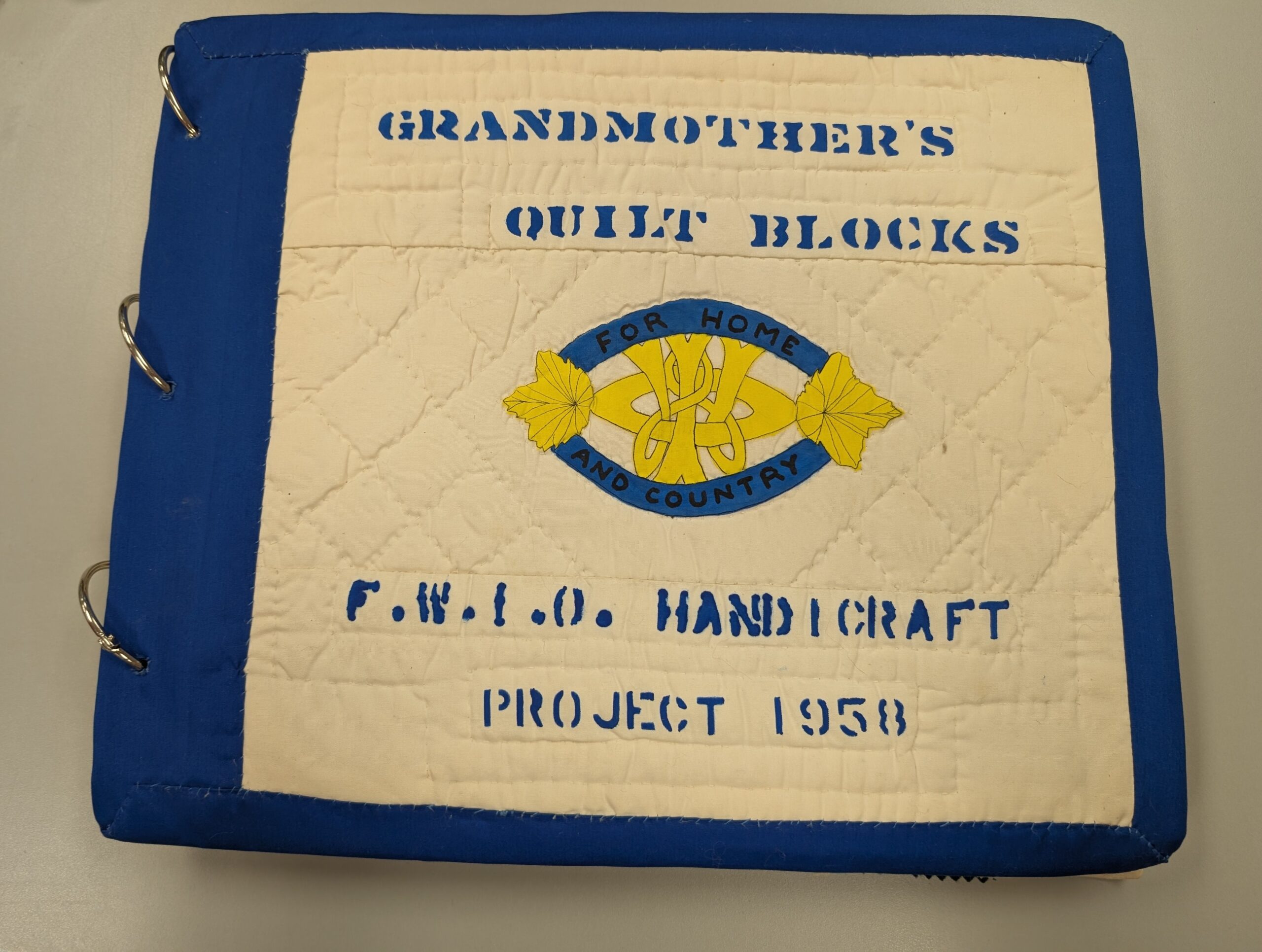
In 2019, I was wandering around the Bruce Mines Museum (about 40 minutes east of Sault Ste. Marie, Ont.) when something caught my eye – quilt blocks and descriptions bound in a hand-made book.
Neat! It was made by the local Women’s Institute (WI). Even the front and back covers were quilted.
Four years later, while researching the Quilt For Canada (see the Autumn 2023 edition), I found more blocks by the Women’s Institute. What is the WI and is it still around? Yes, apparently! It still has chapters across Canada.
The Women’s Institution was formed in 1897 by Adelaide Hunter Hoodless, of Hamilton, Ont., after her 14-month-old son John Harold died due to impure milk. She hadn’t known about bottle sterilization and blamed herself for his death in 1889.
According to Wikipedia, Adelaide grew up the youngest child on a farm near St. George, Ont. Her father David died a few months after her birth on Oct. 13, 1858, leaving his widow, Jane, to care for the farm and 12 children.
“Perhaps the hard work and isolation of her youth inspired Hoodless to take up the cause of domestic reform years later,” it states.
Adelaide committed herself to the betterment of education for new mothers. She started and taught domestic science classes (home economics) focusing on hygiene, cleanliness and frugality.
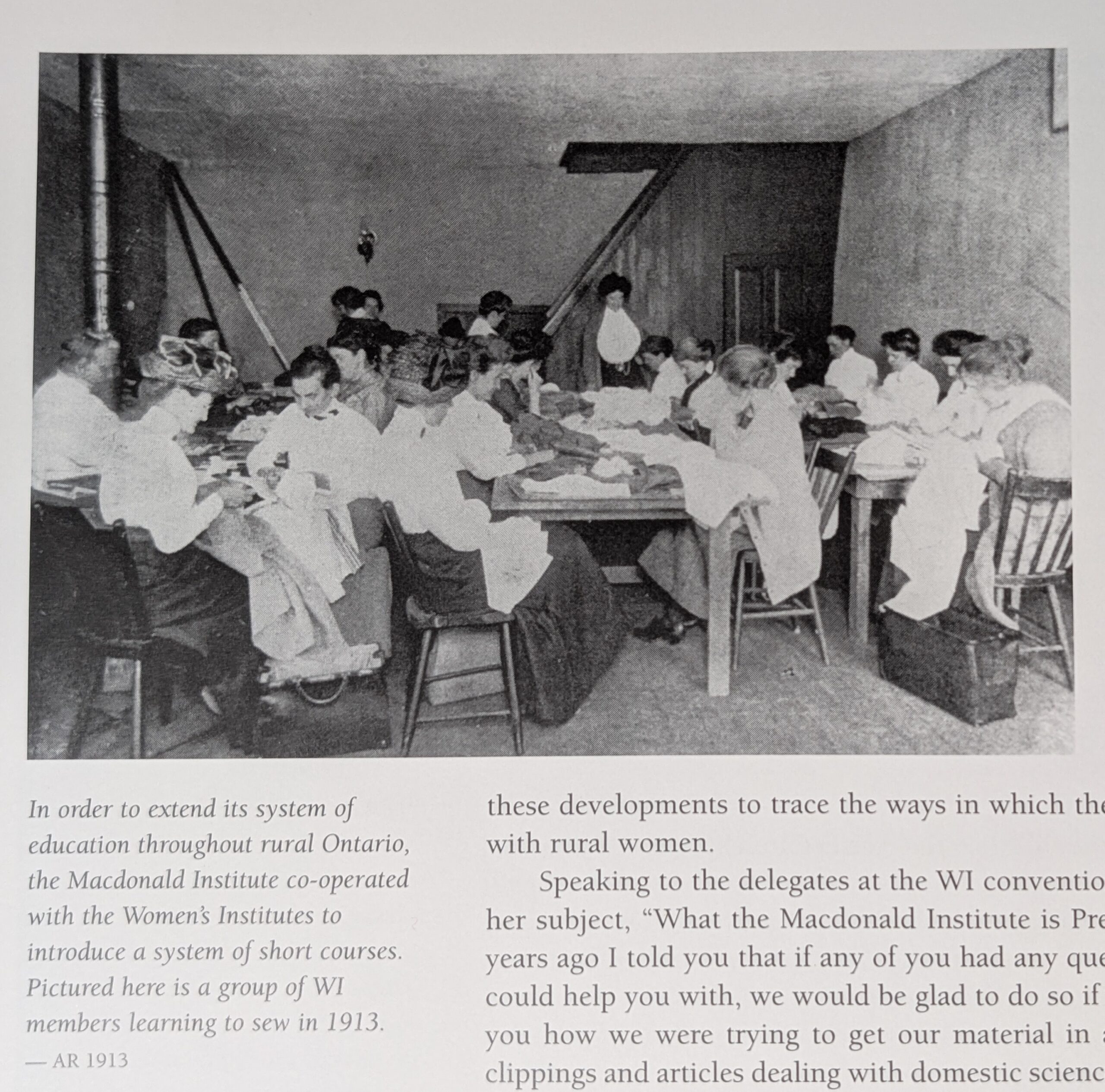
The book For Home and Country: The Centennial History of the Women’s Institutes in Ontario by Linda M. Ambrose preserved this images from a class in 1913.
The beginning of a movement
After addressing the Farmer’s Institute Ladies Night meeting, on Feb 12, 1897, she suggested forming a group for women to socialize and to learn more about domestic science and agriculture.
“A nation cannot rise above the level of its homes, therefore, we women must work and study together to raise our homes to the highest possible level,” she stated. (Fifty Years of Achievement by Annie Walker, Edith M. Collins and M. McIntyre Hood, 1948, page 4.)
Adelaide became honourary president of the first branch of the Women’s Institute. After the first year, the Farmer’s Institute recommended a branch of the Women’s Institute in every community across Canada. Within a decade, Canada had more than 500 of them.
“The object of Women’s Institute shall be the dissemination of knowledge relating to domestic economy, including household architecture, with special attention to home sanitation, a better understanding of the economic and hygienic value of foods, clothing and fuel and a more scientific care and training of children with a view to raising the general standard of the health and morals of our people.”
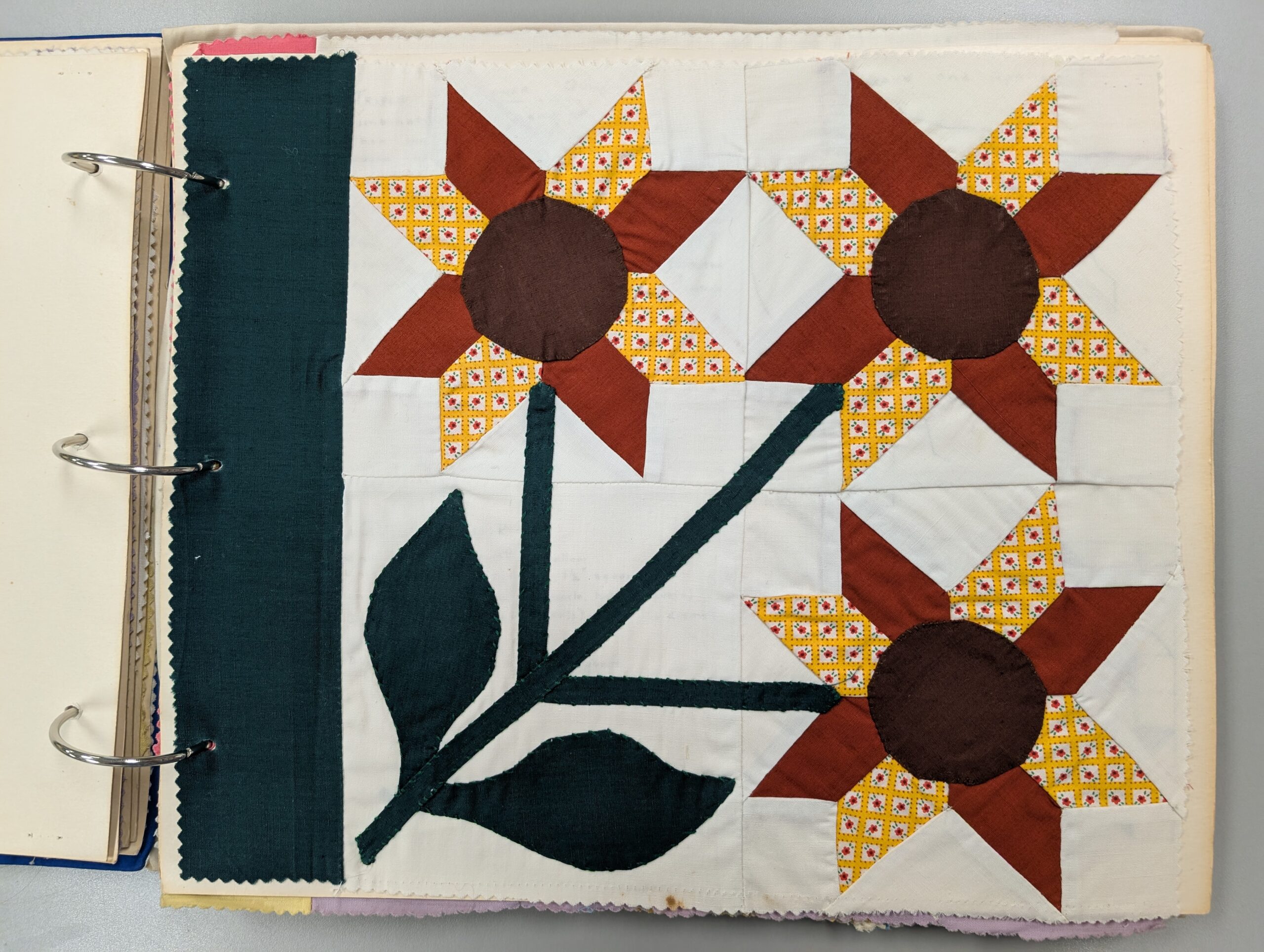
Back to those quilt blocks. After a look around the Bruce Mines Museum this past summer, we could not find the book I saw in 2019. The volunteer staff helped me poke around all possible locations but it did not turn up.
Mystery solved
As it happens, I quilt with members of the Prince Township WI near Sault Ste. Marie. Sandy Marshall and Jane Darlow both remember seeing something like that in their archives. So, we dug in there. Jackpot!
They gave me permission to photograph the entire album and even loaned books about the WI. They suspected that each chapter was written to create a book of 20 example blocks with instructions on how to create, piece and quilt them into full bedcovers.
Instructors were also engaged to interact with women all over to teach classes on a variety of topics. A couple of photos shown here arise from one of these books. You never know where you’ll find quilting resources!
For more information on the Women’s Institute, go to https://fwio.on.ca. You can also read For Home and Country: The Centennial History of the Women’s Institutes in Ontario by Linda M. Ambrose, A Great Rural Sisterhood by Linda M. Ambrose and Township of Prince 1897-1997 A Royal Experience.