

After seeing each winners’ work at Quilt Canada 2025, we asked how they take a quilt from good to great. In this case, Joan Maguire of Sarnia, Ontario, Audubon Christmas, which topped the category for wall quilts arising from patterns. She shares her quilt techniques for success.
When I began this quilt, I never imagined it would win first place in its category. It still amazes me. What started as a personal project to practice quilt techniques reminded me that quilting is always a journey, full of growth and surprises.
I’ve been sewing most of my life, but quilting became my passion about 25 years ago. In the spring of 2004, I took a hand appliqué course at a local quilt shop. What a wonderful way to begin. I learned the needle-turn method.
We traced patterns onto freezer paper, transferred them to fabric, and cut them out with a ¼-inch seam allowance. Next, each piece was then stitched to the background individually.
From that moment, I fell in love with hand stitching. I still use silk thread and a small needle, my favorite combination for creating tiny, neat stitches. My go-to thread is YLI silk, which blends beautifully into fabric.
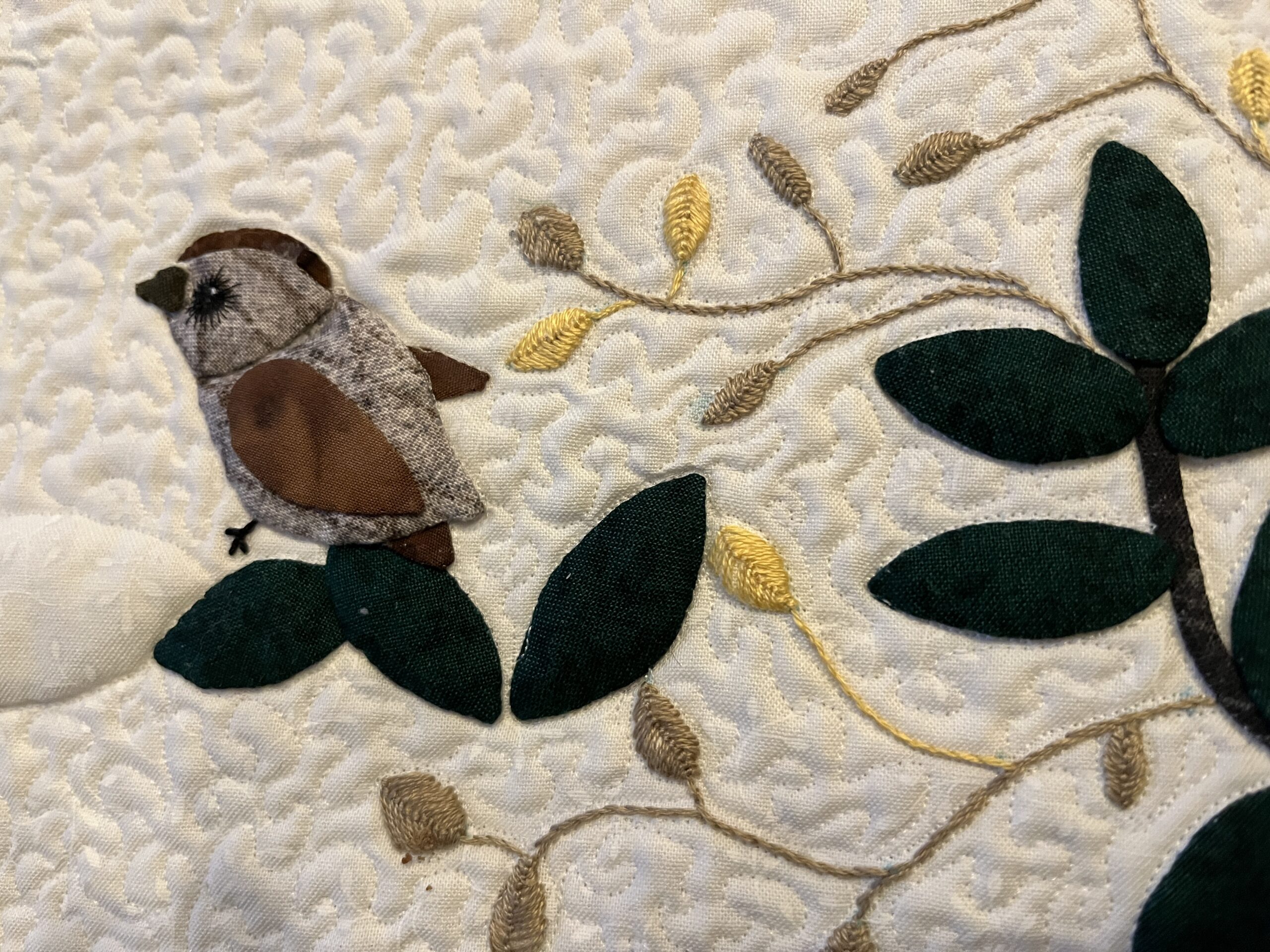
A tip I swear by: always match your thread colour to the appliqué piece itself, not the background. Today, I use Bohin betweens with large eyes, which make the process easier while keeping stitches fine.
Changing quilt techniques
In 2020, I discovered Appliquick, a method for turned-edge appliqué. This quilt technique involves tracing each piece onto a fusible stabilizer, pressing it to fabric and trimming with a ¼-inch seam allowance. With Appliquick tools and a glue pen, I turn under the seam allowance before assembling units—such as entire birds—before adding them to the background.
I first encountered this approach through designer Kathy McNeil’s pattern and I was hooked. It makes creating small, detailed units both easier and more enjoyable.
For this quilt, I tried ghost quilting for the first time—outlining elements like tree branches and blades of grass. It added subtle depth and texture, making the quilt feel alive.
To personalize it, I quilted in holly leaves and ivy vines, a nod to my dogs, Holly and Ivy. I also used the quilt-as-you-go method, quilting blocks individually before joining them. My ¾-inch sashings ended up as ¼-inch, which was tricky but worked beautifully with the quilt’s scale.
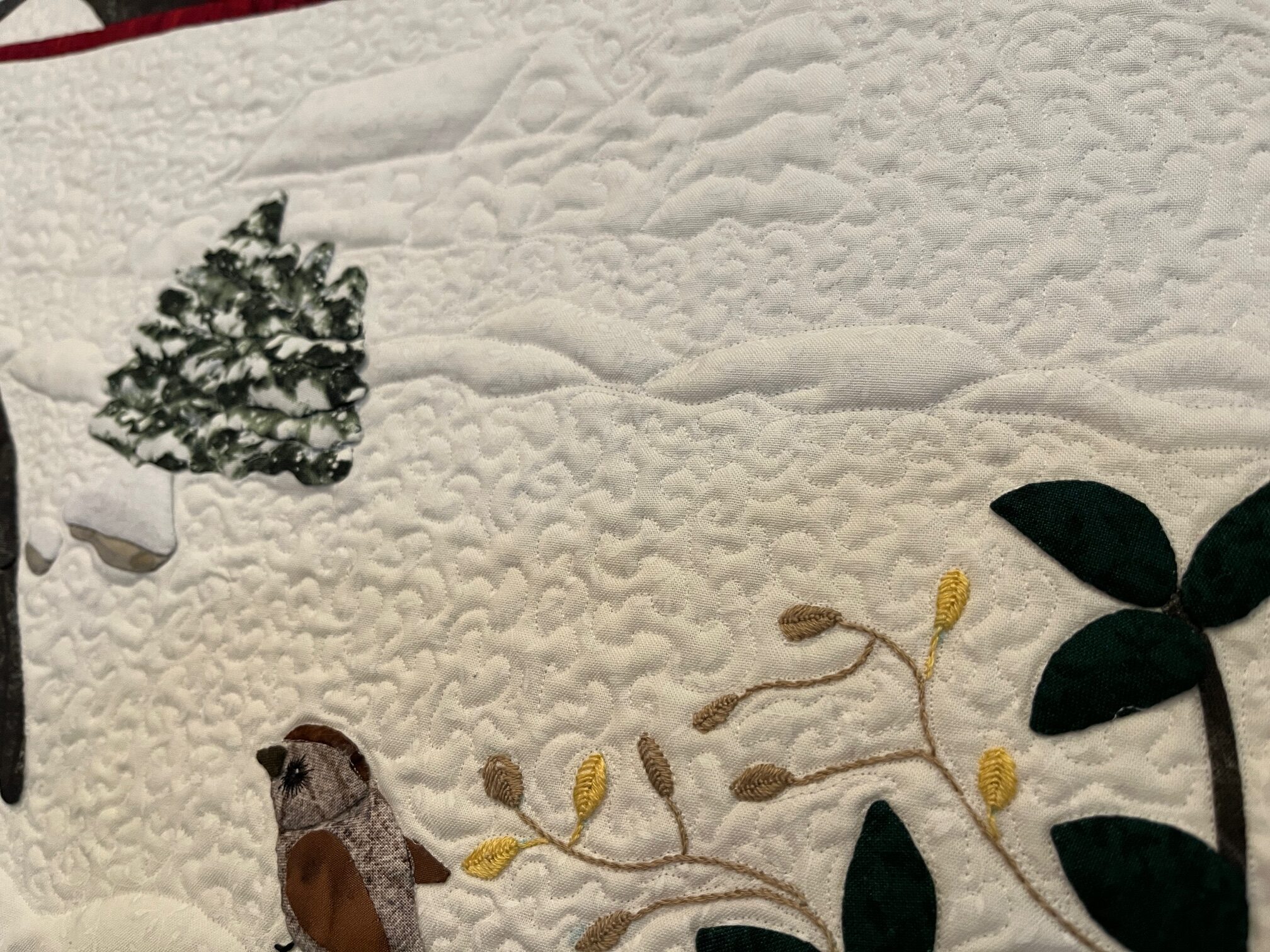
In the end, this quilt received recognition I never expected. Honestly, I would not have entered it in a show without encouragement from my friends. That experience taught me something important: never underestimate your work.
What feels ordinary to you might be extraordinary to others. Every stitch tells part of your story. Sometimes, the quilts you least expect turn out to be your most rewarding achievements.
Details about Audubon Christmas
Dimensions: 43.5” x 49”
When I saw this completed quilt at a show in Michigan, I knew I just had to do it. I love to hand appliqué so I enjoyed every moment. This is the first time I tried micro quilting, using a quilt-as-you-go quilt technique.
Techniques and materials: Hand appliqué, free motion embroidery, painting, hand embroidery; cotton fabric, wool batting, embroidery thread
Quilting: Machine quilting frameless
Credits: Commercial pattern by Kathy McNeil