
Good quilting tools make all the difference when you’re creating, especially when trying a new technique or learning your way. Mastering the basics in the early days, in particular, often determines whether a beginner continues with quilting or not.
As the appetite grows for goods with a Canadian thumbprint, we feature three companies who supply quilt shops. What makes them unique? Their desire to elevate quilters by educating them while keeping as many dollars as possible in Canada.
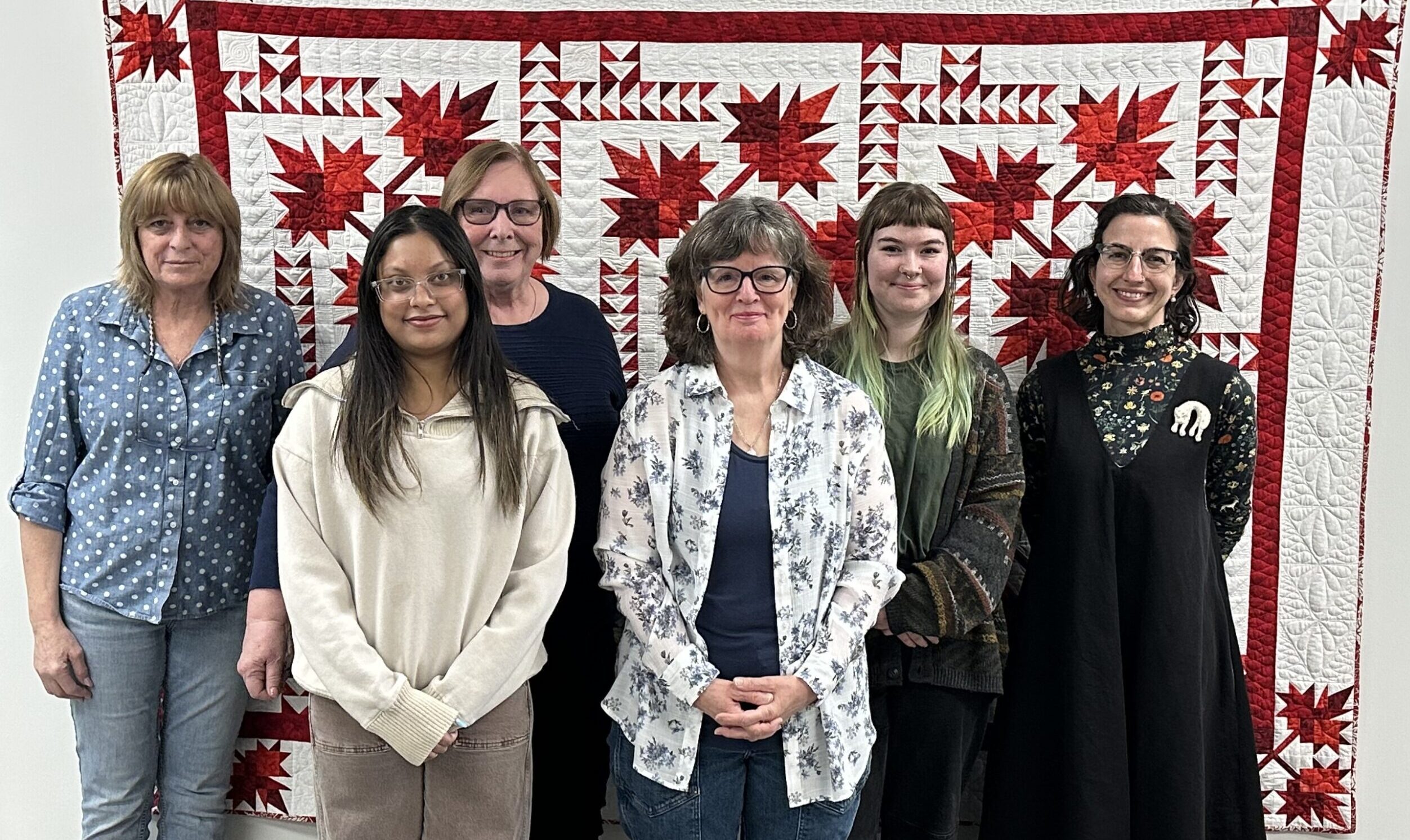
“Quilting is our passion and it is our goal to make the time our customers spend quilting enjoyable and fun,” said Gail Heller of Erie Quilt Art. “Therefore, we choose products that are innovative, have a strong artistic flare and simplify the process. That way, we can all do even more of what we love!”
While not many products are made here, distributors like her employ Canadians and support Canadian businesses.
“While we’re 10 percent of the population of the United States, we only have about four percent of the size of the U.S. quilting market,” Gail added.
Yet, she and others remain dedicated to keeping quilt-related businesses vibrant.

Ruling the Roost
After working as an intensive-care nurse and a medical industry consultant, Gail Heller craved a more enjoyable job. When she returned to her quilting hobby, she found herself representing four fabric lines.
Then she went to the Quilt Market and discovered products she had never seen in Canada. Soon, she found herself supplying a variety of items to quilt shops.
“One thing led to another and it kept growing,” Gail said.
As a Canadian distributor, she carries top-quality threads, patterns, tools, notions and more, adding more product lines every season. She supplies virtually every shop in the nation.
When she decided to move from the shore of Lake Erie to Calgary in 2014, she focused on widening her network. Since then, the business grows by 20 to 25 percent each year, requiring eight full-time employees and a part-time one.
Her menus include a filter for Canadian products and she counts on her shop owner clientele to suggest new ones.

For years, Gail had sought out better rulers. Clear ones would get lost on fabric while others had thick lines that made it hard to get accurate cuts.
She met a manufacturer who offered rulers with fine lines and a non-slip coating that endures. Even better, they come in seafoam green which matches Erie Art Quilt’s logo. All 20 sizes get cut and printed in the United States but packaged and labeled in Canada.
“It’s the most Canadian ruler there is,” Gail asserted.
If she could find a manufacturer to laser cut, UV print and spray coat them, she would make them here. But wait, there’s another bonus.
“We discovered with the move to by Canadian, people were using European patterns,” Gail noted. That called for rulers with centimetres too, which she provides.
Lessons pay off
In 1962 Bert Reich and his wife Lilly set out to buy a sewing machine to make clothes for their family. After reviewing a few different models, they brought home a low-end machine complete with a nice cabinet. Without any training, Lilly struggled for a full year.
Next time around, Lilly took lessons beforehand, which boosted her competency and comfort level, so she really embraced sewing.
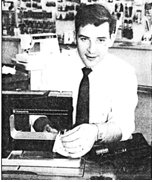
The Elna sewing representative also taught Bert and signed him up to sell them door to door. By 1984, Bert had a sales display in the Fabricland store in West Edmonton Mall, which became Central Sewing Machines. Within six months, he and his son Randy (seen above) opened a second location as they sold more Elna and White sewing machines than any other dealer in Canada.
All along, Bert credited their success to free ‘get to know your machine’ sewing lessons.
When their lease ran out, Bert and Randy opened their own storefront, then a second one. In 1989, Randy and his wife Mona took over the business with Bert’s assistance.
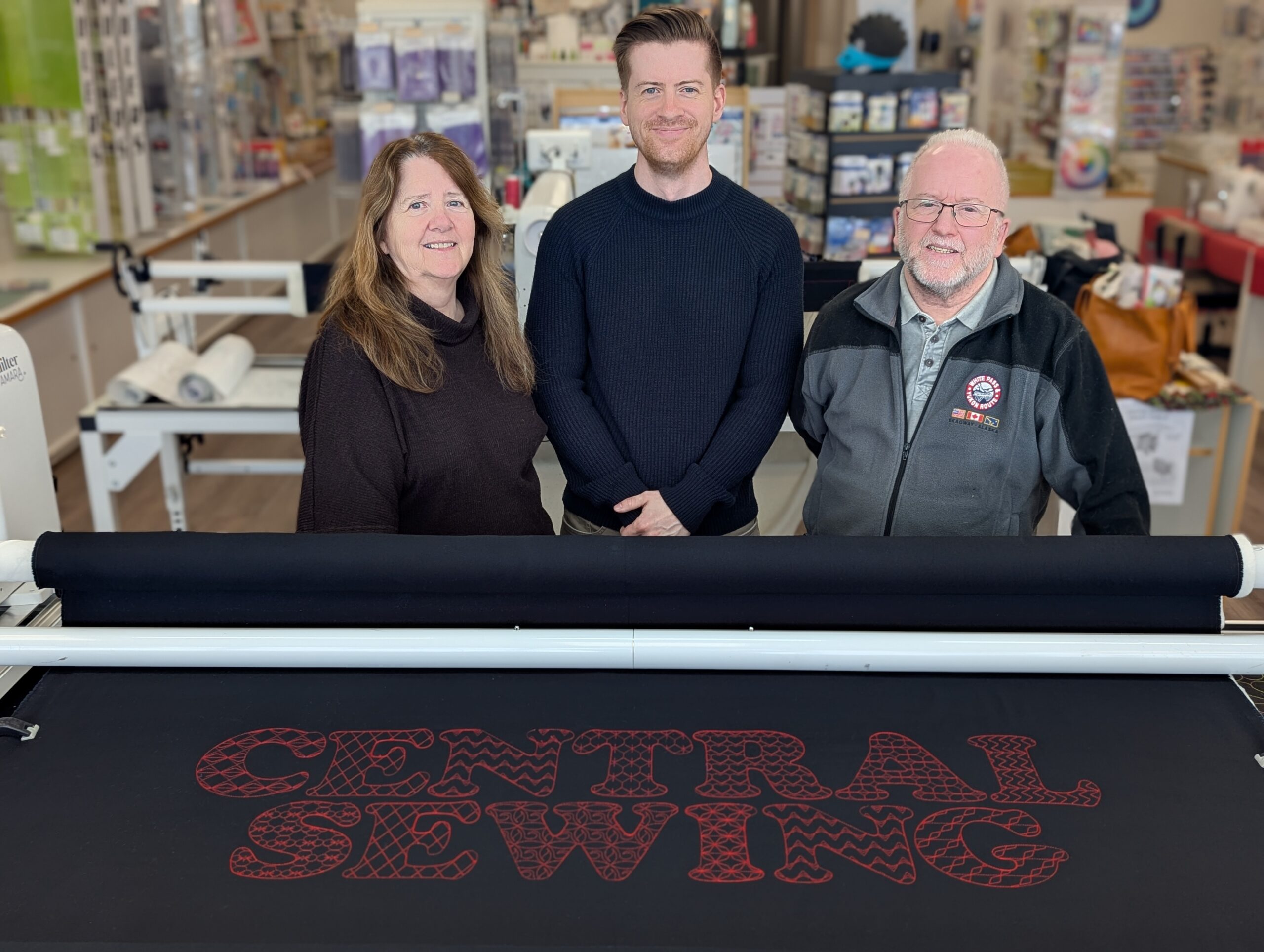
Muriel Jensen plans for her son Kris to take over Central Sewing, which she runs with her brother Keith MacMillan. Like the store’s founder, they offer free lessons with all machine sales.
New owners keep a learning tradition
In 2016, siblings – and customers – Muriel Jensen and Keith MacMillan bought the business and have continued that tradition.
Central Sewing differs from most quilt shops as it focuses mainly on “matching customers to the right machine that you will grow into,” Muriel said. She and Keith encourage people to consider features over price.
In particular, she lists better lighting for aging eyes, automatic needle threaders and larger throats for bigger projects.
“At first, I thought quilting was a dying art,” Muriel recalled. “The more we looked into it, we realized it’s a huge industry.”
A decade later, Central Sewing Machines remains one of the largest store of its kind in Canada. It operates a store with 25 staff in Edmonton and seven more at The Sewing Machine Store in Saskatoon.
“The customers are amazing. I love them,” Muriel said. “They come in and celebrate their passions. Ninety-nine percent of it is joy.”
The stores host volunteer sewing groups: one for the Zebra Child and Youth Advocacy Centre and one that serves 10 additional charities. They also have a bank of 30-plus teachers and service every model they sell.
“If you can get customers to come back in, it builds loyalty,” Muriel said. “It creates a relationship…I like to think Central Sewing is someone’s happy place.”
Her son Kris plans to take over the business in 5 to 10 years while her daughter Kaitlyn does graphics. Meanwhile, her niece and nephew also work there.
“It’s truly a family enterprise and we want to continue that.”
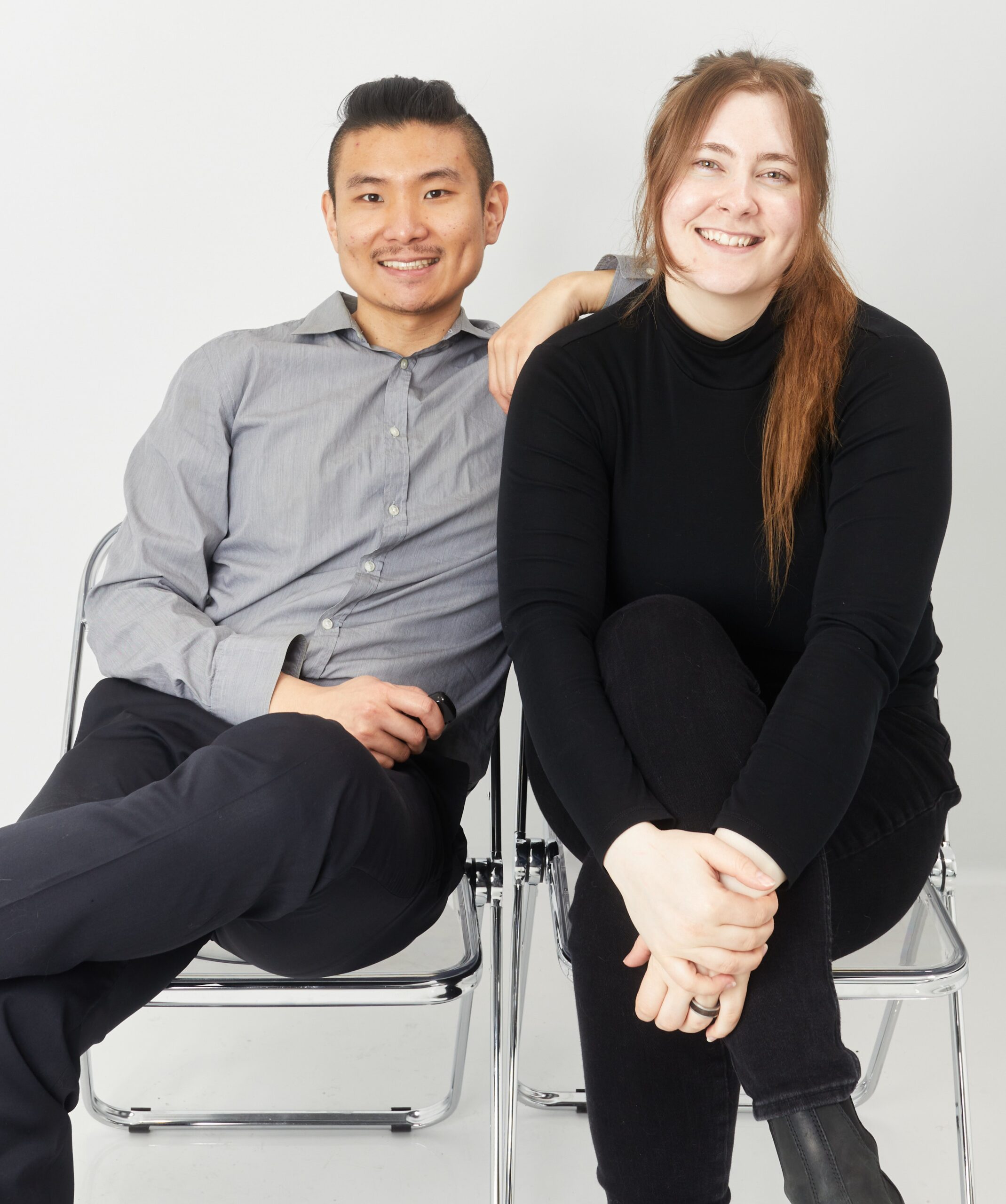
Roy Zhao expanded his family’s business, LDH Scissors, to Mississauga, running it with his wife Ursula McClintock. As a lefty, he understands how frustrating
right-handed scissors can feel in a hand they don’t fit.
A Cut Above
In 1990, LDH Scissors began in Shenzhen, just outside of Hong Kong, by a young couple with a simple mission: to create better sewing scissors. Driven by love, dedication and happiness, the first three letters of those words formed the business’s name.
When their son Roy Zhao studied at the University of Toronto, he fell in love with Canadian Ursula McClintock. In 2018, the couple opened a branch in Toronto, while still in their 20s, also selling scissors, thread snips and rotary cutters.
“We’re proud to remain a family-owned, female-led business,” Ursula said, referring to her mother-in-law.
Good scissors allow creators to work with ease so they can enjoy the process, she added. “When you’re crafting, you want to have fun. There’s a huge appetite for good quality things. There’s also a huge information gap with these tools.”
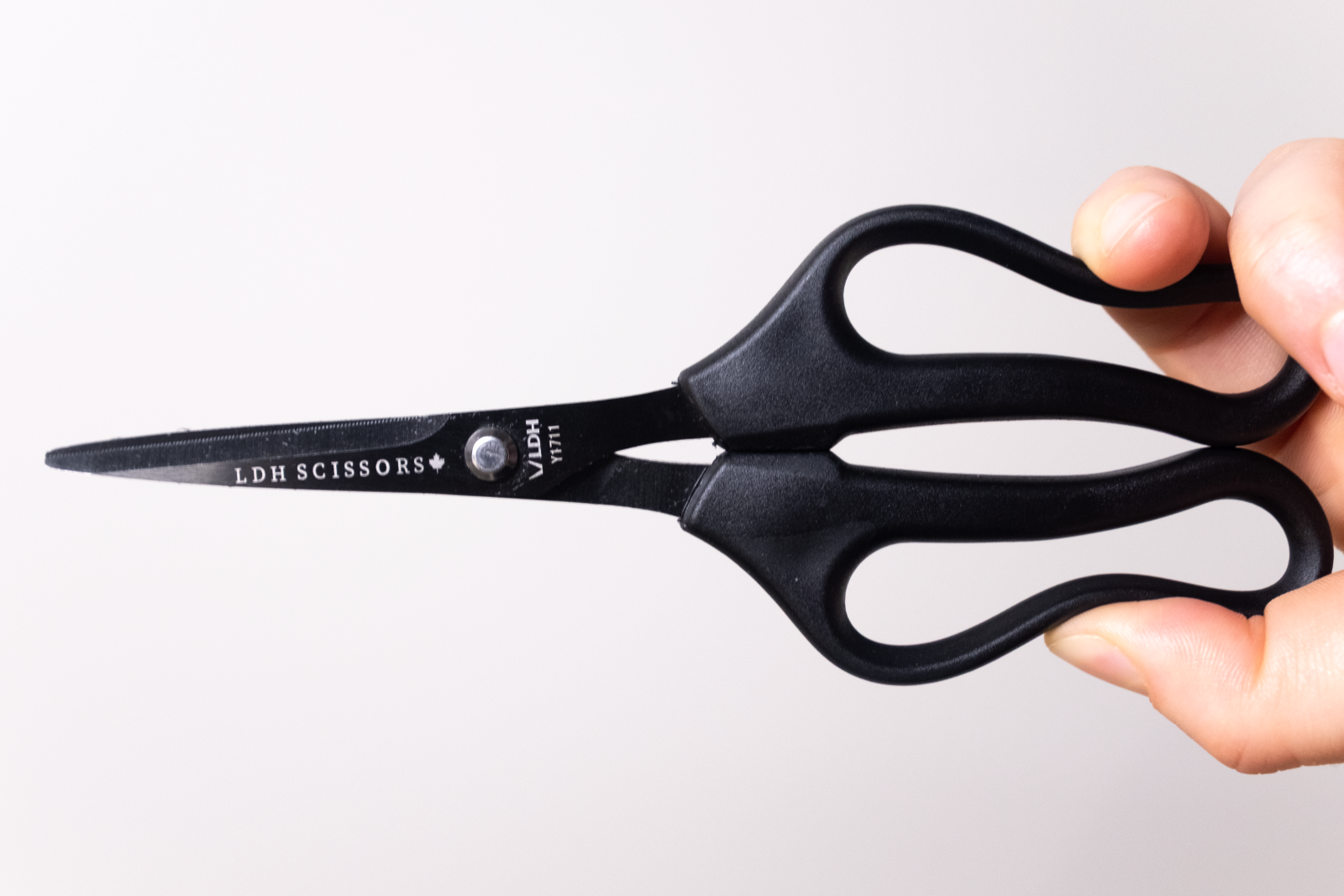
Good news for lefites
For example, LDH’s for left-handed scissors switch the blades not just change the handles like other manufacturers. Since Roy and the artisans working on these model are also lefties, they test them to make sure they work.
However, other lefties who have adapted to right-handed tools need to learn how to cut straight. It takes training to rewire that brain-hand connection, Ursula added.
“It blows people’s minds,” Ursula said about demonstrating these cutting tools at Quilt Canada.
LDH also offers handles that angle to ‘hug’ your hand. That’s why LDH staff encourage people to try them before buying – with three key questions in mind:
- How does it fit your budget?
- How does it fit your hand?
- How does it make you feel?
Ursula and LDH’s staff of five also educate sewists on how to store and care for their scissors so they last. While at shows, they also ask how to tweak their products and packaging to better serve quilters, weavers, sewists and knitters.
“We want to uplift our Canadian crafters. Sometimes, the Canadian industry can be overshadowed but it’s good to keep our money at home.”