
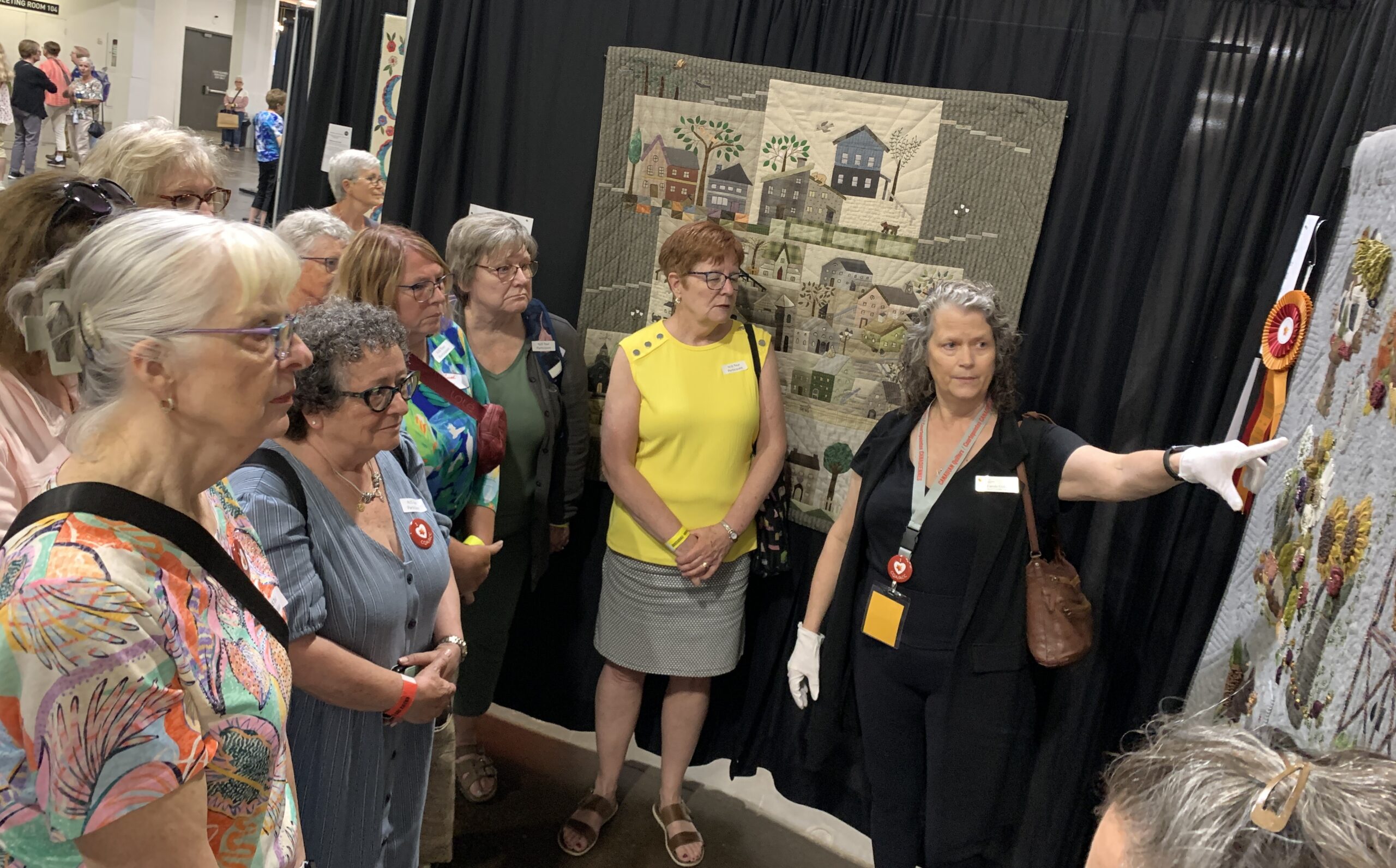
As she pores over a quilt’s detail, Certified Quilt Judge Carole Gold views herself as a kind teacher preparing to provide knowledgeable feedback to artists about their work.
“A show entrant should feel encouraged and thoughtful when learning what a judge has to say,” she said. “At the end of the day, they should be heard saying, ‘I learned so much!’”
Becoming a certified quilt judge requires years of dedication and hard work, added this instructor for the national Quilt Judge Certification Program. The process involves gaining expertise and experience through intensive training, self-guided learning and apprenticeship.
Learning doesn’t end with certification since continuing education is expected. Further, judges are bound by a professional Code of Ethics that never expires.
How do they objectively evaluate artistic works that are so different? Each time, technical standards and design principles underpin a judge’s opinions, according to Carole. There is no “I like” in judging. There is only, “this works”, or “this doesn’t work.”
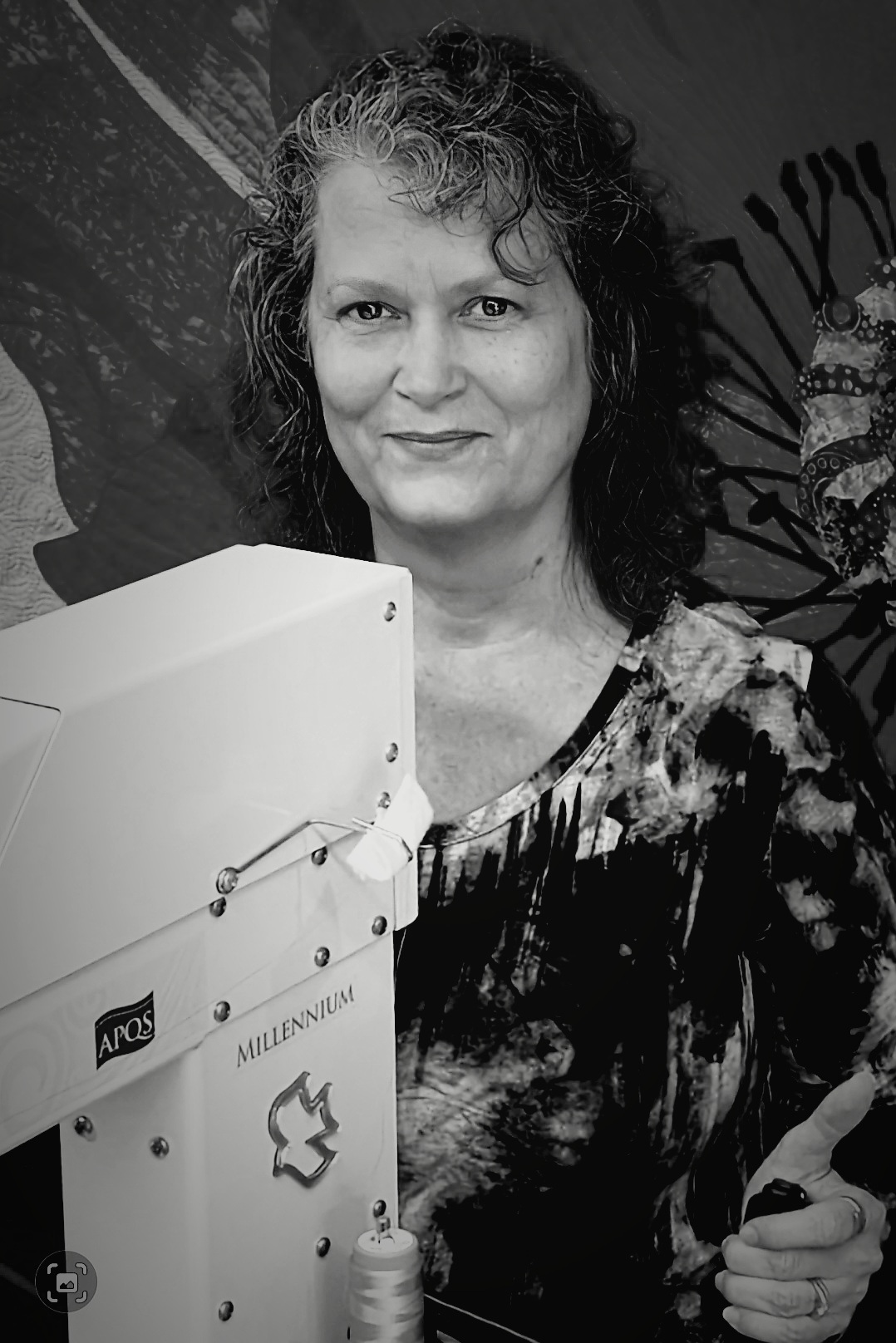
Technical standards
How do they objectively evaluate artistic works that are so different? Each time, technical standards and design principles underpin a judge’s opinions, according to Carole.
It’s important for us to remember that Technical standards and design principles underpin a judge’s opinions.
Design principles are simply guidelines developed over time that help us understand how people experience visual information. We can use this understanding to create art with impact. We can also use the language of design to discuss what we see.
Quilt judges are tasked with objectively evaluating artistic works. Applying the design principles helps remove the element of personal taste during judging. Even if a quilt isn’t something we would choose for ourselves, it’s our job to look at the structure of the design, analyze what works, and give credit where it’s due.
Design principles for judging
Design principles guide how people experience visual information. Meanwhile, technical standards inspire judges to step in close to a quilt and study how it’s made.
If you’ve ever wondered what judges look at when they step in close to a quilt, here’s the not-so-secret secret: the technical standards. Certified Quilt Judges use the NJS Quilting Standards as an “excellence in workmanship” guide.
Judges are expected to have developed an understanding beyond what’s offered here, but it’s an excellent starting point for quilters who want to learn more about colour and design. To learn more, read the Quilting Standards Guide from the CQA/ACC website.
What makes an award-winning quilt? It truly depends on the competition, Carole stated.
When compared directly with the other quilts in their category, those with the strongest design and workmanship in the category rise to the top. Award contenders are then compared to one another. Judges consider workmanship, creativity, degree of difficulty and complexity of design.
“There is no fear of running into the quilt police when meeting a CQA/ACC Certified Quilt Judge,” Carole said. “Please consider inviting us to be part of your next quilt show. You’ll be happy you did!”
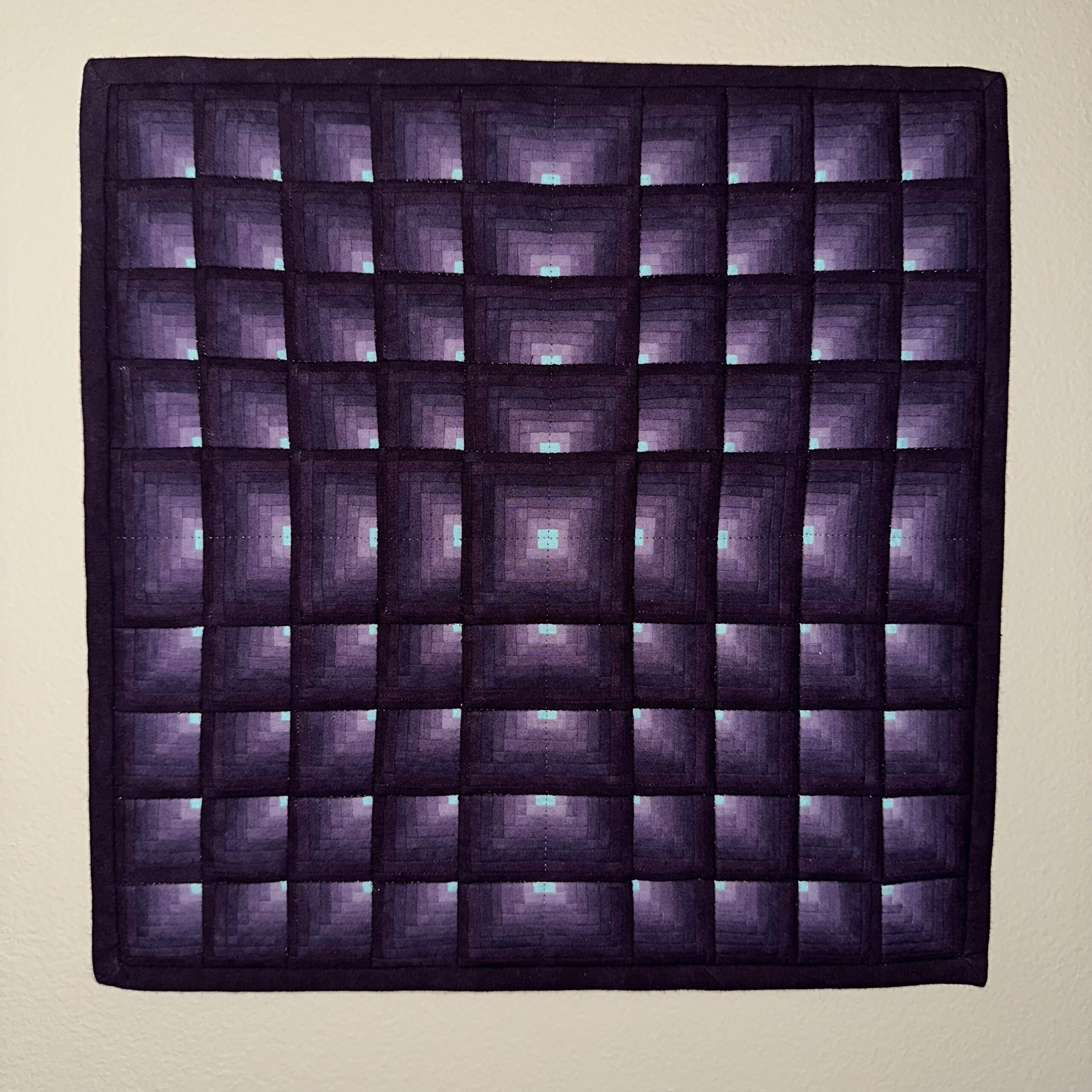
Mulberry Cabins by the late Thelma Robbins
Photography advice
She shared several photography tips to representing your quilt well while speaking at Quilt Canada:
- Shoot using natural light as much as possible.
- Make sure the photo includes every inch of the quilt, including the full border.
- Take additional photos of the details you wish to highlight and the quilting.
Overall, Carole encouraged all quilters to submit their best work for judging. Those reviewed by judges receive a letter with comments about what impressed them and what needs improvement.
As a result, each quilter can learn and improve. That’s what we all want, right?