
In addition to amazing quilts, the members of Qu Artz learned so much about the contributions these trailblazing women made. All members proudly spoke in depth about their chosen person at our group’s meetings.
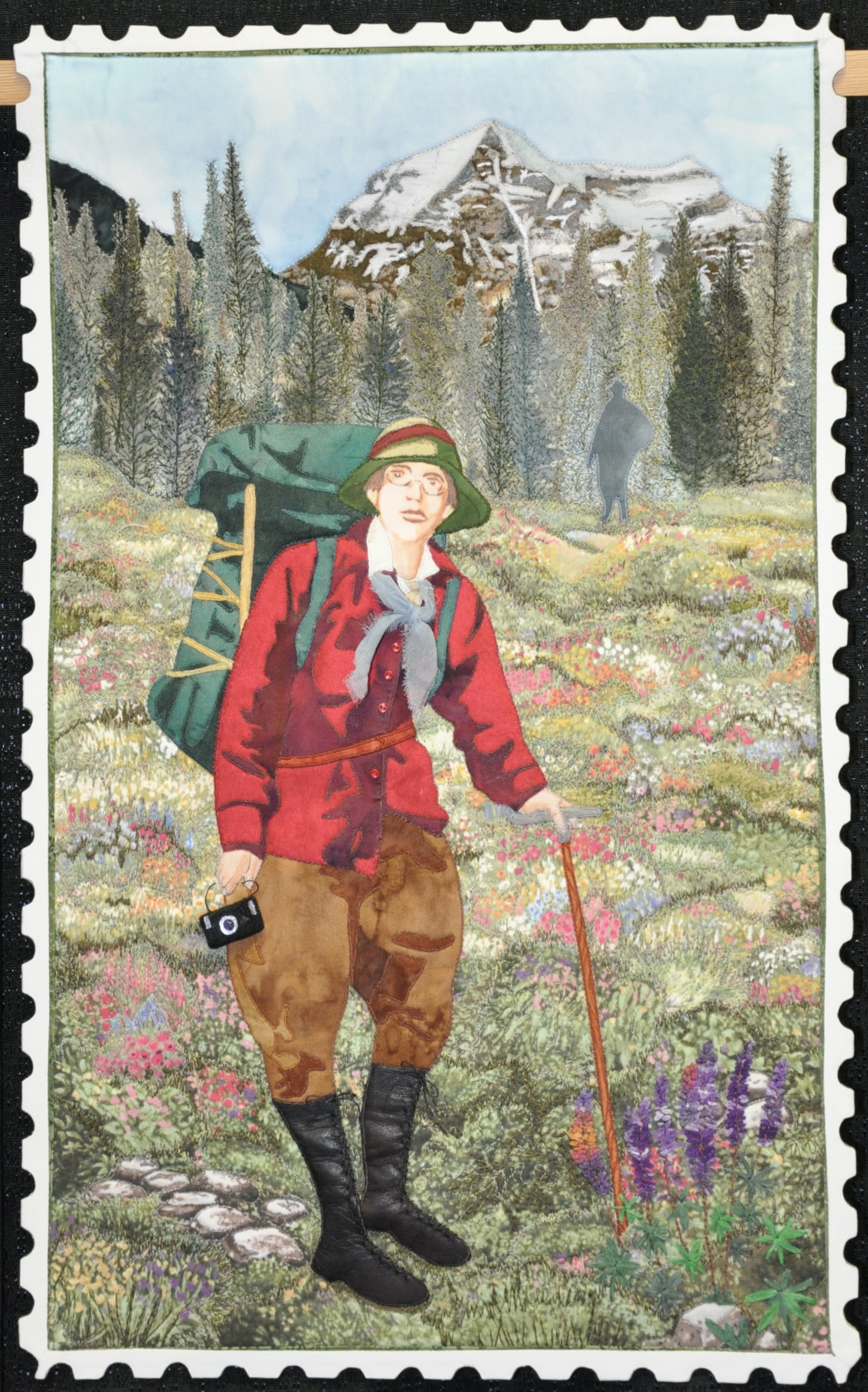
Linda Waters – I’ll Show You The Way (above)
I first learned of Phyllis Munday when I was a Girl Guide in the 1970s. She inspired me with her life and I wanted very much to follow in her footsteps. Phyllis was a scientist, cartographer, photographer, naturalist, athlete, humanitarian and adventurer. She received the Order of Canada in 1973 for her pioneering efforts and her dedicated service to the Girl Guides, St. John Ambulance, and the Alpine Club of Canada.
My quilt interprets a photograph of Phyllis on the Franklin glacier carrying a 70-pound pack in 1927. Subsequently, this image served as the 1998 Canada Post 45-cent stamp in her honour. This is merged with the iconic image of Mt. Robson and an alpine meadow which brought her so much joy.
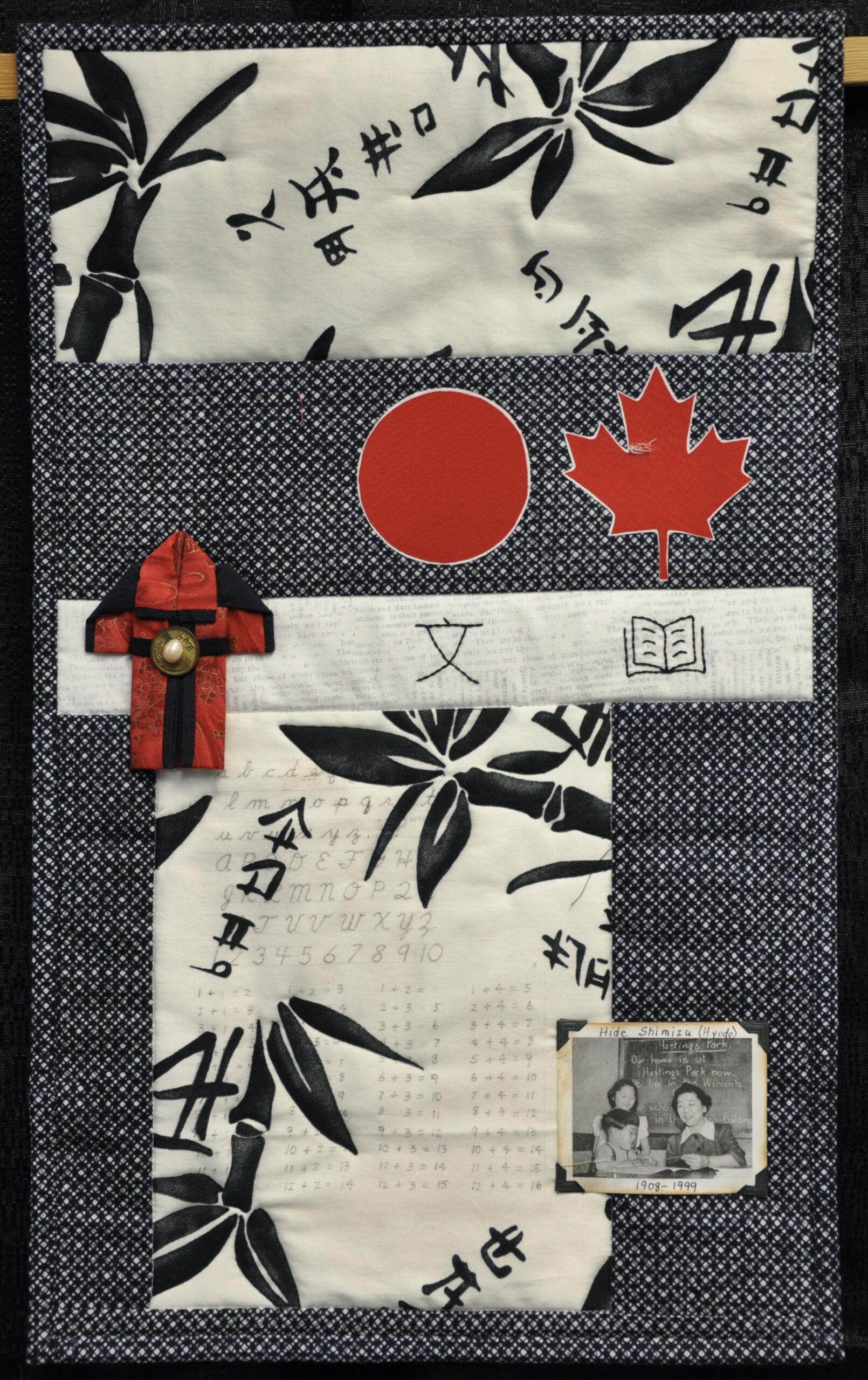
Linda Kuraoka – Hide Hyoid Shimizu
Hide Shimizu was an educator, an activist for redress and reparation and an advocate for Japanese-Canadian rights and enfranchisement. She joined 31 additional women honoured by Status of Women Canada for shaping Canada’s history. She also earned a member of The Order of Canada and title of president of Ghost Town Teachers Historical Society. Lord Byng Elementary School in Steveston dedicated a rock garden in her honour since Hide taught there for 16 years.
I chose both a red circle and maple leaf to signify flags of Japan and Canada. Meanwhile, two black symbols represent education in both countries. The Japanese Kimono has a black belt for Karate, a Japanese coin for wealth and an authentic Pacific pearl for Pearl Harbour. The photo shows Hide teaching at Hastings Park in 1941.
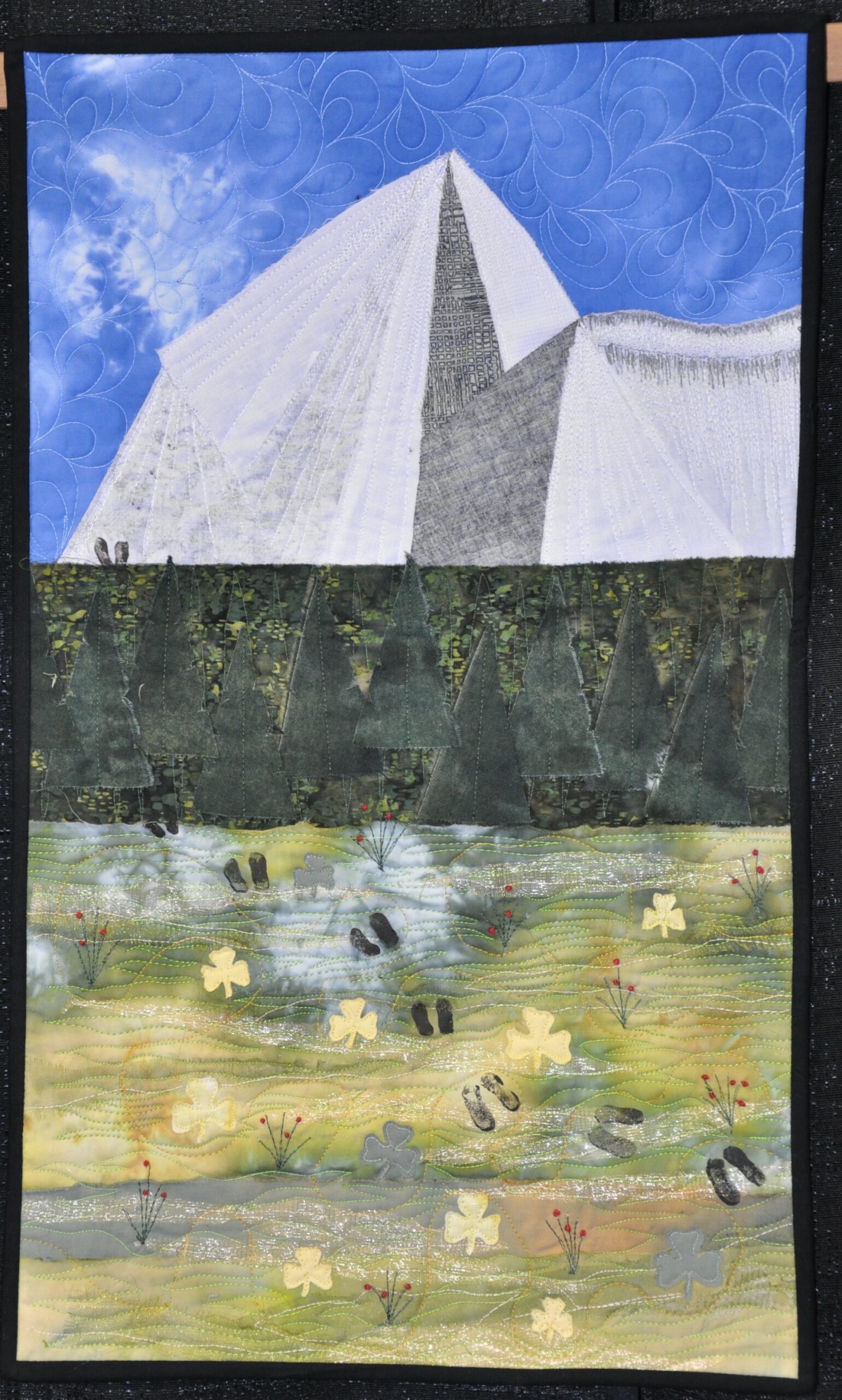
Christine Trory – Phyllis Munday
On July 29, 1924, mountaineer Phyllis Munday (1894-1990) became the first woman to climb Mt. Robson – the highest in the Rocky Mountains. She also climbed and named many other B.C. mountains. Further, she founded the Girl Guides in B.C. and contributed to guiding throughout her life. My piece consists of commercial, hand-dyed and chiffon fabric, stamping, free motion and hand embroidery and quilting.
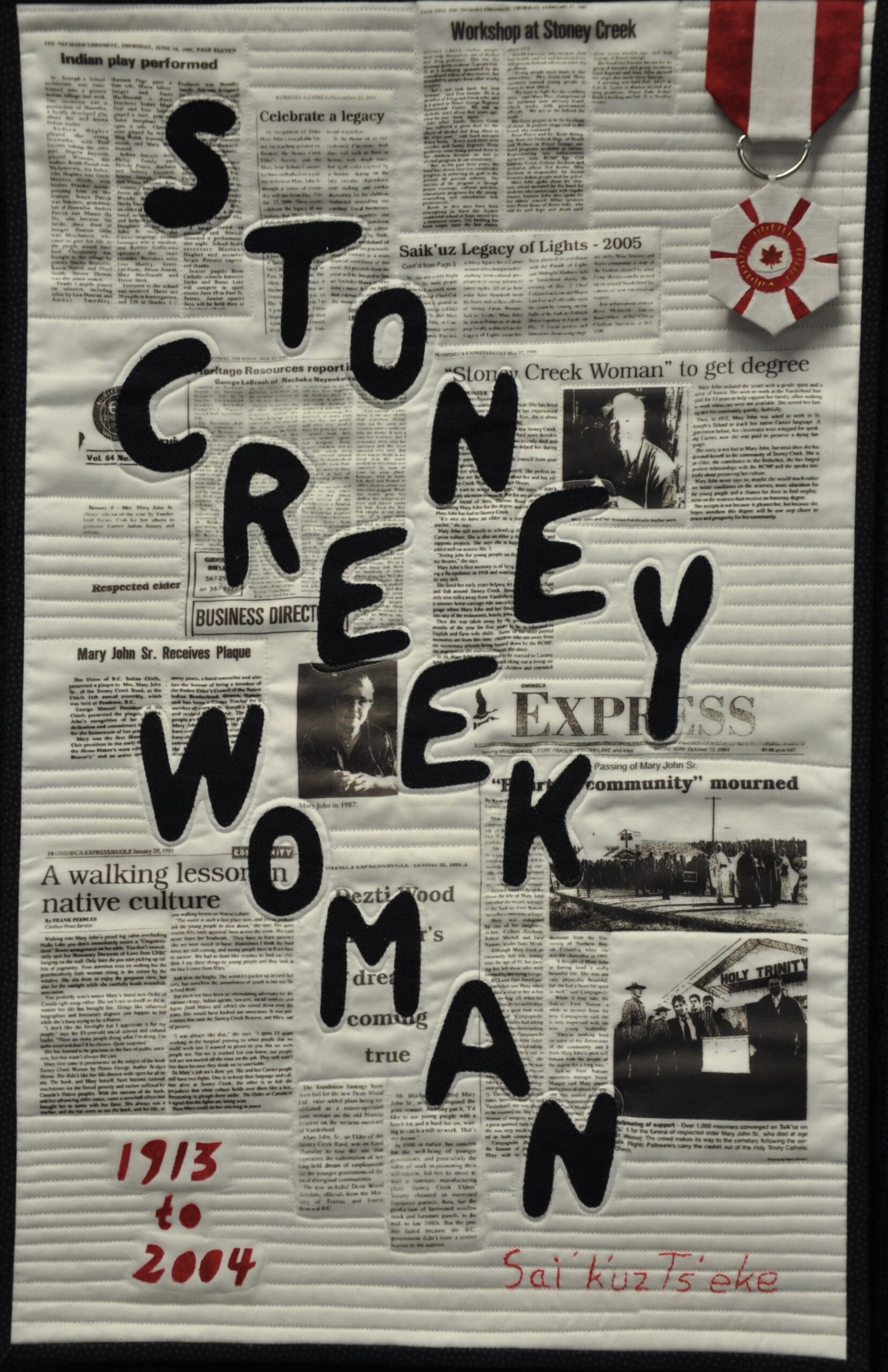
Brigitte Red – Stoney Creek Woman
Inspired by the book by Bridget Moran, my homage to Mary John Sr. carries the same name. She advocated for her Carrier Nation people and their culture as a homemaker, educator, language teacher and social reformer.
Mary saw education as the key to rising above the barriers facing Aboriginal people. She also worked tirelessly to promote understanding between Aboriginal and non-Aboriginal communities. Thanks go to the Vanderhoof Public Library’s Mary John Collection for the articles used.
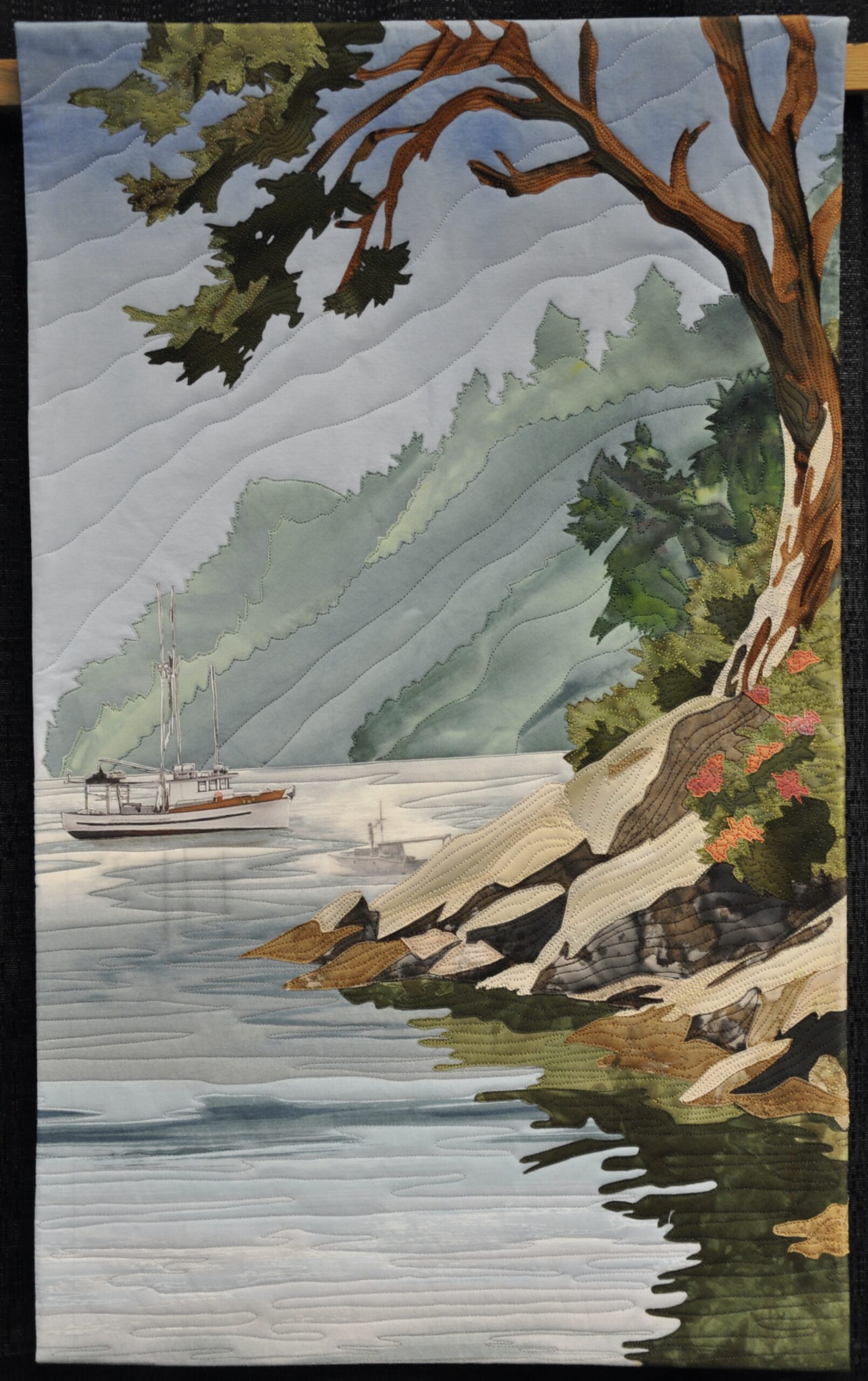
Cath Phillips – Anchored in Time
In the 1920s and 1930s, ‘Capi’ Blanchet explored the B.C. coast with her five children. For 15 summers, they rented out their house near Victoria and lived aboard a 25-foot motorboat, the Caprice.
They explored bays and native villages, weathered storms, navigated with simple instruments and braved tides and currents. Capi kept the boat running and used their adventures to teach her children. Her journal and memories turned into the book The Curve of Time by M. Wylie Blanchet in the 1960s.
My husband and I spent a few summers travelling the West coast in our retired fishing boat. Each evening after dinner, safely anchored for the night, I would read a chapter of the book aloud.
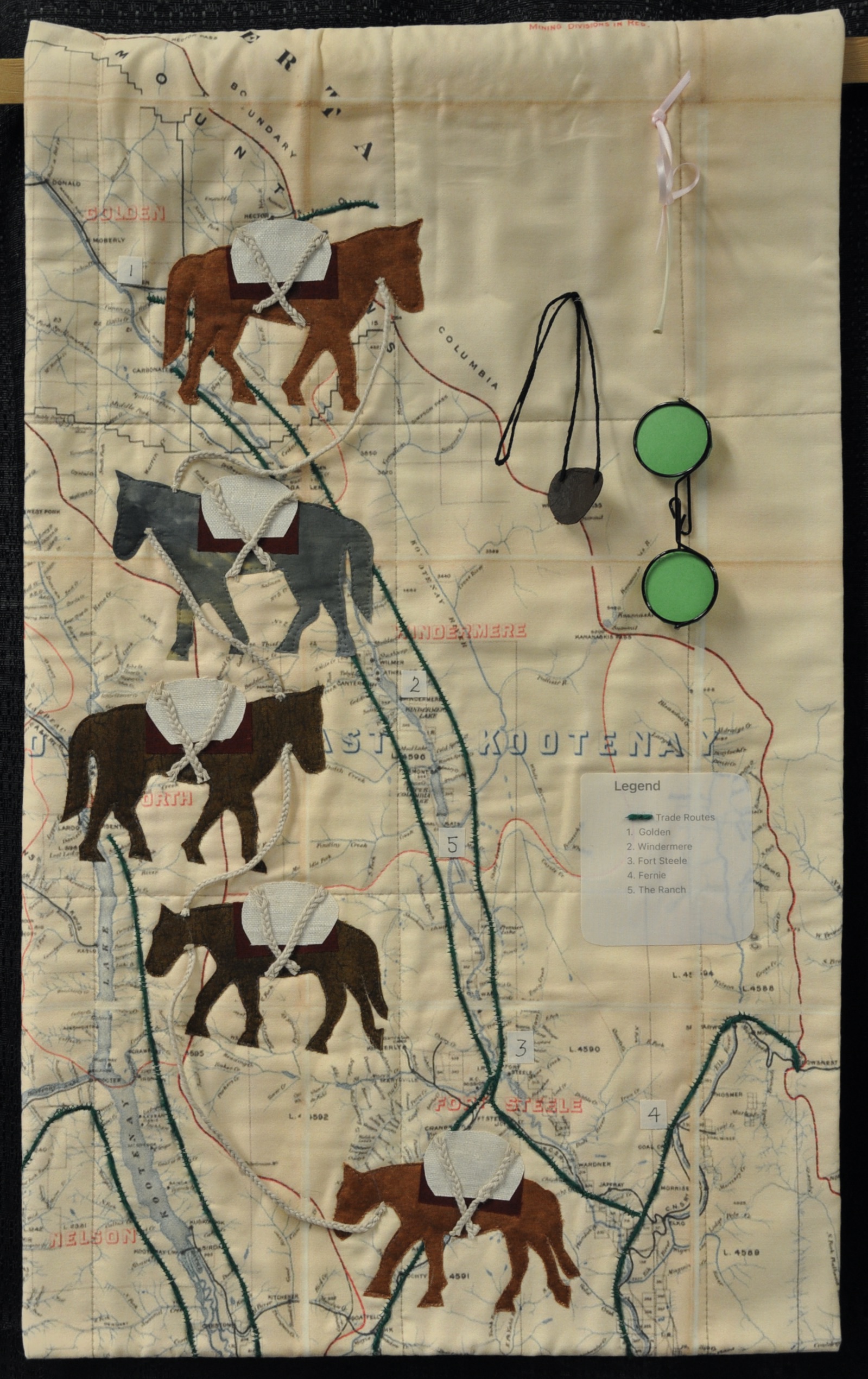
Judith Beaver – Sophie – The Legend
Born in 1836, the child of a Métis woman and a French-Canadian trader, the always independent Sophie Morigeau was an entrepreneur and feminist long before they were talked about. She existed happily in both Indigenous and white cultures, moving between them fluidly.
Married at 16, Sophie left that union a couple of years later to start her own pack team. Using family connections, she brought supplies from across the border. For many years, she travelled all over the East Kootenay selling those goods before opening a store in Windermere.
Always a bit wild, Sophie lost an eye in an accident and took to wearing a patch and, later, a pair of green glasses. Legend has it that after another accident, she amputated a piece of her own rib which had protruded through the skin. Later, she hung it on the wall of her cabin.
Sophie spent her later years on a small ranch at the south end of Lake Windermere, where she employed many Kootenai as hands. She died in 1916 at the age of 80.
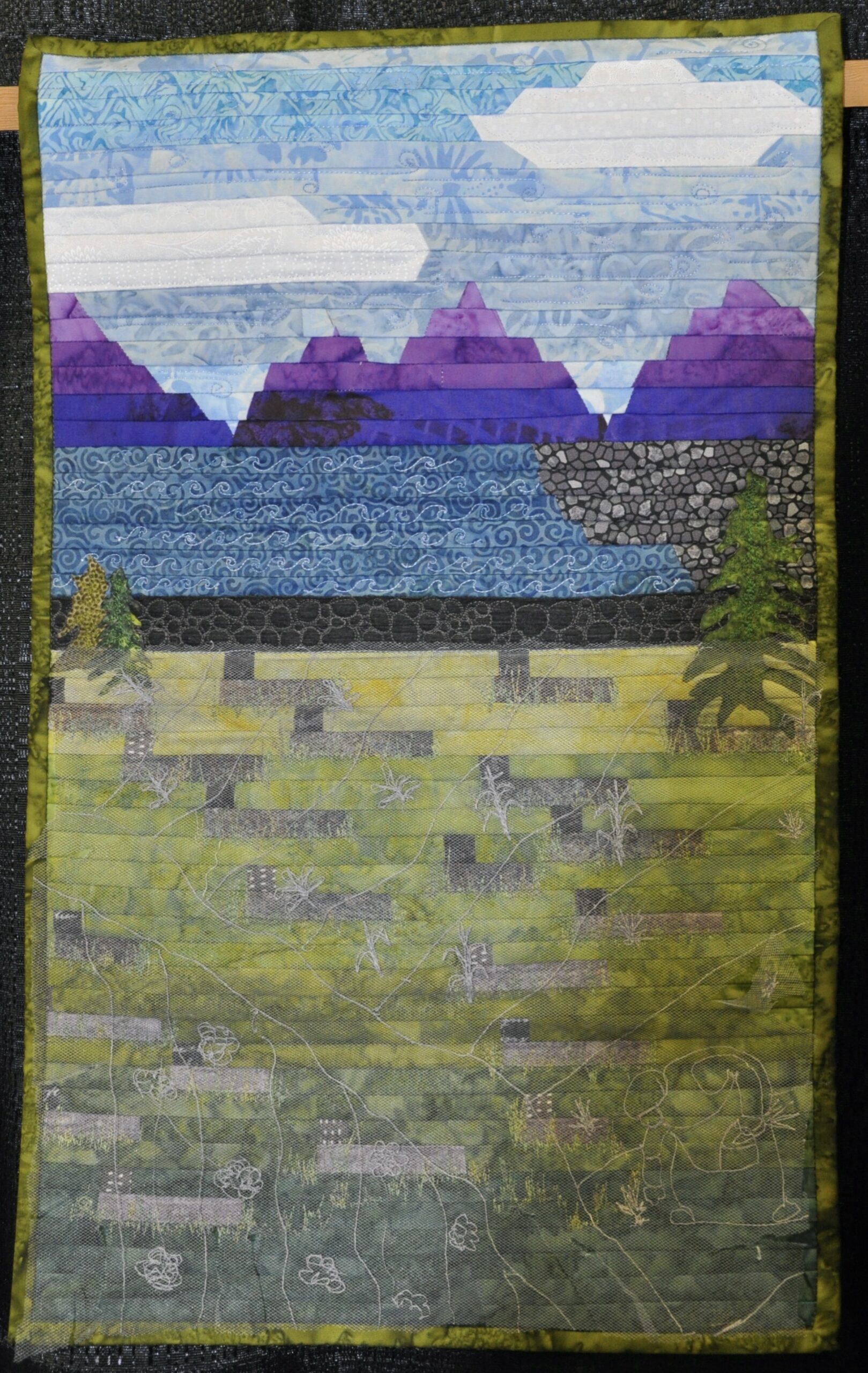
Sandie Guenette – Echoes of Isabella
At the age of 36, Isabella Ross found herself widowed with nine children to support. Eight years later, in 1854, she purchased 99 acres along Haro Strait, making her the first female landowner in B.C. She farmed the land and 27 acres later became the Ross Bay Cemetery. My piece shows the cemetery with an ‘echo’ of Isabella tending the farm.
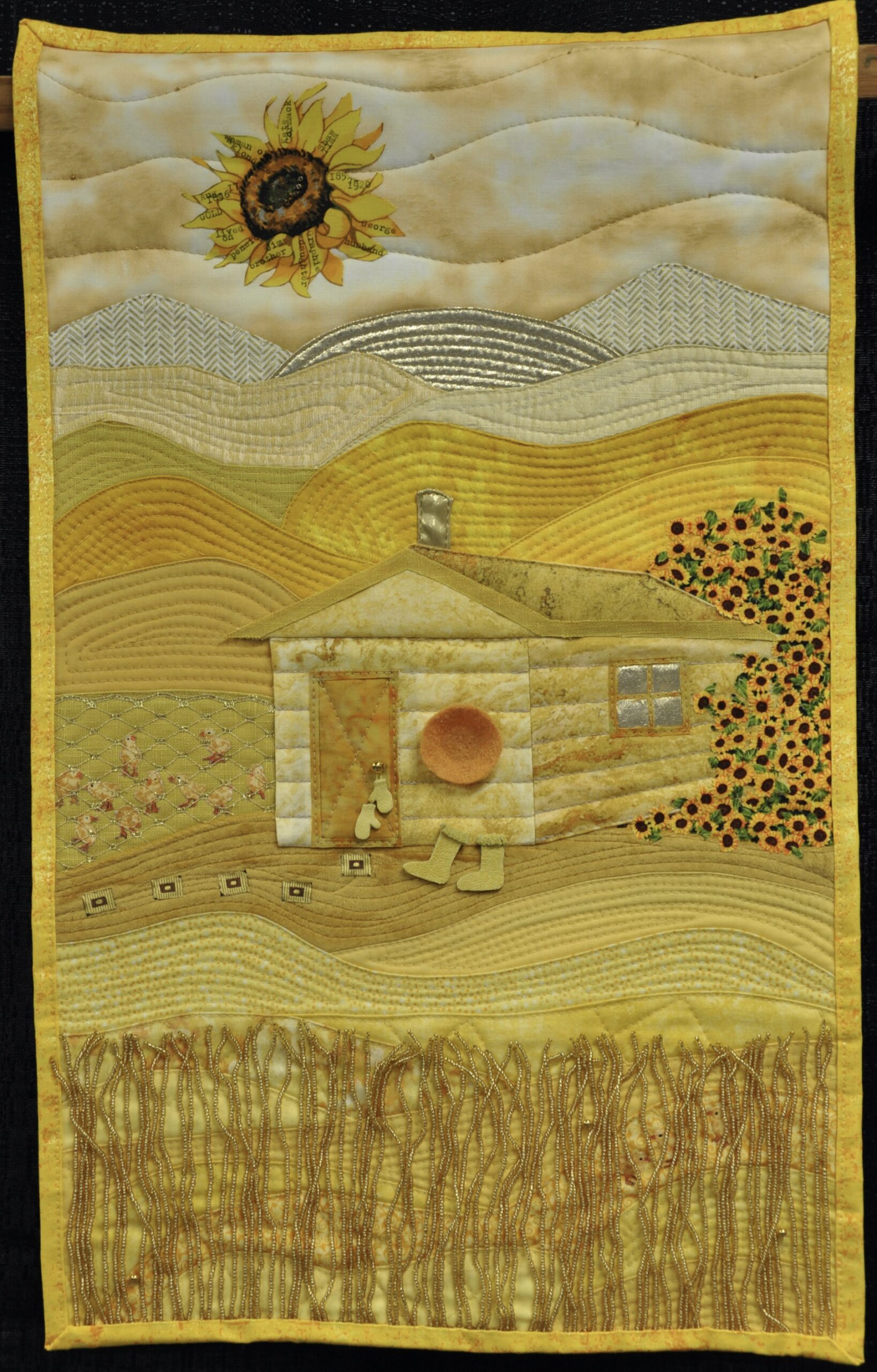
Cathy Gaetz-Brothen – Good Gold, Lotsa Gold
Known as the Woman of the Klondike, Kate Carmack’s biography (1857-1920) is typed onto the petals of this sunflower. She also went by the First Nation name Shaaw Tlaa. She journeyed north in search of gold, along with her husband George and brother Jim. They would never have survived without Kate’s guiding and trapping skills.
On Aug. 17, 1896, Kate discovered “good gold, lotsa gold” as she put it. Afterwards, George falsely declared that he had never married her and he quickly wed a white woman. He also took all Kate’s shares of the gold, as well as their daughter Graphie. Kate lived off a government pension for the rest of her life, surviving by selling handmade leather mittens and moccasins.
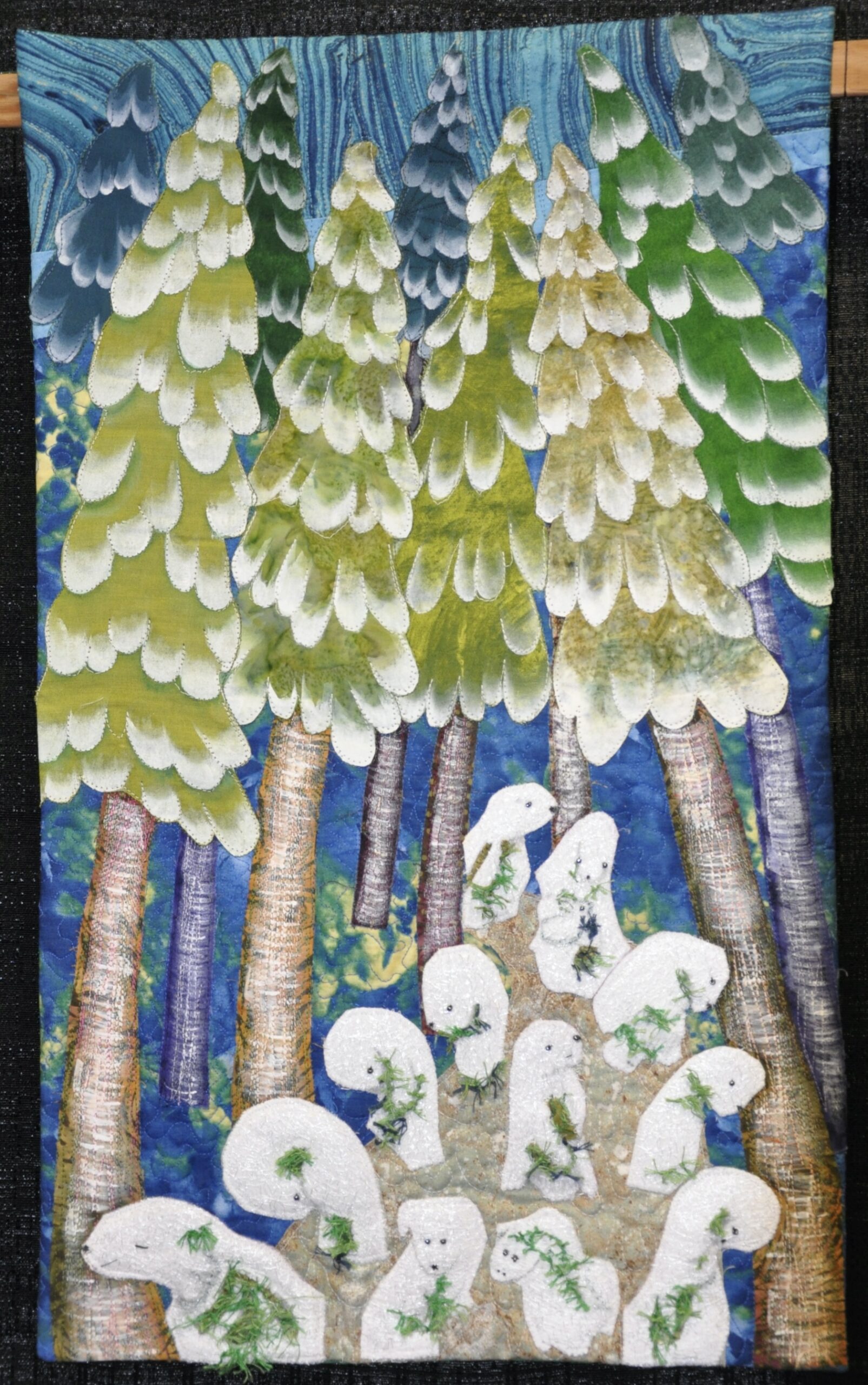
Jeanette Marten – Snow People
The art of Daphne Odjig inspired this quilt. Deep in the forests of B.C., strange creatures known as Snow People shyly live where very few people see them. Scampering around them, animal snow creatures look like dogs, reindeer or rabbits. Basically, anything your imagination will allow. The Snow People appear after a snowfall, especially when the sun is shining. Other times they live in caves hidden in the forest.
Very gentle, friendly, joyous and harmless creatures, they will provide shelter to anyone in distress in the forest. But if someone tries to harm them, they will disappear until that mean person is gone.
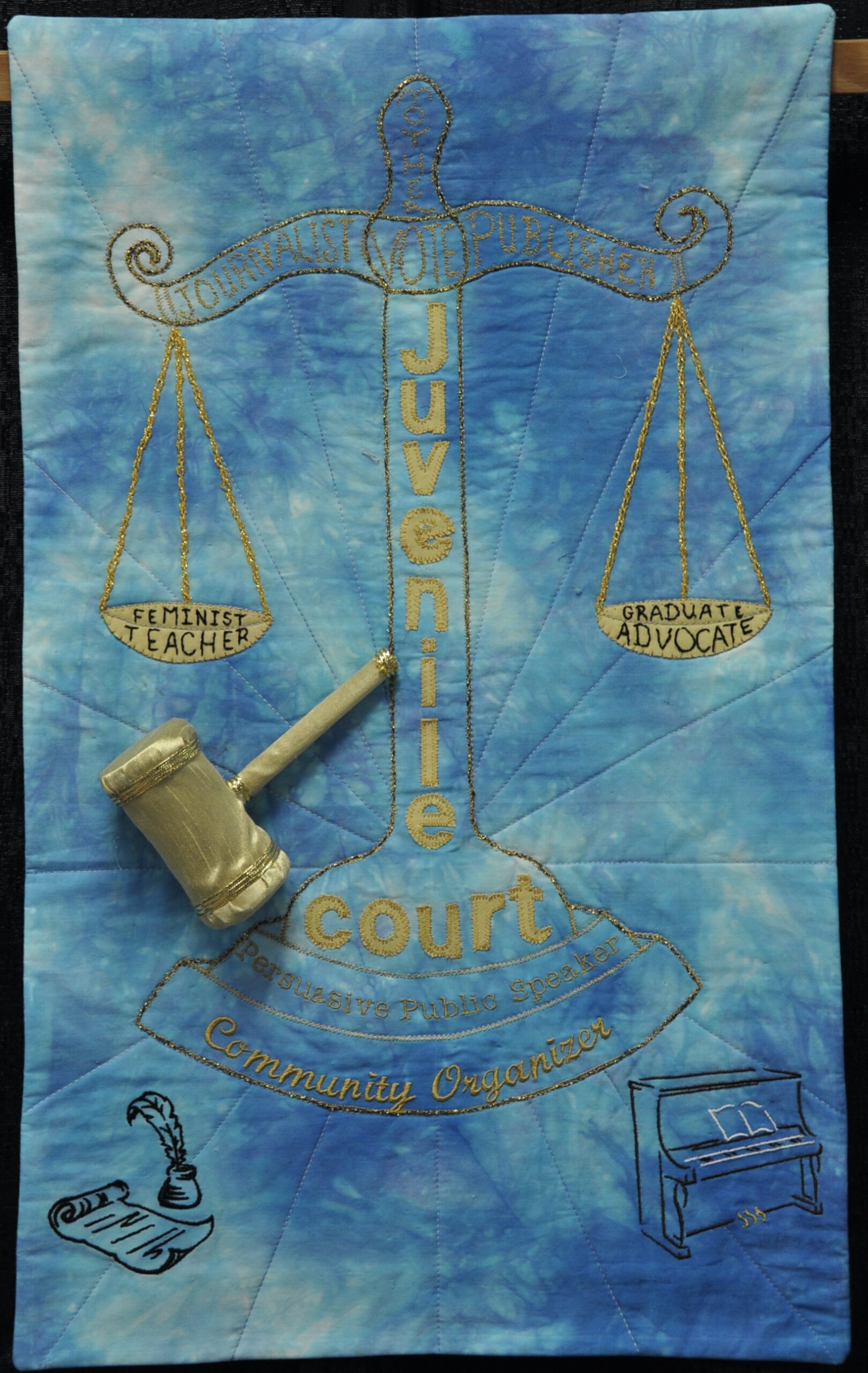
Shirley Weishuhn – Helen Gregory MacGill
As the first woman judge in British Columbia, she served on the juvenile court for 23 years. While a journalist and a publisher, she advocated for the hurt, the helpless and the exploited. She also championed women’s rights in the fight which granted women the right to vote in B.C. in 1917.
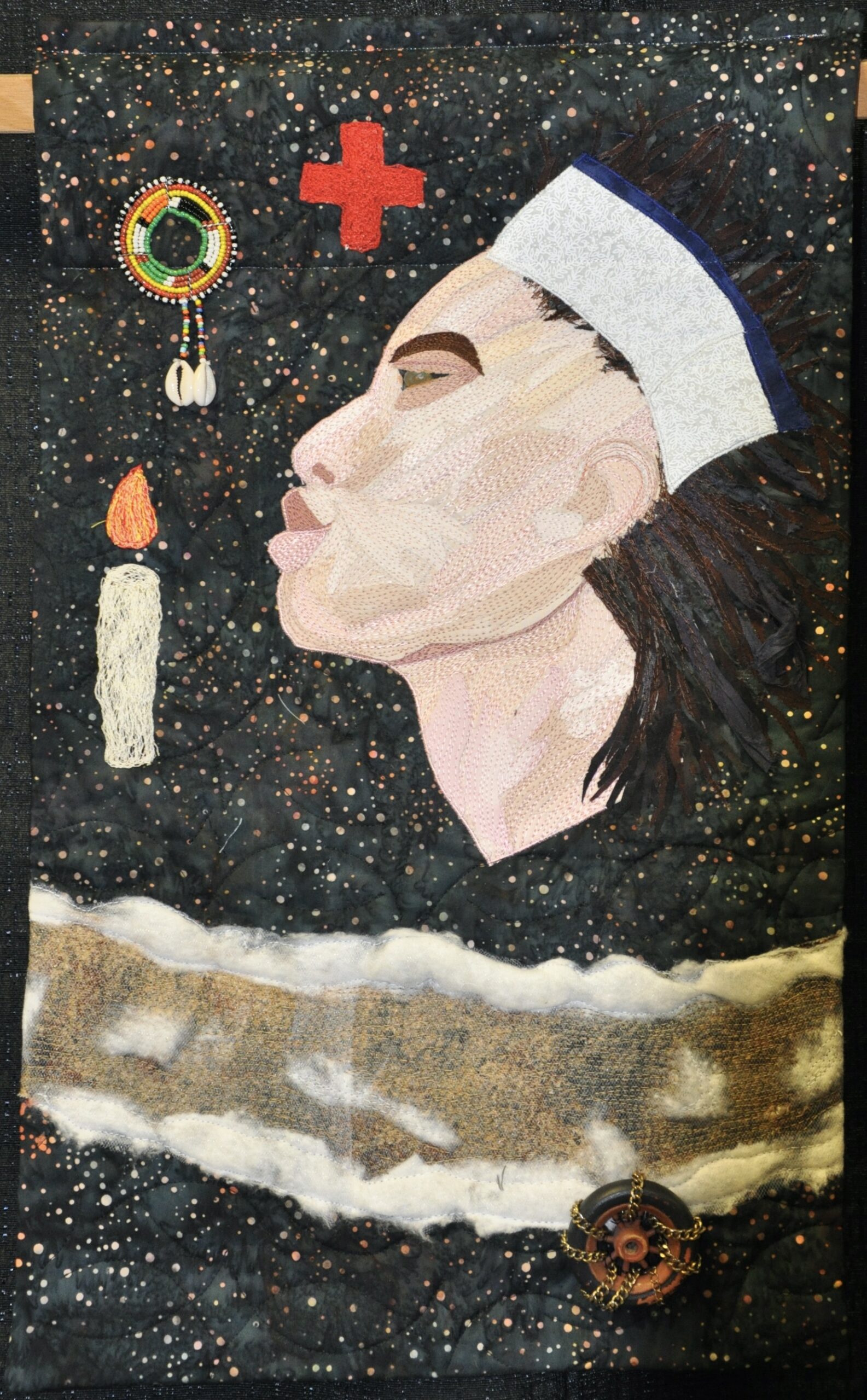
Joan Fudge – A Warrior Indeed
This pioneer woman, Marion McKinnon, drove alone on narrow winter roads to help people in the Cariboo- Chilcotin area. As a young public health nurse, she travelled to remote communities, educating young mothers on birth control and immunization for their babies.
Along the way she dealt with major injuries and deaths in the logging camps. Marion always brought a candle, a candy bar and chains for her tires in case she got stranded.
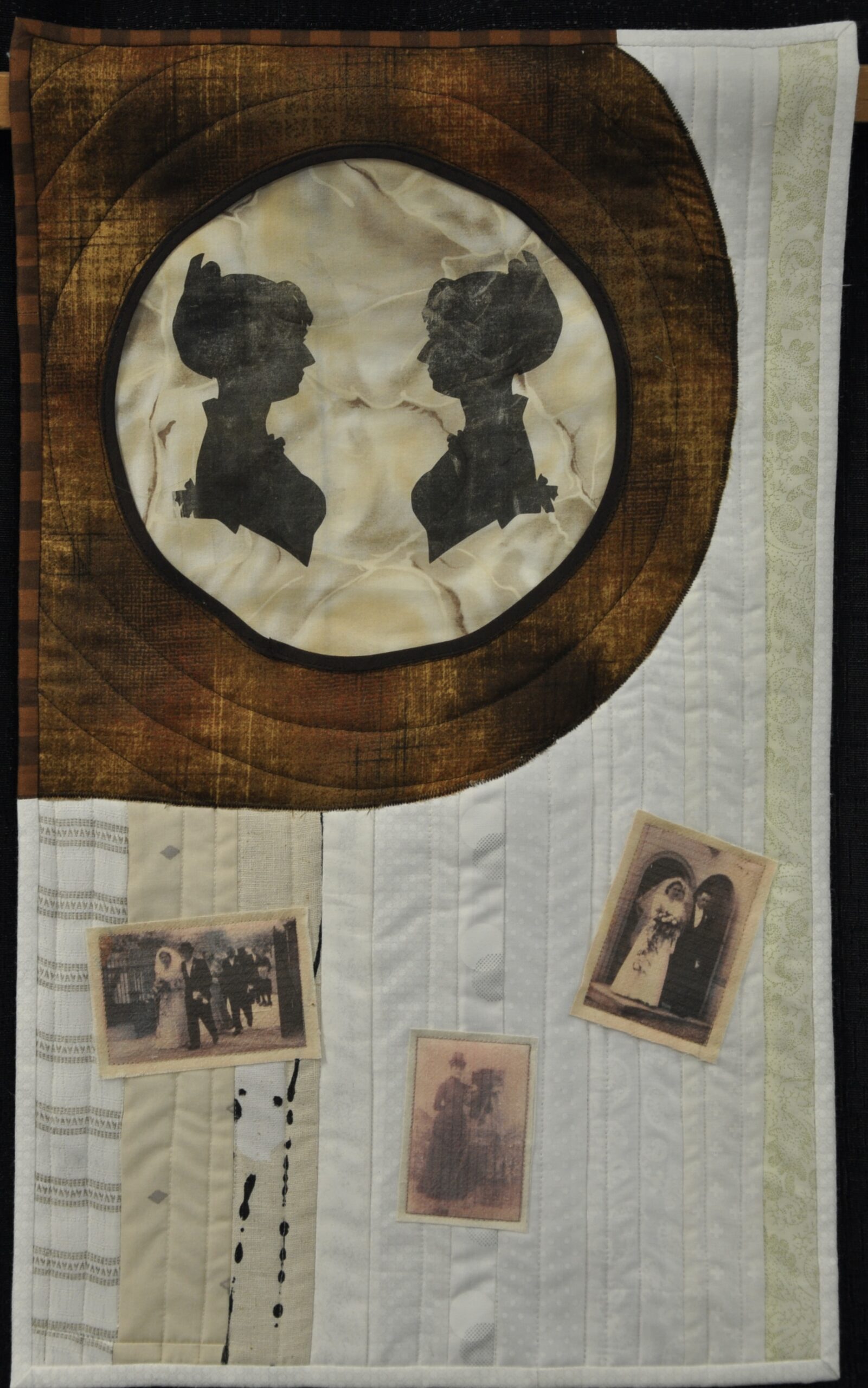
Elisabeth Raymond – Hannah the Photographer
This quilt reflects on the life of Hannah Maynard, a portrait photographer in Victoria (1834-1918). She experimented with photomontage and multiple exposures. She also photographed people using techniques that made them appear as if made of stone.
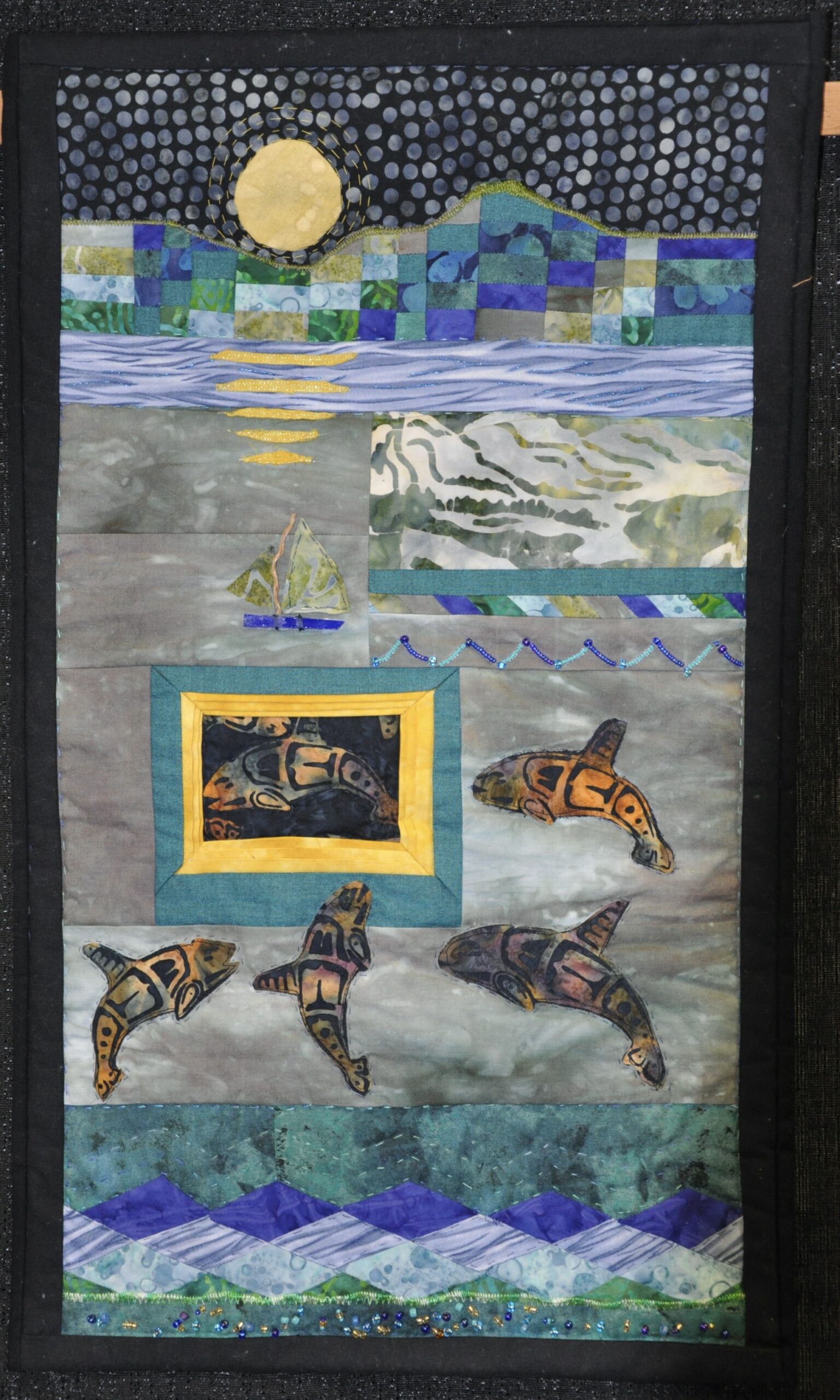
Jan Gardner – Living With the Sea
After moving west in the 1970s, Kristin Miller settled in the Salt Lakes area across the bay from Prince Rupert. This area had no electricity, running water or public transportation. Often, Kristin had to go into town for essentials, such as food, medical attention, employment and socialization.
As a result, she acquired and learned how to operate her own boat. On her first solo trip, Kristin found the body of a woman floating face down in the bay. She learned a huge lesson that day; always wear a life jacket.
As a long-time sewist, Kristin started teaching area residents how to quilt and took her quilts to many local events. Now the author of numerous quilting books and articles, she continues to live on the coast of B.C.
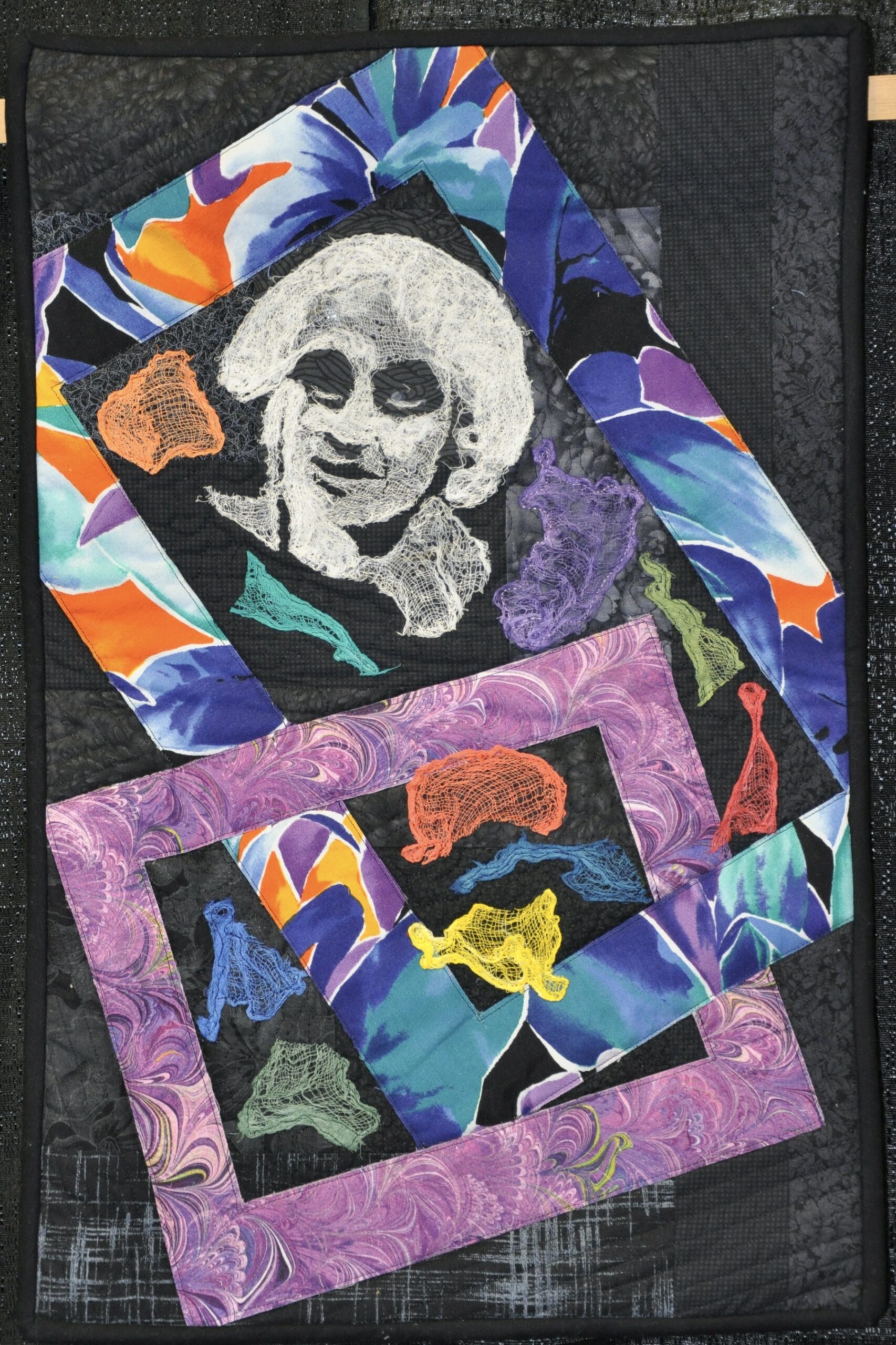
Bev Keith – Sveva Caetani
Born in Rome, Italy in 1917, Sveva Caetani and her parents moved to Vernon when she was four years old. She not so much inspired me but she certainly intrigued me. Why would she allow her mother, after her father’s death, to hold her captive in the family home for 25 years?
After her mother died, she was relieved of her forced solitude at age 43. Next, she took classes at the University of Victoria and earned her teaching certificate. She taught in Lumby while earning a living to maintain her family house in Vernon.
Sveva also painted 56 watercolours paintings over 14 years. She called this collection Recapitulation or the recounting of her experiences and perspectives on life. Sveva died in 1994 and left her family home to the city of Vernon as a home for many creative and budding artists.
To learn more about these quilts and QuArtz, please view the blog at https://quartzcanada.blogspot.com.