
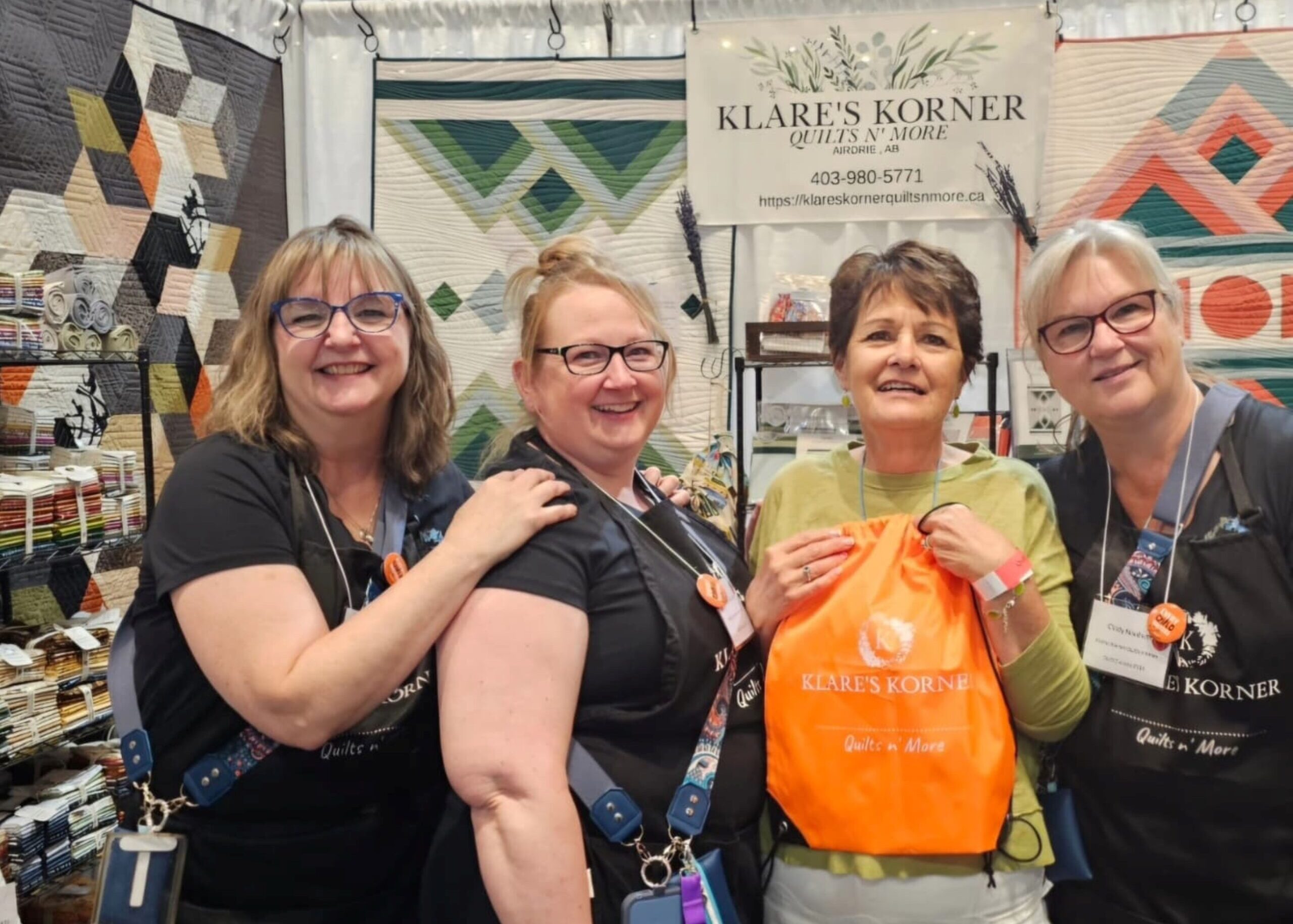
Before you dive in, learn from the experiences of these entrepreneurs who opened their own quilts shops.
After spending a month in the hospital in 2020, Wendy Aubut (above, left) knew she couldn’t stay in her high-stress corporate job. Not ready to retire, she told her husband she wanted to open a shop in her hometown of Airdrie, Alta.
Her sister Cindy had owned a shop more than a decade earlier, so they collaborated on an online store in Wendy’s basement. For a further family connection, she came up with the name Klare’s Korner in memory of their mother – a talented crafter, knitter and sewist.
“Without her, I truly believe that this shop would not be here today,” Wendy said.
Within six months, her basement could no longer contain her stock. Wendy’s realtor husband found a storefront where she officially opened on Jan. 8, 2022.
“I still giggle a little when I think of how empty the shelves were on that first day, and how nervous I was about whether or not people would come out,” Wendy said. “The weather that day was bitterly cold, but we had a fabulous first day. By the end of it, our feet ached but our hearts were full and happy.”

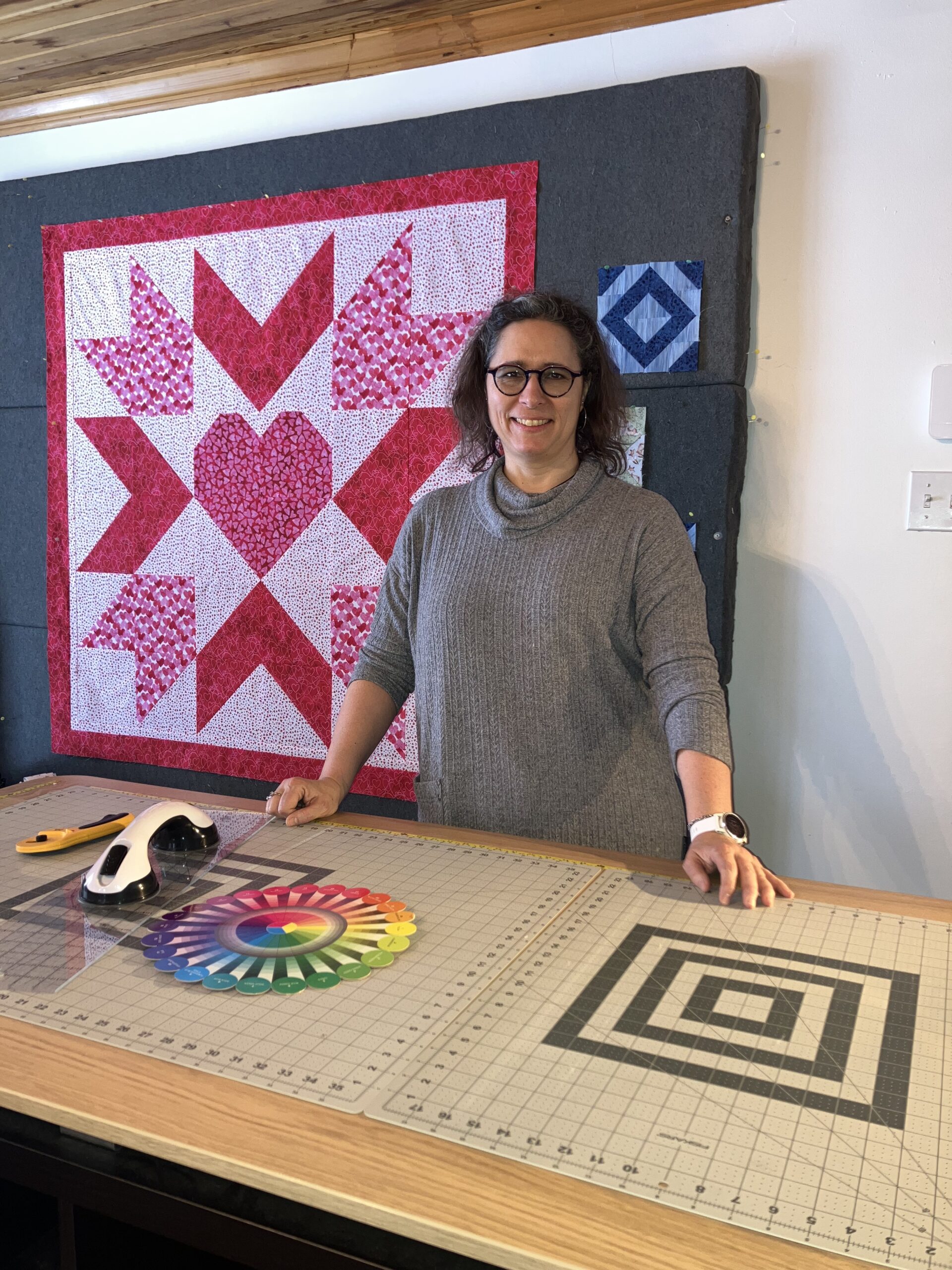
Meanwhile, Renata Piedmont (below) started her shop after she and her husband sold their software company. She began Raspberry Lime Designs – named for her daughter’s favourite smoothie flavour – in Bedford, Nova Scotia in 2021.
“I thought I would buy and sell a bunch of fabric online and it would be easy,” she said. “It wasn’t. It was a huge learning curve…It took almost a year to get my website the way I wanted.”
A few years later, she has abandoned her retail operation to make patterns. Her $20,000 fabric investment now appears in those designs. Based on their experiences, she and others share what else they wish they knew before they began their adventures.
Create a community
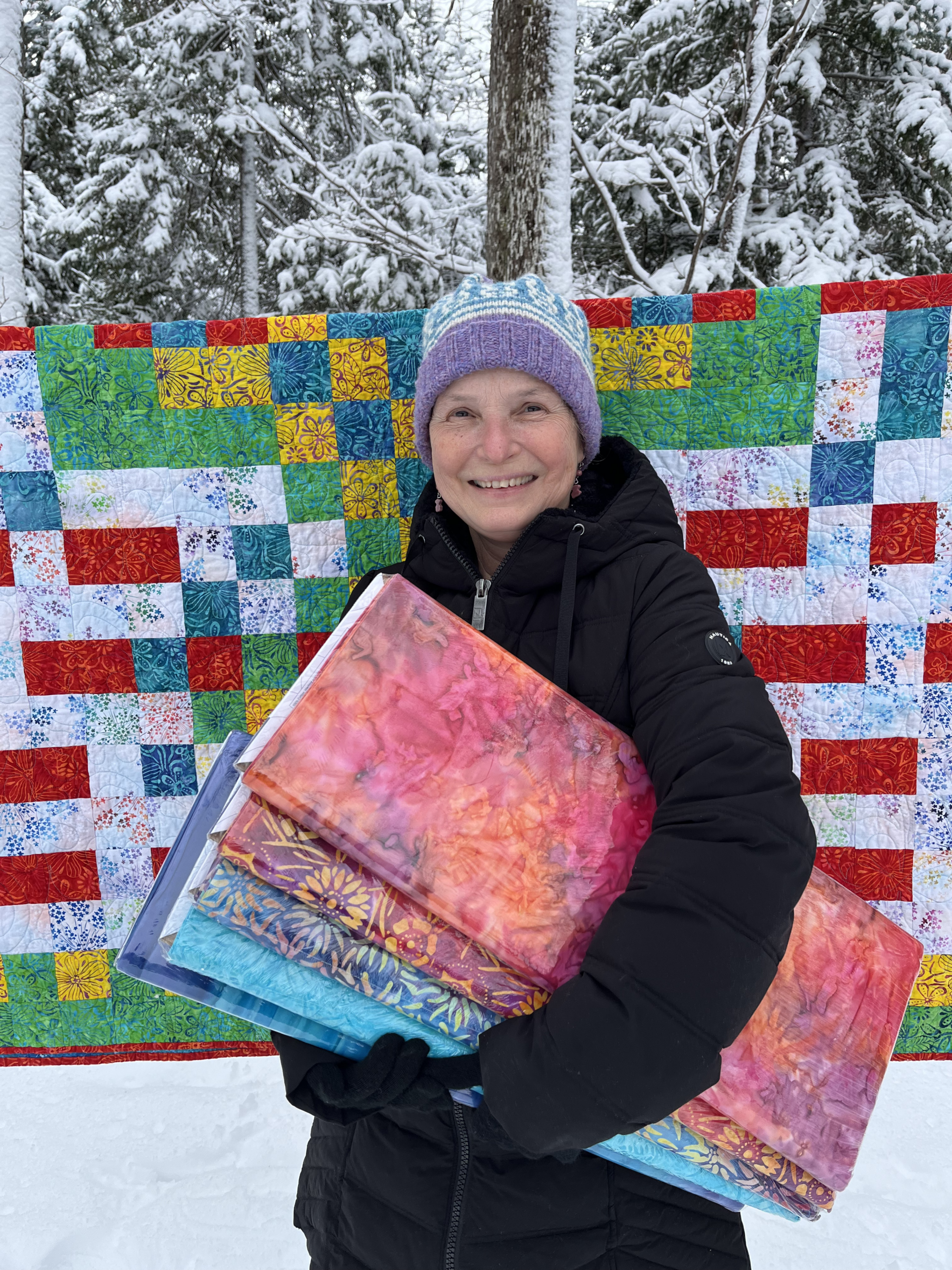
For Danielle Richard, the layout and location for her shop in Saint-Louis de Kent, New Brunswick has helped fuel her success.
After buying a former bakery, Danielle, 55, set up a sewing area in the former dining room. Across the foyer, her retail space operates where people used to buy buns and cakes. She named the business Chloe’s Quilting Café as a tribute to her dog and the building’s former use.
Situated right on Hwy. 11, she draws in quilters from the northeastern part of the province when they drive to Moncton for Costco grocery runs or medical appointments. Even better, a nearby Tim Horton’s coffee shop gives family members a place to hang out while their spouses shop.
“It’s fine to think you want to open a shop but those dreams get shattered pretty quickly,” she said. “You need a local market to support you. Who are they and what are they doing? Follow your passion but your clients are going to tell you what they need. If they want paper-piecing, you had better learn it.”
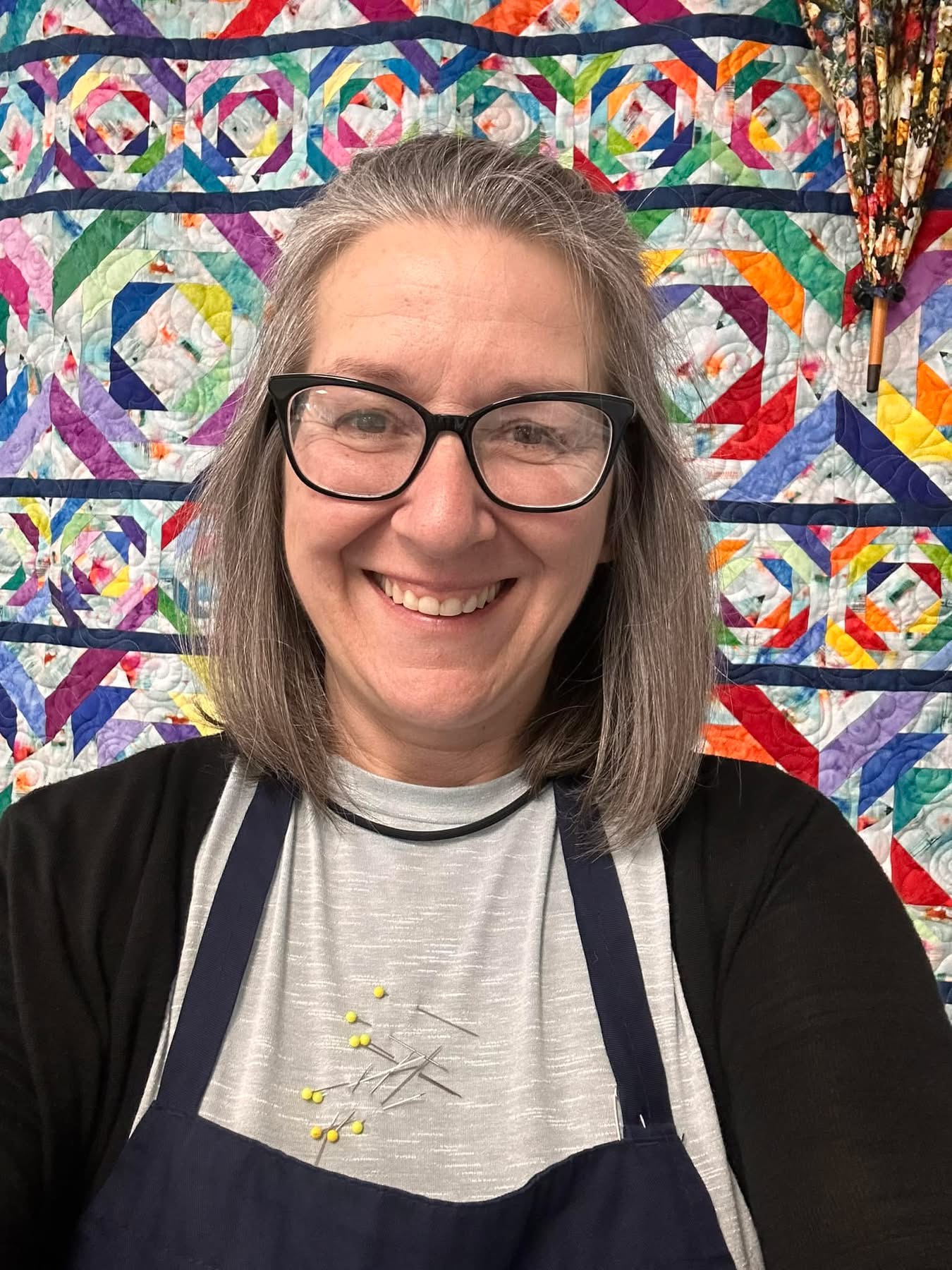
With 250 quilt shops in the province and many online stores, she discovered her audience often searches for the best prices. To compete, she highlights the service and expertise offered by a local store owner. This includes ‘bargello counseling’ and weekly demonstrations via Facebook and Instagram in French and English.
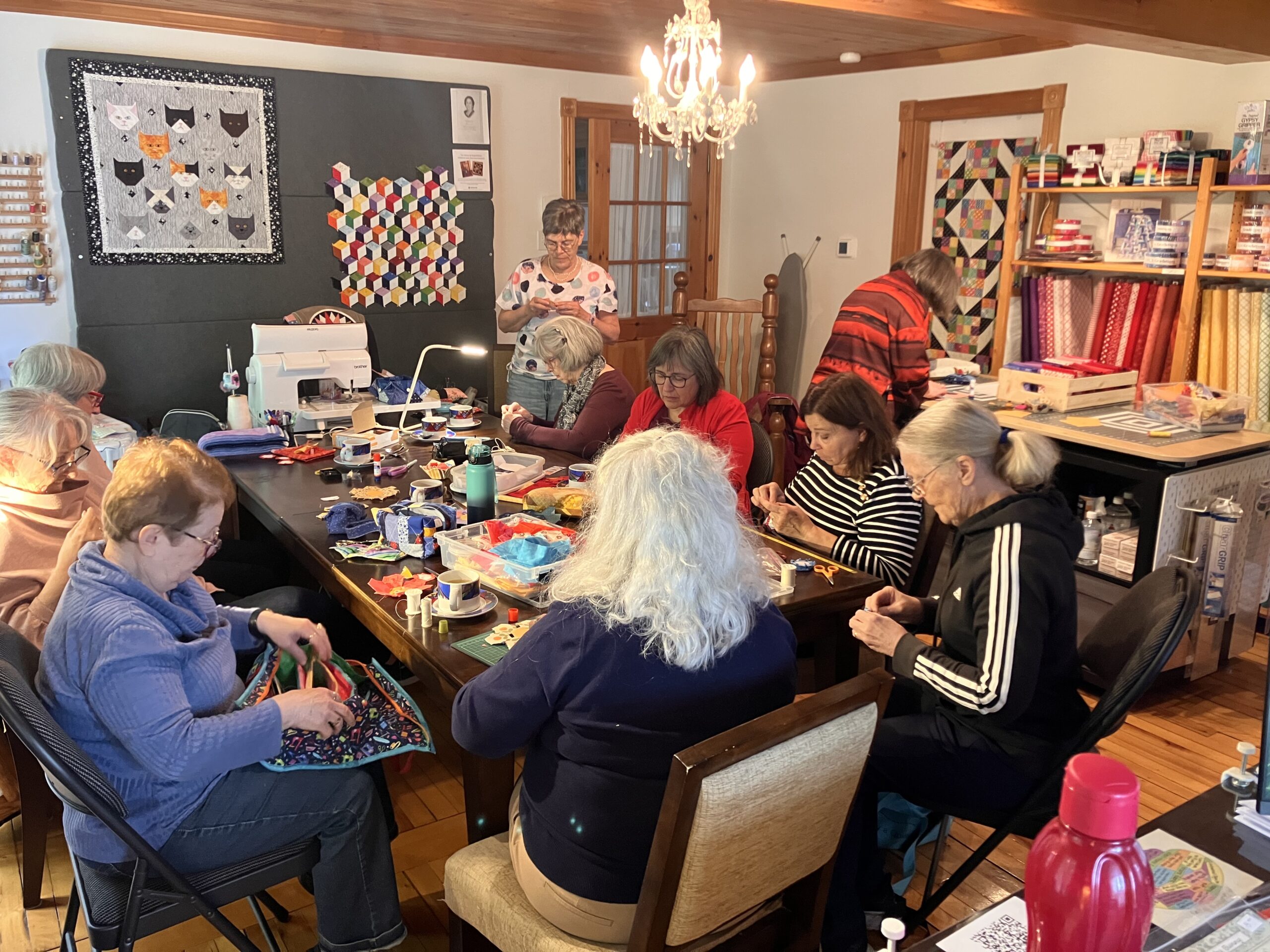
Danielle opens Wednesdays through Sundays. Rather than run classes, she welcomes groups in to sew together two days a week.
These connections make a huge difference, Wendy agreed.
“Take the time to learn your community’s likes and dislikes,” she said.
Right from the start, she set up a 650-square-foot classroom space suggested by her sister. When quilters requested design board walls, Wendy’s husband built them to display their works.
Over the past four years, the classroom space has become very popular for classes and private groups and quilt clubs. As a result, Wendy has to book a weekend off from time to time just to catch up.
Fabrics and finances
Like Wendy, Isabelle Girard’s entry into quilt shop ownership began with an illness. After breast cancer treatments in 2021, she decided to live life free of regrets.
She converted part of her 1942-built house into a store near Trois Rivières, Que. Its name – Les Doudous d’Isa – arises from the Facebook page she created while making cuddly kids’ blankets (les doudous).
“Now, I live in the candy shop,” she said with a laugh. “J’adore what I do. C’est une passion et une demande énorme.”
Getting it ready and opening in April 2025 required a line of credit and loans from her son and her parents. Her thread cabinetry alone cost $1,500.
“Manage your working capital,” Isabelle (above) advises. “You need an investment not only at the beginning. Start with the basics if you cannot afford full fabric collections.”
Isabelle is grateful for her friends from the Au Fil de Trois Rivières guild who fold fat quarters and help her in other ways. “They want me to succeed,” she said.
With few Quebec quilting stores outside of the Montreal area, Isabelle aims to offer an in-person shopping option based on Canadian suppliers.
“Buying Canadian makes us all stronger,” she added.
Mastering technology
With a background in communications and marketing, Isabelle adapted to creating weekly videos based on Danielle’s example. She shares tips and tricks via Facebook and YouTube. Next, she plans to update her website for online sales.
Renata started posting to social media but quickly learned her website didn’t align with Pinterest’s standards, so she dropped it. Etsy’s fees per post proved to drain her budget so she bailed after a year.
“To get any traction, you have to post constantly, which was too much time and work,” she said.
She recommended hiring professionals to do things you don’t do well and adding those items to your budget. She regrets the time spent on her logo, website design and the use of keywords for online sales.
Danielle has used artificial intelligence to simplify her website to focus on moving inventory. She also relies on Square for her point of sales, inventory management, client database and more.
“We cannot possibly know it all or do it all,” Wendy added. “If you have the right people in your corner than you probably have a fighting chance.”
She recalls learning about user-friendly websites, social media channels and content creation – on top of the latest quilting trends.
“There is constant upkeep of the incoming and outgoing inventory, so build confidence and trust with your suppliers,” she added.
Parting advice
“Opening a quilt shop has been a dream come true, but it takes a lot of money and elbow grease,” Wendy said. “I often arrive in my shop by 8 a.m. and work on my laptop at home until 10 p.m.”
“Don’t be afraid to start small. Find the people who are willing to help you learn and grow. Have a plan but be okay with diverting from that plan if it doesn’t work. Trust yourself. Tears and frustration are normal. If you don’t know – ask.”
“Don’t try to do everything at once since you’ll burn out,” Danielle added. “Stay in your lane. If one person asks you to stock yarn, resist rather than investing in more inventory.”
Isabelle also works nights and weekends, while trying to maintain her health. Yet, she still finds time to sew, often with the group who drops into her shop twice a week.
“All the pleasure of working with colours balance it out,” she concluded with a smile.