
After seeing each winner’s work at Quilt Canada 2025, we asked how they take a quilt from good to great. These snippets of advice come from new and repeat quilt show winners.
Quilt Canada, 2025 was a big year for me for several reasons. For the first time, I hosted a solo exhibit of 21 quilts, while having 10 quilts juried into the show. Ultimately, I took home six ribbons! Other quilters have asked, “How did you manage to win so many ribbons?” Let me answer this question!
Every quilt I make has its own unique concept that I do not repeat. This way, when my quilts all stand alone without a common theme. Say, for example, you love making improv-curved quilts and you have three similar ones in the show. If so, you lower your chances to get multiple ribbons because your quilts look alike.
Did you know half of the judge’s marks are on your technical skills? I practised my sewing skills for two years before making my first show quilt to earn those extra points!.
I hope this helps you along in your journey of becoming quilt show winners! Best of luck to you!
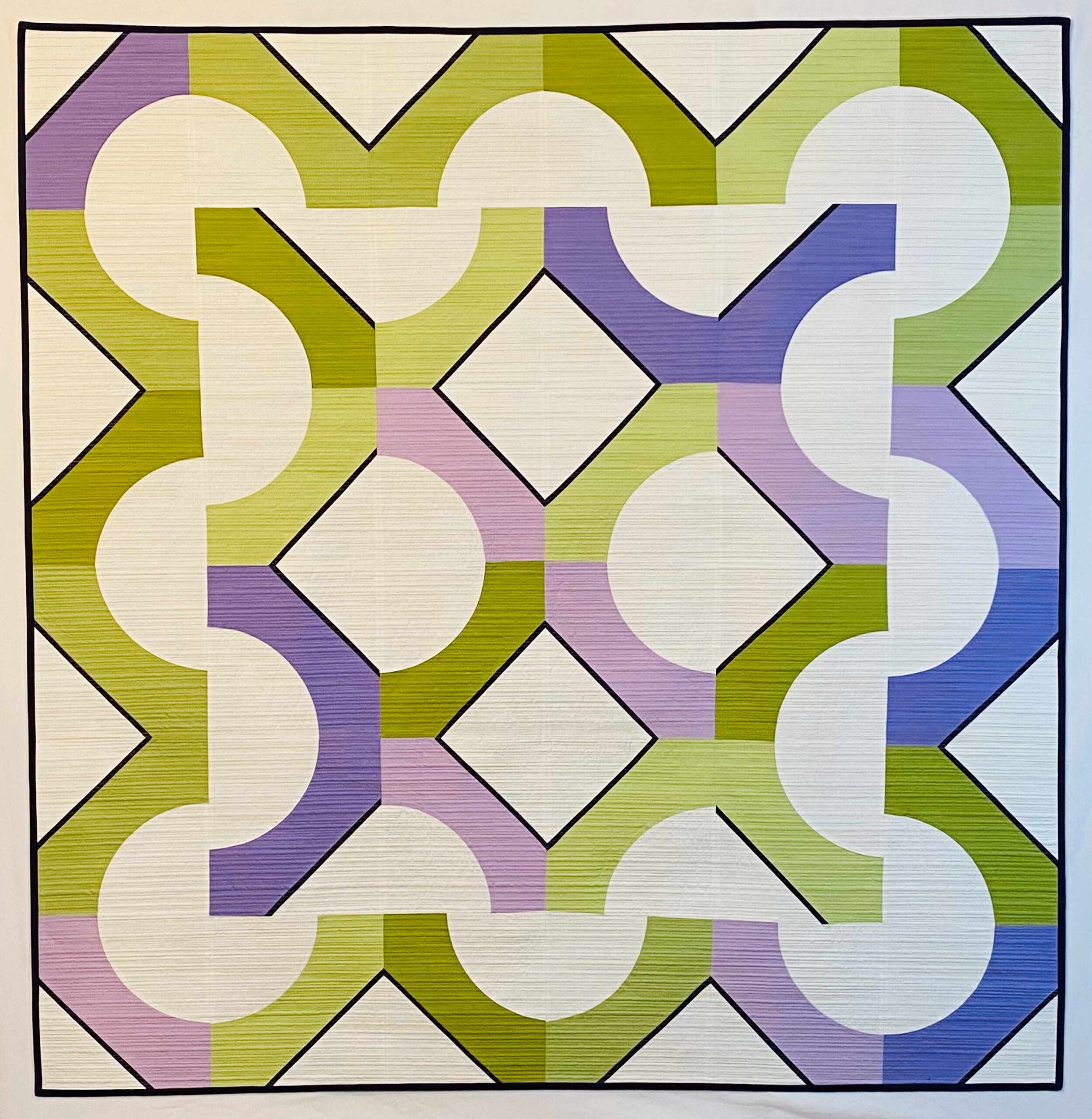
Peter Byrne, winner for Modern Quilts, Excellence in Hand Quilting and Machine Quilting – Framed, among others (Veil, pictured above, won top honours in the Modern Quilt category)
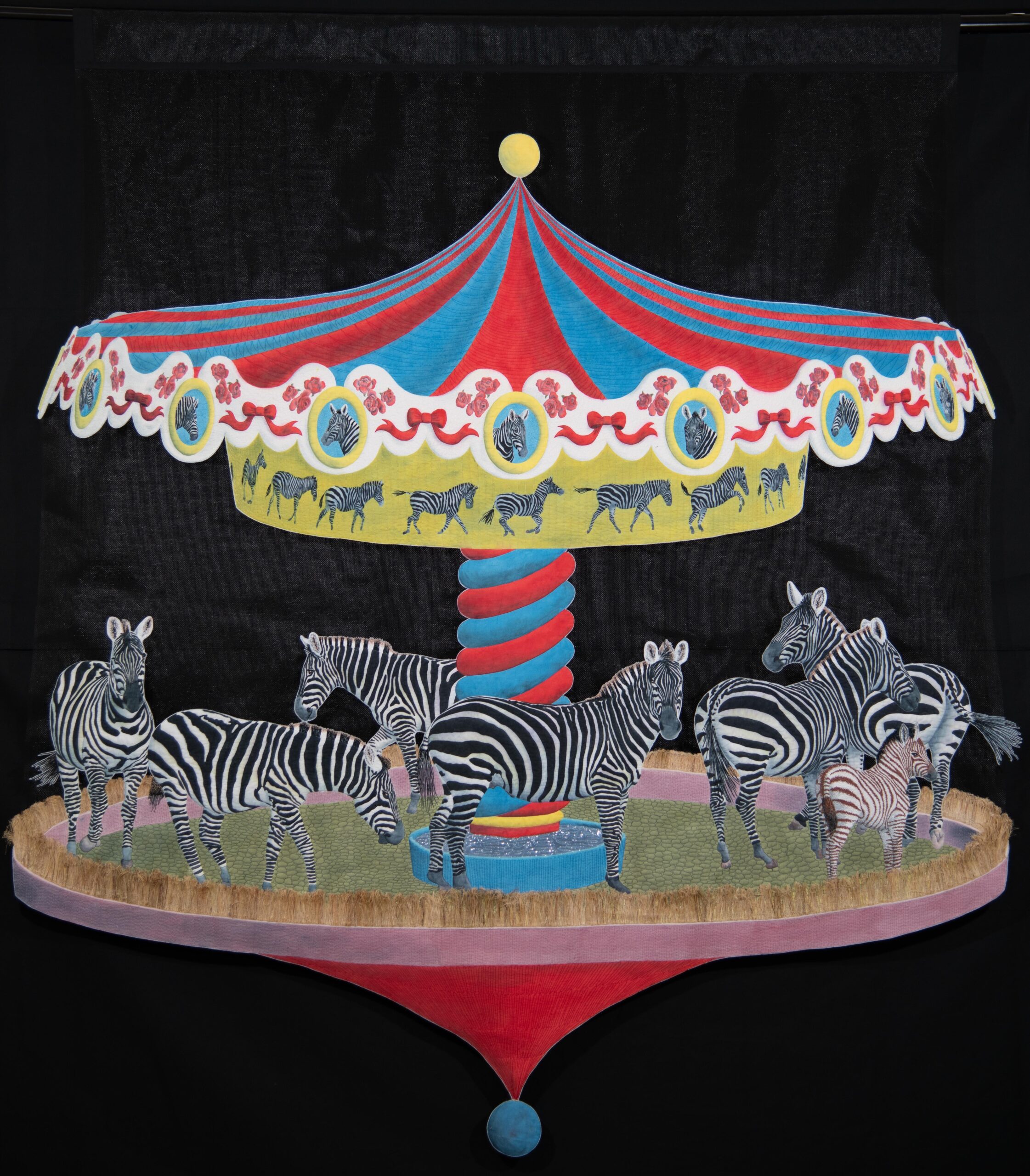
Sue Sherman’s Habitat Merry-Go-Round won for Excellence in Innovation
Express your originality
A winning quilt is very often selected thanks to some spark of originality. It absolutely needs to be well constructed, but it needs more than that.
Don’t be afraid to step outside the box you have created for yourself. Try a new technique on a test piece, then incorporate your new skill into a masterpiece! This could mean combining two techniques that don’t normally go together. Or maybe introducing a colour from outside your normal palette.
Add something huge – or tiny. Stepping outside your comfort zone won’t always yield a great piece of fibre art, but it will pretty much guarantee a learning experience. Who knows where that will lead?
Sue Sherman
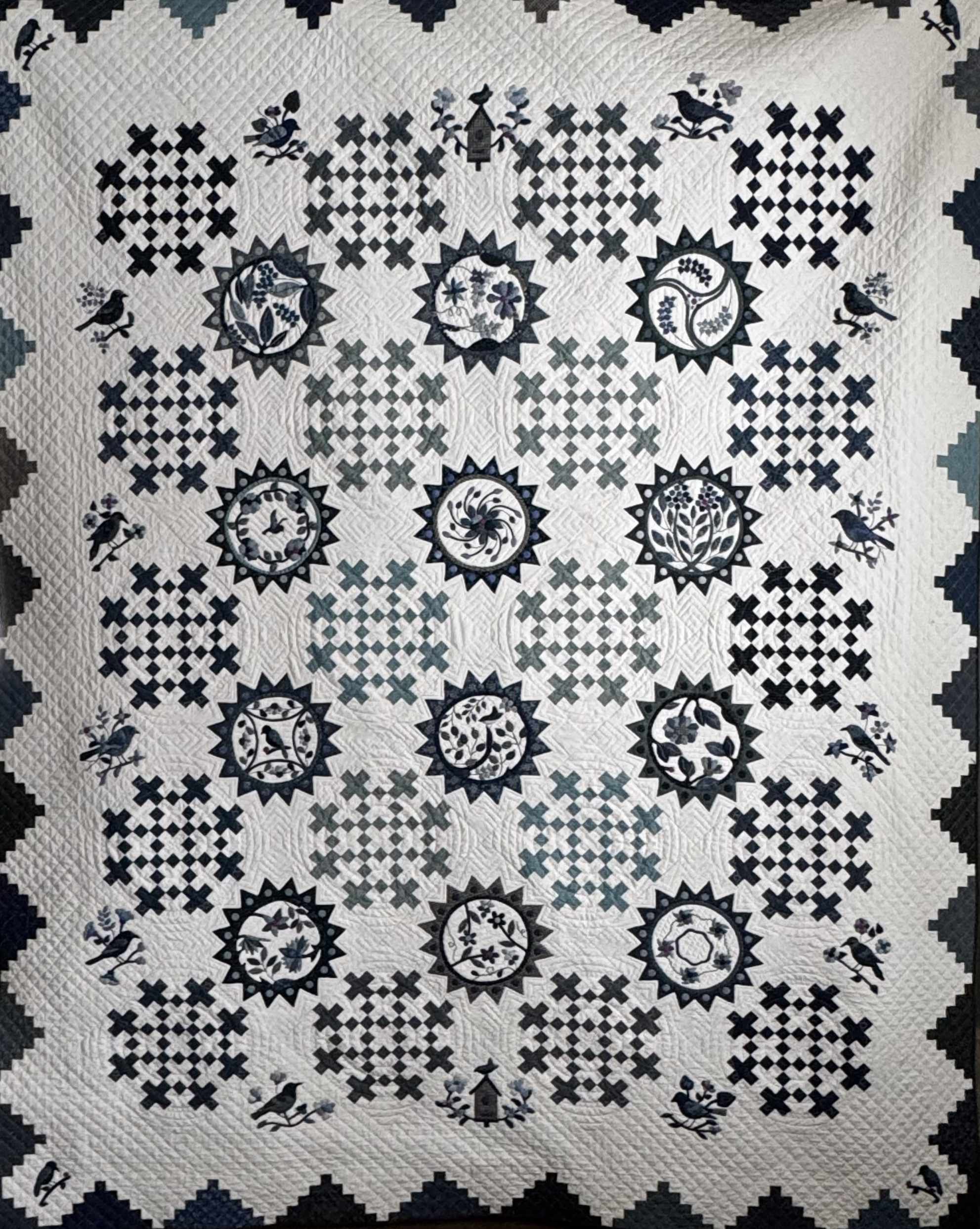
Ruth McLeod’s Celeste placed second for Traditional Wall and Bed Quilts
Pressing, precision and perseverance
I always concentrate on pressing, precision and perseverance – the 3 Ps.
I press everything as I go and work on making the intersections meet. That way, the blocks turn out precisely square and have a quarter-inch seam.
Many times, you say to yourself, “What am I doing?”’ You must persevere through these feelings to become quilt show winners.
In my case I broke my wrist a week before the deadline. Fortunately, I had already made the label and hanging sleeve. I called a couple of friends and they sewed them to the quilt. They also checked for loose threads and any marks left on it.
The quilt had a little wow on the one side, so I put a damp cloth on it overnight. The next morning, the wow was gone but one of the blues ran. I frantically ripped out that area but couldn’t sew a new block on my own. I called a friend and she made the new block and sewed it back into the quilt. machine quilted it again, then a friend sewed the binding back on.
I was relieved to see the quilt finished at last.
Ruth McLeod

Patricia Dance’s Water Dog placed second in Art – Depiction of Human or Animal
Adapt as you go
Learn to pivot. I was almost too afraid to begin since I very badly wanted my fabric version of my design to succeed with my own hand-dyed fabrics. After dyeing some fabric, I discovered that I wasn’t going to have enough. Fortunately, I had purchased the Cherrywood challenge fabrics for the theme “Abyss” which fit quite nicely into my colour palette.
Patricia Dance
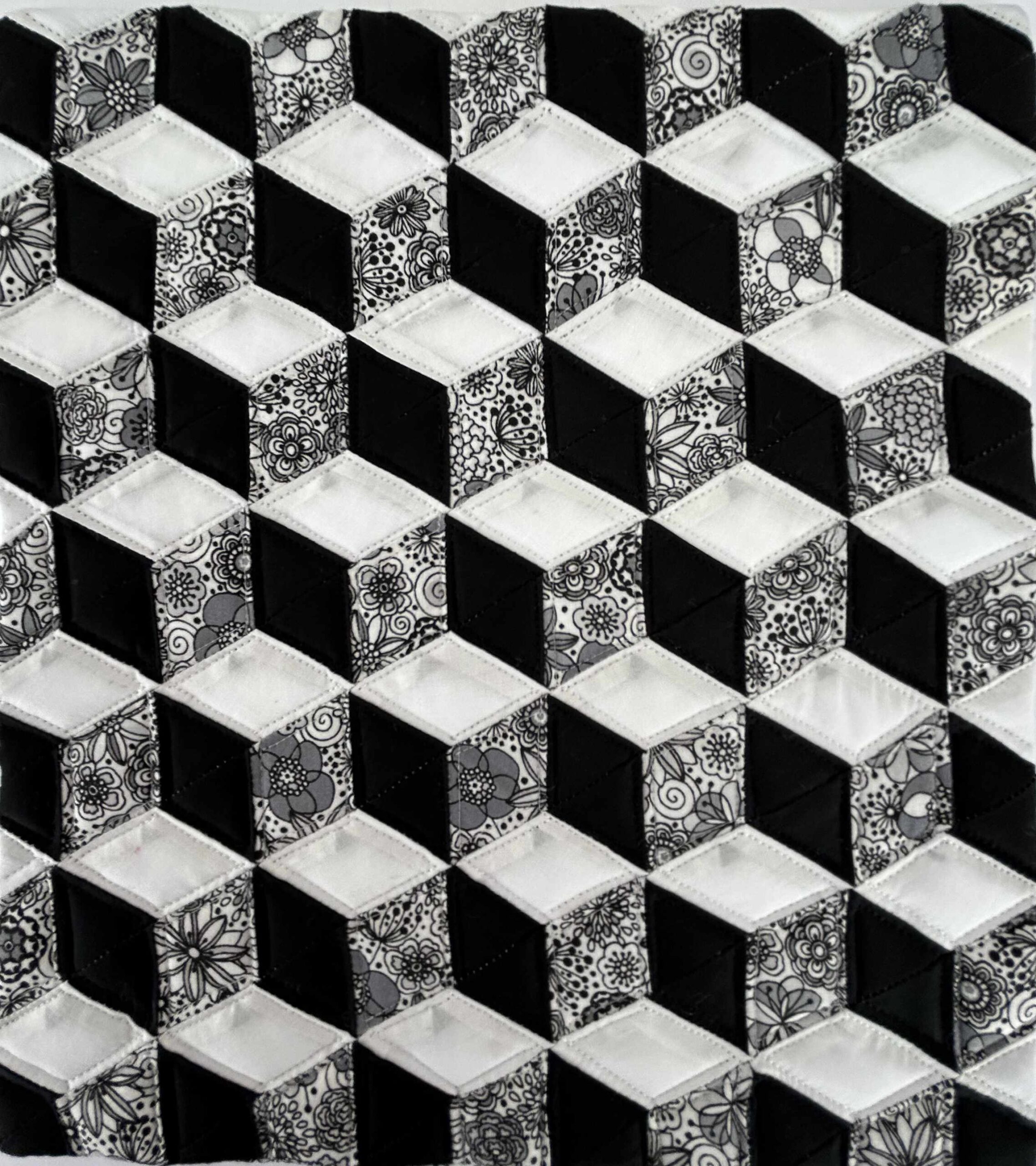
Betty Sutherland’s 3D Cubes placed third in Miniatures
Accuracy within miniature quilts
I am very proud of this very small quilt (7 by 7.5 inches, just larger than a postcard). I have always enjoyed working with small pieces, but I knew I had to be careful with a juried miniature quilt.
Making a paper-piece pattern for this small project ensured that the points would line up better. Normally this pattern has only triangles, but I “cheated” and inserted diamond shapes to reduce the amount of piecing.
Using a finer fabric like that from Liberty London produces flatter seams, especially in smaller quilts. Working with fine threads like Wonderfil, DecoBob and Invisafil, a new sharp needle, a small stitch length, a dry iron with a small spritz of diluted starch and a clapper helped to make the piecing lie even flatter.
More than anything else, you’ll need patience to sew slowly and accurately. When I made a mistake (sometimes more than once!), I had to discard that piece. The small stitch length would damage the fabric if I tried to rip them out.
The delicate fabric was more transparent than traditional white cotton. Next time, I would use a colour that does not show the shadow as much.
Finally, I would encourage others to overcome their fears of entering a quilt into the show. Find a style or theme that you enjoy and go for it.
Betty Sutherland
To learn more from other categories, you can read longer blog posts by additional winners. Each one offers helpful advice to boost your skills and confidence for entering shows at all levels.