
Back home, three families started Canadian companies that their grandchildren and great-grandchildren operate today. Each has evolved to survive as trends and markets change.
JN Harper’s legacy
To this date, James Norman Harper’s signature stands as the brand for the company he founded in Montreal with a $100 loan. Already a textile industry veteran, he distributed men’s suiting and interlining for men and women. Soon, he brought his sons, Ralph and Bruce, aboard.
Bruce branched out into buttons while Ralph stuck with textiles. In the 1980s, Ralph’s son Gary joined the garment supply business but soon took it in a new direction. In 1990, he attended his first quilt market and quickly added it and women’s apparel to the menu.
As a wholesaler, JN Harper now represents 18 fabric lines in Canada. They include Riley Blake Designs, Timeless Treasures and Robert Kaufman, plus Quilters Dream Batting and Red Pine Minky. They also distribute Quilters Choice wideback and regular-width prints, batiks, cotton prints and batting. If you buy any of these brands, you support this Canadian business.
Over time, Montreal’s vibrant made-to-measure trade faded as shirting sales moved overseas. So, the company went in a new direction. Today, it maintains a workforce of 25 employees, plus seven regional sales reps.
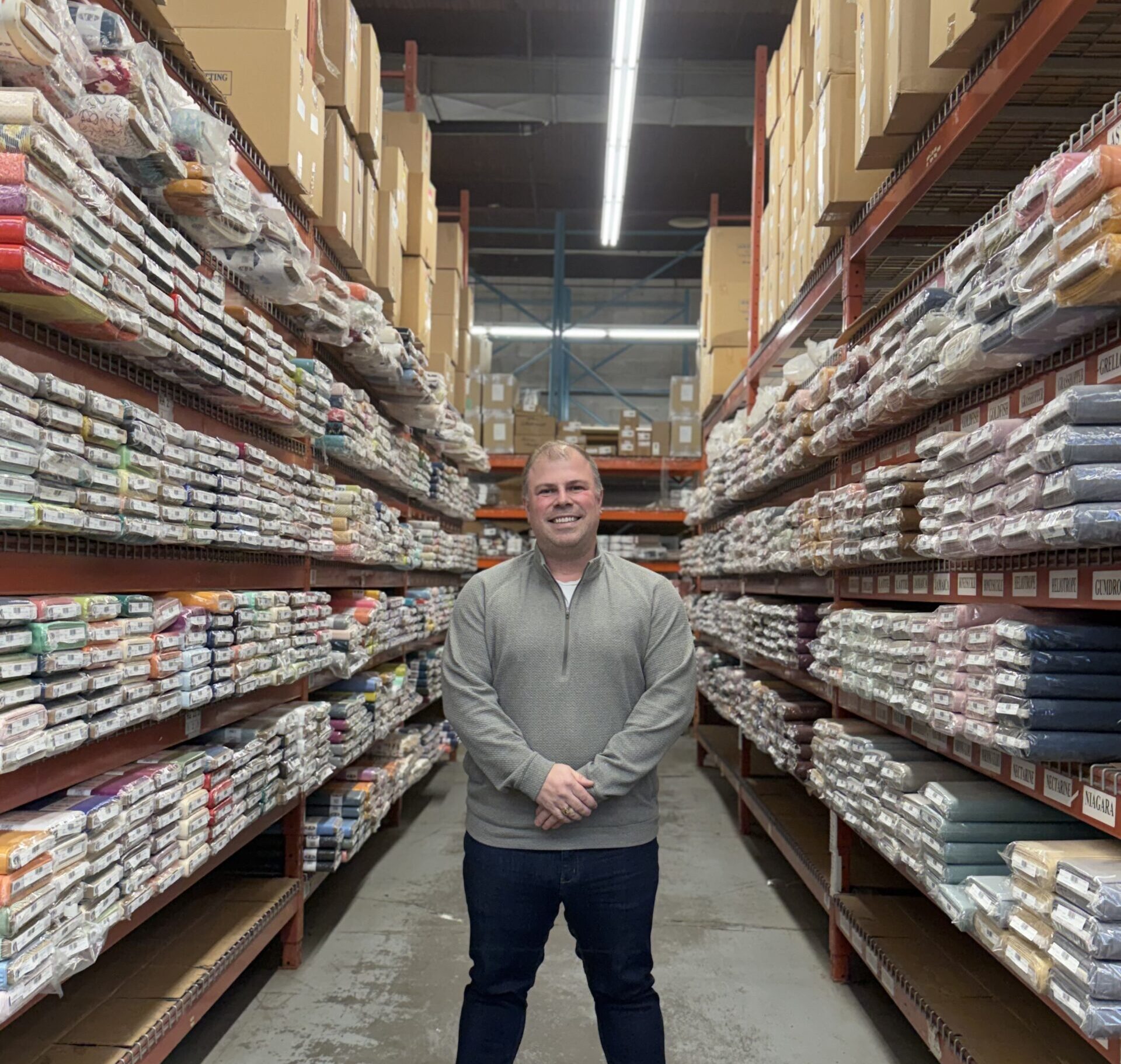
“We’ve definitely expanded into things we never thought we would supply fabric for,” says Gary’s son Mike (pictured above). He became operations manager in 2007.
The company offers custom work for stores at a minimum of 300 metres per order. Requests have come in for specific panels and prints in cotton and minky, often from local designers or artists.
“People want exclusivity. Our goal is to help Canadian shops grow.”
Meanwhile, JN Harper has refreshed its Discover Canada panels with images from across the nation as part of the Proudly Canadian collection.
“People really stood behind that collection to show their pride,” says Megan Harper, the company’s marketing director since 2017.
For years, JN Harper has provided the fabric for the Canadian Quilters Association’s youth challenge from a supplier.
“We’re passionate about young quilters since they are the future of our industry,” Megan says. “This year, we are excited to focus more on the Canadian aspect and donate our own.”

Doug Earle (right) promoted his son Bart to general manager in 2000.
Bart has served as company president since 2020.
H.A. Kidd and Company keep evolving
H.A. Kidd and Company operates as Canada’s largest manufacturer and distributor of more than 45,000 products: notions, quilting tools, embroidery and knitting supplies and much more. Yet, it began almost by accident.
Its brilliant but headstrong founder, Oliver B. Earle, had a lively career as a buyer for the T. Eaton Company, Canada’s largest department store chain. While attending a Toronto customs auction, he purchased several cases of unclaimed pearl buttons. To get rid of them, he asked his wife’s cousin, Harold A. Kidd, to help sell them.
Certain sizes sold quickly; others didn’t, so they reordered the ones in demand to keep things balanced. Before long, the duo realized they were in the button business, and H.A. Kidd and Company officially launched.
In the early years, the company supplied buttons to Woolworths, Kresge’s, and hundreds of Canadian small dry goods shops.
When Oliver died in 1934, his sons, Roger and Ron Earle, took over. Roger died in 1954, then Ron turned the business over to his son Doug in 1959. Doug made it his mission to diversify and to develop button supply chains that soon replaced the American brands in the Canadian market.
A new era
In 1967, H.A. Kidd partnered with YKK zippers. It acquired the Joseph Boucher Button Co. from Montreal in 1969 and the Famous Button Co. in Hamilton. In 1972, it introduced Gütermann sewing thread to North America for the first time. Its success in Canada helped pave the way for Gütermann’s entry into the U.S. market.
In the 1980s, it acquired Dufferin Craft Enterprises to produce licensed craft kits for major retailers like Lewis Craft, Crafts Canada, and Woodwards.
During this time, Doug brought his sons into the office where they would run their hands through containers of buttons. In 2000, Bart Earle stepped into the role of general manager and moved operations from Regent Park in Toronto to its current home in East York.
Under Bart’s leadership, H.A. Kidd entered the knitting business in 2005. In order to grow, the company also entered the growing hobby segment of art in 2019.
Bart moved to his current role as the company’s president in 2020. Today, he leads a team of more than 120 employees. Sixty of them work in the East York distribution centre to keep up with a flood of orders.
Cansew threads made in Montreal
Cansew Inc. in Montreal has a strong family history, far beyond its own founder’s bloodline.
“My grandfather Aaron was delivering beer for a living when he started with buttons in his living room in 1924, under the name Canadian Sewing Supply Ltd.,” said Mark Schachter, the current vice president.
“He distributed buttons and thread to tailors in Montreal, then my dad and uncle took over. Now, it’s run by my cousin Hershie, and my brother Jack and I.”
The Schachters opened their own thread factory in 1951 and added a dye house in 1960. By 1968, the company had moved to a larger location on Chabanel Street.
Since then, its footprint has grown from 80,000 square feet to 200,000 square feet of factory, warehouse and dye house.
It also has offices in Calgary, Toronto, Vancouver and Winnipeg with 130 employees overall. Some of them have worked there for 30 to 40 years.
“We have a lot of multi-generational families working for us. The customers get a sense of who we are through our employees.”
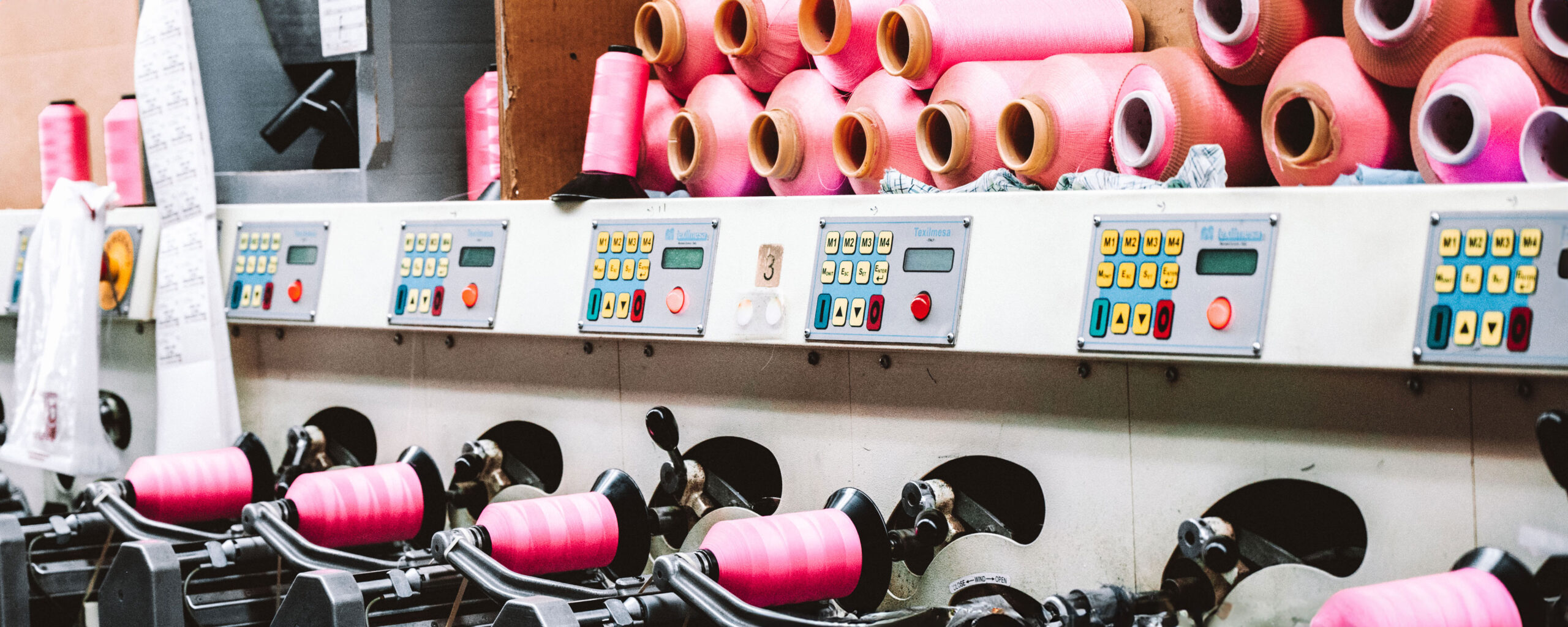
The company sells threads in more than 800 colours, including Picasso 40w Trilobal Quilting Thread. It also makes spun polyester threads, Primo, Xtra and Poly Plus as well as drawstrings.
Another division creates custom-dyed yarns.
As a distributor, it manages Madeira threads and Avery Dennison craft products, scissors and thread snips. In all, Cansew has more than 2,000 products, such as trims, elastics, webbings, Velcro® fasteners, thread kits and LED lights.
Cansew sells directly to manufacturing companies to make clothes, furniture and industrial goods. Customers can also buy thread from its website and select stores across Canada.
“We’ve been able to adapt to the changing requirements of our customers, changing industries, new technologies and new fibres,” Mark said.
He takes great pride in the company’s spirit of resilience and innovation throughout world wars and economic downturns.
“The fact that we’re a local family-owned business gives us an agility to maneuver through tough times,” he noted. “Since our founding, we’ve proudly remained a 100% Canadian company, evolving alongside the ever-changing needle-trade.”
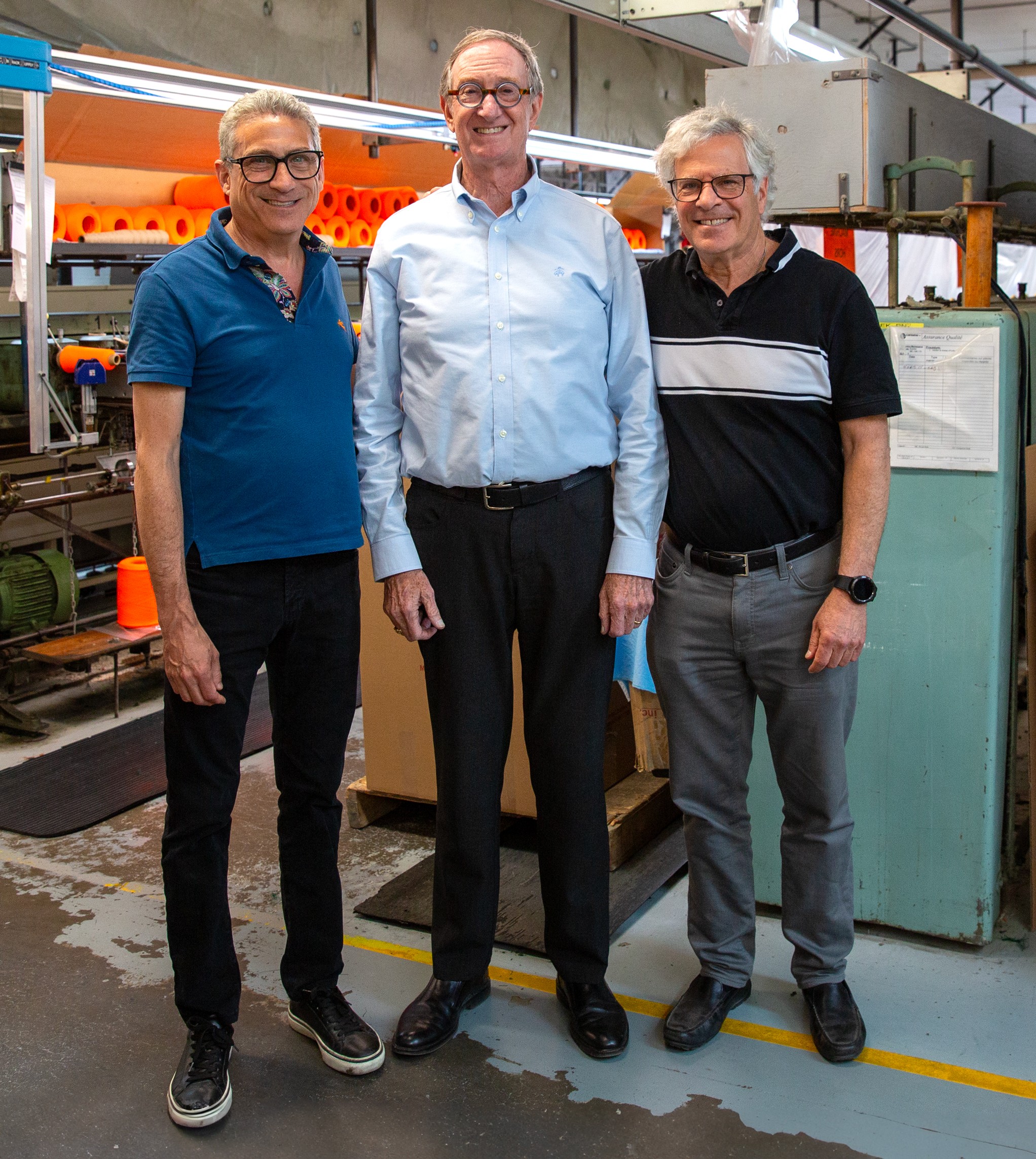
Jack, Hershie and Mark Schachter carry on leadership at Cansew Inc. as the third generation of family owners.